Notes A–Z
Cedarwood in Perfume: Dry Timber, Pencil Shavings and Soft Woods
Cedarwood in perfume smells dry, woody and often reminiscent of pencil shavings, with resinous, smoky or softly balsamic variations.
4 min readNotes A–Z
Explore birch tar, guaiac wood and cade in smoky perfumes, with practical ways to choose and wear a bonfire accord for autumn.
By The Bla Blu Bli Fragrance Library editors · Published October 25, 2026 · Updated October 25, 2026 · 5 min read
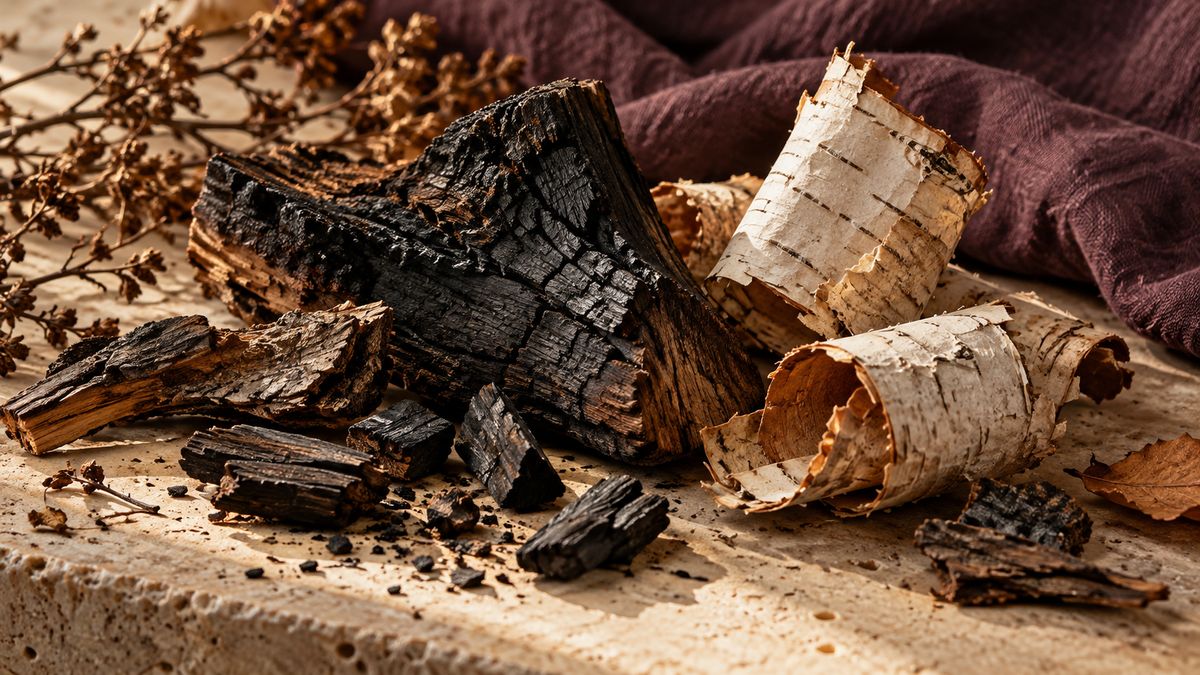
Bonfire perfumes suggest burning wood through smoky, woody and sometimes leathery notes, balanced with softer materials so the effect is wearable. Birch tar, guaiac wood and cade offer different smoke associations: dark leather, rounded smouldering wood and sharper tarry smoke. For Bonfire Night, which falls on 5 November in the UK, choose the kind of smoke you enjoy before deciding how strongly to wear it.
The same approach works for an autumn evening in the US without a holiday connection. Think about the smell you want to carry indoors: a trace of embers in dry wood, soft resinous warmth, or a more challenging burnt edge.
A real fire changes as wood heats, burns and settles into embers. Perfume can suggest selected parts of that scene without reproducing the whole experience. An accord is a combination of materials that creates a recognisable impression, such as charred timber or smoke caught in a wool scarf.
Dry woods can supply the timber shape. Resins can add a glowing, balsamic impression, while leather-like accents suggest darkened bark. Sweetness may round off the bitter edge, but too much can move the idea towards toasted sugar.
Start by asking which part appeals. If you like stacked logs more than smoke, explore cedarwood. If your reference is resin burning slowly, incense may be closer. Neither description guarantees a bonfire effect in every composition.
These names are useful scent clues, not interchangeable labels. Their character depends on the material, its treatment and the surrounding composition. A perfume can also suggest them through an accord rather than contain the named material.
| Note description | Impression it can suggest | What to check while sampling |
|---|---|---|
| Birch tar | Dark smoke, tar and leather | Does the leathery edge become too sharp for you? |
| Guaiac wood | Rounded wood smoke, sometimes creamy or softly sweet | Does it stay woody or turn sweeter than you want? |
| Cade | Dry, phenolic, tarry smoke | Does the medicinal or burnt facet dominate? |
| Dry woods | Timber, pencil shavings or bark | Is there enough softness around the dry base? |
| Resinous accents | Balsamic warmth beside the smoke | Does the result feel resinous, sugary or heavy? |
Birch tar is associated with the smoky leather side of perfumery. Guaiac wood can give a less angular impression, though it is not always gentle. Cade can be especially assertive in smell. None of these names tells you the finished perfume's strength or suitability for your skin.
Treat phrases such as ash, charcoal and embers in the same descriptive way. They tell a scent story; they do not give you an ingredient inventory or a promise of natural origin.
For a dry, coat-and-scarf effect, look for smoke framed by cedar, vetiver or restrained leather. That combination may feel closer to a woodpile than a dessert. If the dry edge seems austere, a creamy wood can make the transition into the base feel softer.
For a warmer interpretation, resinous amber or a little vanilla can cushion the smoke. Smell carefully after the opening fades. What first seems like distant embers may settle into a much sweeter base, particularly when several gourmand notes appear together.
A floral or aromatic accent can leave more space around the woods. Do not dismiss a composition because its note list includes flowers: the useful question is whether you can still distinguish the smoke without finding it dense or abrasive.
Avoid choosing entirely from seasonal language. A description involving firesides and blankets might mean sweet amber with a trace of smoke, while a plainly described woody perfume might give the charred effect you wanted.
Try the perfume on an ordinary day first. Outdoor smoke can cling to clothing and confuse your impression, making a bonfire gathering a poor first test. Begin with a strip, then wear a finished sample according to its directions if suitable for you.
Follow this sequence to separate attraction from wearability:
Our perfume testing method explains why a full wear gives better evidence than repeated sniffs at a counter. Record the settled character in your own words, such as dry ash, soft leather or sweet wood, instead of copying the note list.
At an outdoor event, wind can make the scent seem to disappear. That is not a reliable signal to add more. You may notice the full application again in a car, train or warm room, where everyone is much closer together.
Apply conservatively at home and allow it to settle before leaving. Follow any fragrance-free requirements at your destination. If you want help distinguishing intensity near the skin from the trail you leave, read about sillage and projection.
Clothing is not a neutral testing surface. Perfume may mark fabric, and smoke from the event can remain after the perfume changes. Check care instructions before applying anything to a scarf or coat; skin testing and garment testing answer different questions.
Use finished fragrance products, not raw birch tar, cade oil or homemade mixtures. Their smell does not establish safe use. If a perfume causes irritation, stop using it; seek professional advice for persistent symptoms or a suspected allergy.
The most useful choice is a smoke effect you still enjoy after the novelty fades. You should be able to name what you like about it beyond the seasonal image: the dry timber, the soft resin, or that small leathery trace at the end.
A guide to the note’s usual role, not a fixed formula or an ingredient list.
Notes overlap as a fragrance develops. Placement varies with the finished composition.
A smoke or ash note describes a smell. It does not establish that soot or ash is an ingredient, and a note list is not a formula.
No. A restrained woody composition can suit daytime. Consider the setting, how far the scent travels and the preferences of people nearby.
The vial opening gives a concentrated impression. Use a paper strip first, then assess a suitable finished perfume on skin before deciding.
They have no required gender. Dryness, sweetness, floral accents and personal taste offer more useful ways to choose.
No. Wind and distance can make judging intensity difficult. Check the scent again indoors before adding more.
For general information. Patch test a finished perfume as directed before wider wear. Stop use and see a doctor if irritation develops.
Notes A–Z
Cedarwood in perfume smells dry, woody and often reminiscent of pencil shavings, with resinous, smoky or softly balsamic variations.
4 min readNotes A–Z
Incense in perfume can smell resinous, aromatic and smoky, while frankincense itself often adds bright citrus-like, peppery and pine-like facets.
4 min readNotes A–Z
Leather in perfume can smell dry, smoky, tarry, warm or softly suede-like, sometimes with animalic or rubbery facets.
4 min readHow to wear fragrance
Test perfume by limiting competing scents, assessing an opening on paper, and giving a suitable finished sample a separate skin-wearing day.
4 min read