Notes A–Z
Cinnamon in Perfume: Bark, Leaf and Warm Spiced Accords
Explore cinnamon bark and leaf in perfume, their different spicy facets, useful pairings and sensible precautions for sensitive skin.
5 min readNotes A–Z
Understand clove and eugenol in perfume, useful pairings, the difference between spicy and sweet, and how to approach ingredient labelling.
By The Bla Blu Bli Fragrance Library editors · Published October 24, 2026 · Updated October 24, 2026 · 5 min read
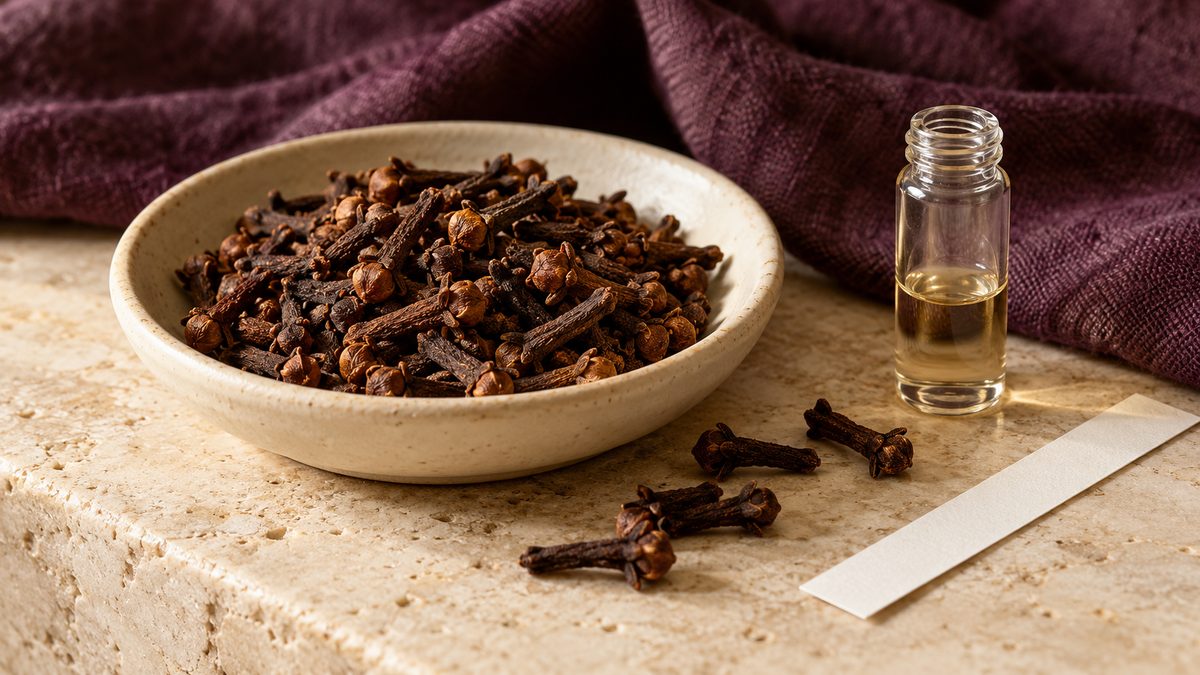
Clove in perfume smells warm, pungent and spicy, with woody, slightly sweet and sometimes medicinal edges. Eugenol is a major contributor to the characteristic aroma of clove oil, but a finished clove perfume can range from dry spiced wood to a rounded festive gourmand.
If the note sounds appealing but seems too sharp on first spray, give the sample time. Its relationship with flowers, citrus and the base can matter more than the initial spice impression.
Cloves are the dried flower buds of Syzygium aromaticum. Their aromatic oil contains eugenol, which contributes much of the recognisable clove character. Perfumery can use clove-derived materials and individual aroma materials to shape that effect.
Eugenol also occurs in other aromatic plants. Its smell may recall old-fashioned dental preparations for some people, while others think first of baking, mulled drinks or a spice cupboard. Neither response means that the perfume is faulty. Associations can be strong enough to outweigh the rest of a composition.
The clove bud, its oil and a composed fragrance will not smell identical. Extraction changes the balance, and a formula may emphasise the woody, floral or sweet side. Smelling a cooking clove can help you recognise the family resemblance without predicting how a fragrance wears.
A clove note can feel warm without suggesting sugar. Dry cedar, peppery woods or incense may draw out its austere side. Vanilla and balsamic materials can push the same spice towards a softer, edible impression.
It helps to separate pungency from sweetness when comparing samples. A perfume may be both very spicy and very sweet, or sharp at the opening and comparatively dry later. Calling all of those effects heavy hides the reason a sample does or does not suit you.
| What you notice | A possible direction | A useful comparison |
|---|---|---|
| Sharp aromatic clove | Dry spice or a medicinal edge | A softer woody spice sample |
| Warm petals with spice | A carnation-like or spiced floral effect | A rose-led sample without obvious clove |
| Sweet clove and vanilla | A festive gourmand impression | A dry resin or wood composition |
| Clove with citrus peel | A brighter spiced opening | The same sample after citrus fades |
Carnation-like effects are a familiar use for clove-related aroma materials. That does not mean a carnation extract or a visible clove ingredient must appear in every floral fragrance with this character.
Rose can make clove feel petal-like and rounded. The pairing can be rich, but it can also be relatively dry when woods carry the base. Try the settled heart before dismissing a spiced floral from its opening.
Citrus adds contrast and can suggest peel above a warm spice centre. Orange-like effects may strengthen festive associations, while brighter citrus can make the blend feel less enclosed. Once those volatile notes soften, the remaining base needs to appeal on its own.
With cinnamon, clove can create a concentrated warm-spice impression. Cardamom offers a different kind of aromatic lift. If a mixed spice accord feels crowded, compare it with a perfume where clove is the only obvious spice.
Woods, leather and incense can pull the note away from food. Vanilla, tonka and caramel-like effects tend to make the warmth rounder or sweeter. These are directions to test, not dependable predictions from a list of notes.
A note list tells you what a perfume aims to evoke. The ingredient declaration serves a different purpose. A named clove note does not prove the presence of clove oil, and eugenol in an ingredient list does not prove that the fragrance will smell strongly of clove.
Eugenol can cause allergic contact reactions in susceptible people. Allergen labelling requirements depend on the market, the product and the applicable rules. Do not infer a universal threshold or a guarantee from the presence or absence of one word on a webpage.
Check the actual packaging for the version sold to you. If you have a diagnosed fragrance allergy, use your clinician's avoidance advice and ask the manufacturer about information that is unclear. General labelling guidance cannot replace assessment of your own triggers.
Our allergens and patch testing article explains the limits of home trials. A small test that causes no immediate response cannot certify that a product is allergy-free. The fragrance standards overview also provides context for ingredient restrictions without making them a promise of individual tolerance.
Begin with a strip to decide whether the aromatic edge appeals. Return later, when the first bright notes have receded, and ask if you prefer the floral heart or the warmer base. Avoid comparing many spicy scents together, since their shared facets quickly become hard to distinguish.
For a skin trial, use the finished product as directed. Choose a normal day when you can assess it both outside and in a heated room. Notice if the clove remains a quiet accent or grows tiring beside a persistent sweet base.
Do not apply raw clove oil, crushed spice or improvised mixtures to imitate the perfume. Concentrated aromatic materials are not ready-to-wear fragrance. Stop using a finished product if irritation develops and seek medical advice for a persistent or concerning reaction.
Clove can make a small scent impression feel distinct even when it is not projecting far. A restrained application may suit a shared evening better than repeated sprays intended to preserve the exciting opening.
At a meal, consider how close people will sit and whether anyone has requested a fragrance-free setting. Familiarity can make your own perfume less noticeable to you while it remains apparent to others. Moving outdoors for a moment is not a reliable test of whether it has vanished.
If clove interests you primarily as a seasonal accent, sample before buying a large bottle. You may prefer it occasionally, or discover that a dry floral version works beyond winter. Choose according to the whole wearing experience rather than the comforting memory of a spice jar.
A guide to the note’s usual role, not a fixed formula or an ingredient list.
Notes overlap as a fragrance develops. Placement varies with the finished composition.
No. It may be present through different fragrance materials and need not dominate the scent. An ingredient declaration is not a note pyramid.
Yes. Its sharp aromatic edge can feel cool or medicinal against a warm spicy background. Your associations and the surrounding formula affect that impression.
A personal fragrance should not be treated as an insect repellent. Use a product intended for that purpose and follow its directions.
No. The effect can come from perfumery extracts, individual aroma materials or an accord. A note name does not describe kitchen ingredients added to a bottle.
For general information. Patch test a finished perfume as directed before wider wear. Stop use and see a doctor if irritation develops.
Notes A–Z
Explore cinnamon bark and leaf in perfume, their different spicy facets, useful pairings and sensible precautions for sensitive skin.
5 min readNotes A–Z
Cardamom smells fresh, aromatic and gently warm. Where the oil comes from, how perfumers use it, what it pairs with, and when to wear it.
3 min readIngredients
Perfume can irritate skin or trigger an allergic reaction in some people, including when its materials are natural.
4 min readNotes A–Z
Rose can smell green, citrusy, honeyed or spicy. Explore distilled oil, absolute, key rose molecules and how to find your preferred floral style.
4 min read