Fragrance families
Gourmand Perfumes: Edible Notes Without Too Much Sweetness
What makes a perfume gourmand, how edible accords are built, and how to choose vanilla, nutty or roasted scents without sweetness overload.
4 min readNotes A–Z
Explore roasted coffee accords, from bitter beans to creamy vanilla, and learn how to find a coffee perfume that stays balanced.
By The Bla Blu Bli Fragrance Library editors · Published October 27, 2026 · Updated October 27, 2026 · 4 min read
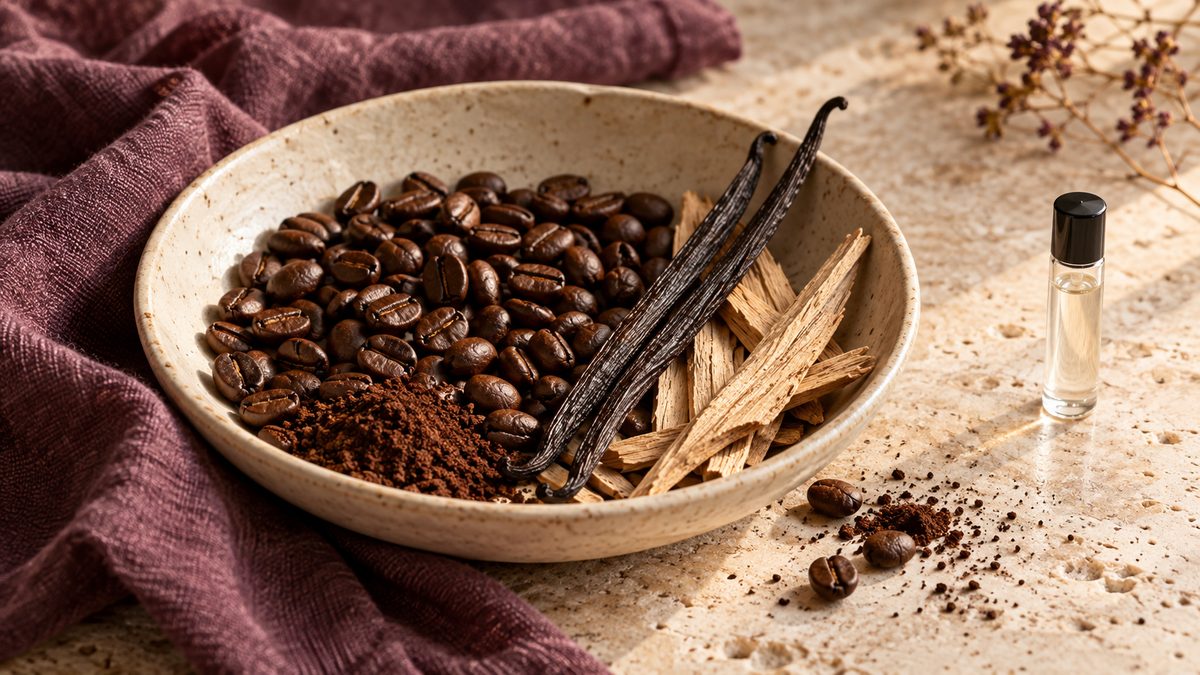
Coffee in perfume usually evokes roasted beans, ground coffee or a prepared drink through an accord, sometimes supported by coffee-derived extracts. It can smell bitter and woody, creamy and sweet, or dark and smoky. Vanilla pushes it towards a café-like gourmand, while woods can keep the roast dry.
Coffee's familiar smell develops through roasting and involves many aromatic compounds. A perfumer may select materials that suggest toasted beans, burnt sugar, cocoa-like darkness or warm steam rather than reproduce every aspect of a cup. The result is an interpretation, not necessarily a literal drink.
Natural coffee extracts exist, but a coffee note list does not prove that one is present. Nor does an extract guarantee a more realistic impression. The surrounding formula can amplify selected facets or hide them beneath sweetness, spice and woods.
Start by deciding which coffee moment you like. Freshly opened beans, dry grounds, dark espresso and a milky sweet drink offer different reference points. Someone who loves the smell of a grinder may find a creamy coffee perfume too sugary, while a latte lover may dislike a bitter roast accord.
| Feature | Possible impression | A question for the sample |
|---|---|---|
| Roast | Toasted bean, char or warm grain | Does it feel toasted or burnt? |
| Bitterness | Dark, dry contrast | Is it pleasant after the opening? |
| Creaminess | Milk-like or smooth texture | Does it soften or obscure the bean? |
| Sweetness | Vanilla, caramel or sugar-like effects | Does sweetness keep increasing? |
| Woodiness | Dry timber or earthy roots | Does it support the roast or replace it? |
These features can move independently. A fragrance can smell creamy without being very sweet, or sweet without resembling milk. Writing down each impression prevents a vague judgement such as too strong from hiding the real issue.
Avoid assuming that a dark liquid indicates dark roast. Colour is not a dependable guide to the coffee accord, its intensity or the quantity of natural material. Judge the smell and check product information when appearance raises a question.
Vanilla can round roasted bitterness and create an association with sweetened coffee. Creamy materials, caramel-like effects or nutty notes may reinforce that impression. This is a common route into gourmand perfumery, where the composition suggests something edible.
The risk for a coffee lover is that the roast may be only an opening accent. After it fades, the perfume may feel mostly like vanilla or caramel. That can be appealing, but it is different from wanting a recognisable coffee note throughout wear.
When sampling, ask yourself what remains after the initial novelty. If you would not enjoy the base without the coffee opening, keep looking. A brief realistic bean effect cannot compensate for hours of a drydown you dislike.
Cedarwood can connect coffee's toasted side to a dry timber impression. Sandalwood may add smoothness, while vetiver can introduce rooty or smoky contrasts. These pairings can make coffee feel more like a textured woody accent than a drink.
Spice changes the picture again. Cardamom brings a cool aromatic lift against warmth, while cinnamon-like effects can make the accord feel more culinary. Leather can deepen the bitter side; flowers can provide contrast rather than another roasted layer.
A note list containing woods is not a promise of dryness. The amount and character of the sweet base still matter. Ask for a sample described as dry and roasted, then verify that impression instead of buying from the listed ingredients alone.
Begin on paper with separate samples representing a dry roast and a sweeter coffee style. Smell them after the initial alcohol impression has cleared. Return later to compare which parts remain recognisable and which have become generic sweetness or smoke.
Wear the preferred sample during a normal day. Keep other scented products quiet so you can identify the source of creaminess, spice or sweetness. Check it while sitting in a warm room, where a dense base may feel more enveloping than it did outdoors.
Take a break between assessments rather than repeatedly holding your wrist to your nose. Familiarity can reduce your own awareness while the fragrance remains detectable to others. The perfume testing article explains how to gather useful impressions without relying on constant sniffing.
A roasted woody perfume may suit daytime if its projection is restrained and the setting permits fragrance. A rich sweet coffee can feel comfortable in cold weather but more intrusive in a heated shared room. Application and the finished formula matter more than the word coffee.
Do not top up automatically after stepping outside and returning indoors. Give yourself time to assess the existing application. Clothing can retain sweet and roasted bases, so follow care guidance before spraying fabrics or adding perfume over a scented scarf.
Finished fragrance is for external use as directed, even when it smells convincingly edible. Keep it separate from food and drinks. If use causes persistent irritation or other symptoms, stop and seek suitable professional advice rather than assuming a familiar food-associated note must be gentle.
A guide to the note’s usual role, not a fixed formula or an ingredient list.
Notes overlap as a fragrance develops. Placement varies with the finished composition.
A coffee note does not establish caffeine content. It describes a smell, and wearing fragrance is not a method of obtaining caffeine effects.
Do not expect a fragrance to act like a caffeinated drink. An association with alertness is different from a demonstrated stimulant effect.
Brewed coffee is not formulated or preserved as a fragrance product. It can stain, and its smell does not reproduce a balanced coffee accord.
No. Coffee can provide roasted bitterness inside woody, spicy or leathery compositions without making them smell like food.
For general information. Patch test a finished perfume as directed before wider wear. Stop use and see a doctor if irritation develops.
Fragrance families
What makes a perfume gourmand, how edible accords are built, and how to choose vanilla, nutty or roasted scents without sweetness overload.
4 min readNotes A–Z
Vanilla smells warm, softly sweet and balsamic, with possible creamy, woody, smoky or dried-fruit facets. It can suggest a cured pod rather than frosting.
4 min readNotes A–Z
Cedarwood in perfume smells dry, woody and often reminiscent of pencil shavings, with resinous, smoky or softly balsamic variations.
4 min readNotes A–Z
Cardamom smells fresh, aromatic and gently warm. Where the oil comes from, how perfumers use it, what it pairs with, and when to wear it.
3 min read