How to wear fragrance
Sillage and Projection: Two Ways Perfume Reaches Others
Projection describes how far a perfume seems to extend around the wearer, while sillage describes the trail it leaves as the wearer moves.
4 min readHow to wear fragrance
Choose a wedding or party perfume that suits close seating, the season and a long event, with a practical rehearsal and reapplication plan.
By The Bla Blu Bli Fragrance Library editors · Published November 7, 2026 · Updated November 7, 2026 · 4 min read
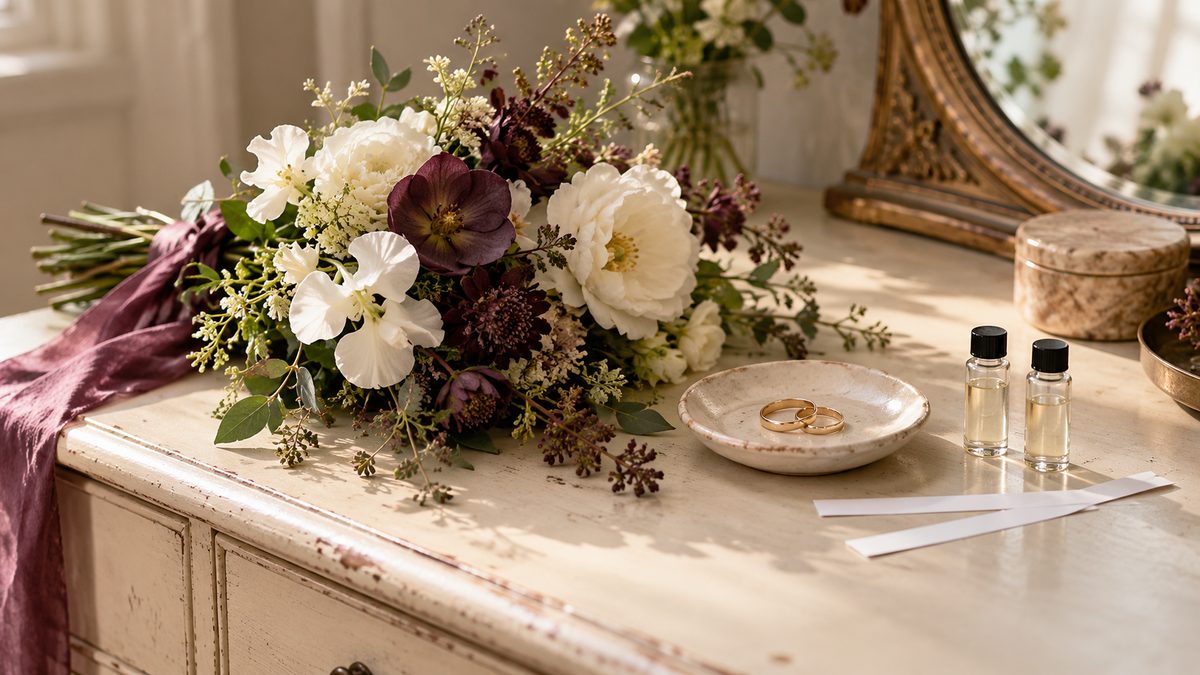
Choose a wedding perfume that you enjoy at close range and that remains comfortable through the longest, warmest part of the event. Test the scent in advance, judge longevity separately from projection and begin with restrained application. The same approach works for a party with dinner, close seating and dancing.
A memorable fragrance does not need to announce you across the room. On a day involving hugs, shared tables and photographs, the most useful test is how the perfume feels to you and the people immediately beside you.
Map the event before choosing a fragrance style. An outdoor arrival may be cool and breezy, but the meal can be warm and enclosed. A quiet ceremony also creates a different setting from an evening reception.
Choose for the most confined part rather than the part where scent disperses easily. If the venue requests a fragrance-free environment, follow that request. Guests and wedding-party members should also respect any specific preferences from the couple or host.
For a guest, restraint is particularly useful. Your perfume does not need to compete with flowers, candles, food or other guests' scents. A couple choosing their own fragrances can use the same principle while making the day feel personal.
A perfume can remain noticeable close to skin without projecting strongly into a room. Conversely, a bright opening can feel expansive without lasting through the entire event. Decide which behaviour you want before choosing from descriptions such as intense or delicate.
Read about sillage and projection if those terms are unfamiliar. Projection concerns how far a scent is noticed around the wearer; a trail is a different aspect of its presence. Neither is a direct measure of how much you will enjoy wearing it.
The longevity guide is useful for thinking about wear time, but avoid a fixed-hours promise. Formula, application, conditions and perception affect the experience. Test the particular perfume rather than choosing a concentration label as a guarantee.
| Event condition | Direction worth trying | Rehearsal question |
|---|---|---|
| Warm outdoor ceremony | Airy floral, citrus or restrained woods | Is it still comfortable once you go indoors? |
| Cool-weather celebration | Soft amber, woods or gentle spice | Does it become too rich beneath formal layers? |
| Close seated dinner | A scent you enjoy at low projection | Can you wear it without dominating your own meal? |
| Long reception with dancing | A familiar, well-tested composition | How does it feel as you become warmer? |
| Fragrance restrictions | No perfume | Have you checked the host or venue guidance? |
These are starting points rather than seasonal rules. Someone who loves dry woods need not switch to flowers for a summer wedding. The summer and winter comparison can help you adjust weight and application while keeping your own preferences.
Wear the perfume alone on a day when you can observe it through several activities. Include time indoors and, if relevant, a walk outdoors. Try similar clothing layers without using the actual wedding outfit as a testing surface.
Follow the sample testing process: let the opening settle, notice the heart and check what remains later. Record comfort, not just strength. A scent that persists but becomes tiring is a poor match for a day when changing or washing may be inconvenient.
If a partner or close companion will be beside you for much of the event, ask how it feels from normal conversational distance. Their reaction offers useful information, although it cannot speak for every guest. Make any adjustment during the rehearsal rather than experimenting on the day.
Use the product according to its directions and apply only where appropriate for that formula. Avoid spraying directly onto a wedding dress, suit, silk scarf, jewellery or delicate accessories. Fragrance liquids can mark or affect materials, and a special garment is a poor place to discover incompatibility.
Allow applied perfume to dry before dressing. Do not spray hair unless the product is intended for that use, and keep it away from the face and irritated skin. Adding many scented body products makes the final result harder to predict.
There is no universal wedding spray count. Atomisers and formulas vary. Start with the restrained amount that worked during your rehearsal instead of copying another person's routine or adding extra because the occasion feels significant.
If your rehearsal suggests that you want a later touch-up, bring an identified small supply in a secure container. Use it privately and sparingly. Check any travel rules if reaching the venue involves flying.
Do not reapply simply because you have stopped noticing the fragrance. Your perception can fade while the smell remains apparent nearby. Step away from other scents and consider whether a companion can still notice it before deciding.
If the perfume has become uncomfortable, adding a second scent is unlikely to help. Stop applying it and use a familiar alternative only on another occasion. The most reliable wedding choice is the one whose behaviour you already know, leaving your attention free for the celebration.
No. Choose scents each person enjoys, then check that wearing them nearby feels comfortable to both of you.
Only if you have time to test it. A familiar fragrance can be a meaningful choice without adding uncertainty on the day.
You do not need to wear the event outfit. Test with similar layers while keeping perfume off delicate or valuable fabric.
Yes, if it suits both settings. You do not need a second scent merely because the event changes mood.
For general information. Patch test a finished perfume as directed before wider wear. Stop use and see a doctor if irritation develops.
How to wear fragrance
Projection describes how far a perfume seems to extend around the wearer, while sillage describes the trail it leaves as the wearer moves.
4 min readHow to wear fragrance
To make perfume last longer, choose a formula whose settled scent you enjoy, apply it as directed to clean dry skin, and store the bottle away from heat and light.
4 min readHow to wear fragrance
Test perfume by limiting competing scents, assessing an opening on paper, and giving a suitable finished sample a separate skin-wearing day.
4 min readScent through the seasons
Summer fragrance choices often favor bright citrus, airy florals and dry woods, while winter choices may lean toward warm amber, vanilla and richer woody textures.
4 min read