Fragrance families
The Fragrance Families Wheel: Find Your Bearings
Fragrance families group perfumes by their dominant character, such as citrus, floral, woody or amber.
4 min readHow to wear fragrance
Choose a perfume gift for a man using his routine, preferred scent families and sample testing, with concentration and exchange checks.
By The Bla Blu Bli Fragrance Library editors · Published November 7, 2026 · Updated November 7, 2026 · 4 min read
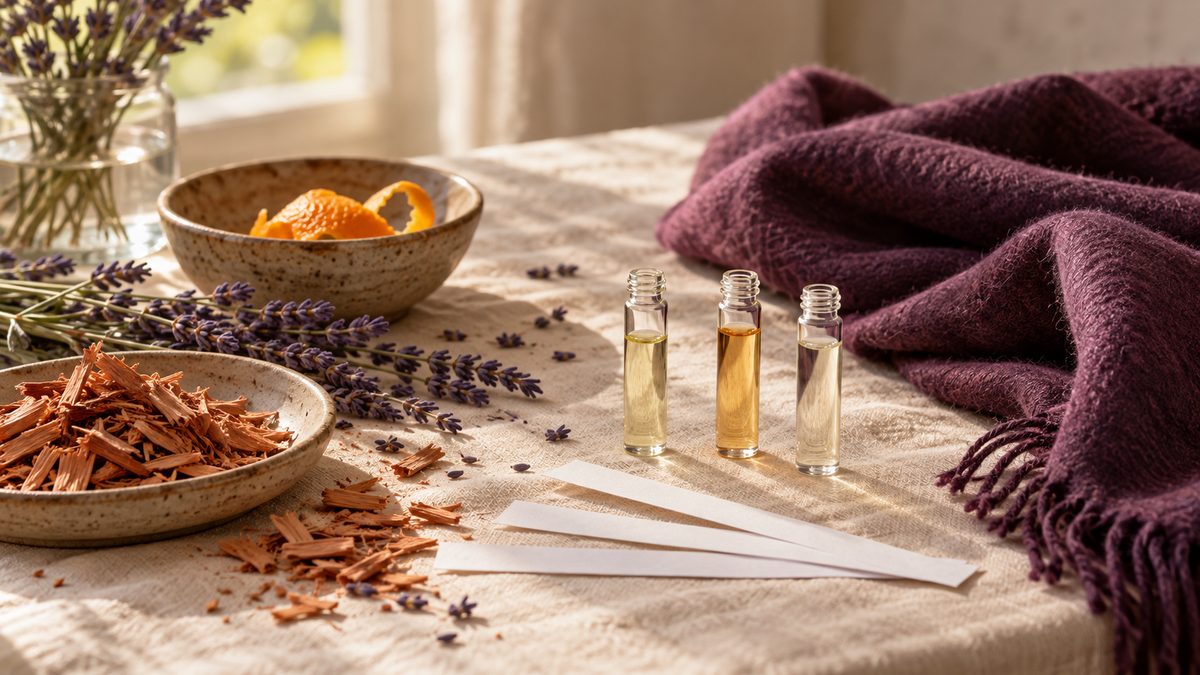
Choose a perfume gift for a man by finding out what he enjoys wearing, where he wears it and how noticeable he likes it to be. An exact requested fragrance is a strong starting point. Without that information, a small selection he can test is more useful than choosing the richest bottle or the most forceful description.
Men can prefer florals, sweet gourmands, soft musks or crisp citrus as readily as dry woods. The useful distinction is between his preferences and your assumptions about what a men's fragrance should smell like.
Ask when he reaches for perfume. Someone who wears scent only for evenings may want a different gift from someone seeking a quiet daily option. Workplaces, shared transport and close seating also affect how much projection he finds practical.
Use a concrete question: does he want to notice it himself, or does he enjoy leaving a scent trail? Avoid translating a confident personality into a powerful fragrance. A sociable person may prefer an understated smell, and a quiet person may enjoy a rich one.
If he has named a favourite, confirm the exact version and concentration. Do not assume a similarly named variation will smell the same. A replacement gift succeeds by matching what he likes, not by making an unsolicited upgrade.
The fragrance families guide gives language for asking better questions. Instead of asking only whether he likes woody perfume, distinguish pencil-like cedar from creamy wood, smoky wood and earthy roots.
| If he describes his preference as… | Compare these directions | Ask before committing |
|---|---|---|
| Fresh and clean | Citrus, aromatic herbs, soft musk | Does clean mean crisp or laundry-like? |
| Dry and woody | Cedar, vetiver, restrained woody blends | Does he enjoy earthy or smoky edges? |
| Warm and smooth | Amber, soft woods, gentle vanilla | How much sweetness is welcome? |
| Traditional and aromatic | Lavender-led or fern-like blends | Is the herbal opening comfortable? |
| Unusual and textured | Leather-like, resinous or spicy styles | Has he tried these on skin already? |
These are routes to explore, not guarantees. A fresh opening may lead to a sweet base, and a leather description may be soft rather than severe. Read the full description and seek a sample instead of buying from a single note.
An eau de parfum is not automatically a better present than an eau de toilette. Concentration categories do not reliably rank every perfume by projection, persistence or quality. Different versions may also change the balance of the composition.
For a man who already has a favourite, match his preferred version. For someone exploring, compare how the specific samples behave. The concentrations article explains why the label alone cannot answer whether a scent will feel strong.
Think about application format too. A spray and a dab sample distribute fragrance differently, so the sample experience may need another careful trial before he decides on a bottle. Avoid promising a fixed number of hours from a category name.
Choose a small group with a clear reason for each sample. A crisp aromatic, a dry wood and a softer woody amber can reveal more than several similar scents. Include an explanation based on something he has said, such as wanting a less sweet evening fragrance.
Keep each sample's identification, ingredients and directions with it. Do not give anonymous decants that leave him unable to check what he is applying. If the gift includes a later bottle choice, explain the arrangement accurately and check its current terms.
There is no need to turn testing into homework. Let him explore at his own pace and accept that he may reject the whole group. The gift can be a shared shopping visit if he prefers making decisions in person.
You can use strips to narrow a selection, but your skin cannot stand in for his. Invite him to test one candidate during an ordinary day, with no competing perfume, and notice the settled smell as well as the opening.
Our perfume testing guide covers that process. Suggest recording whether the scent feels dry, sweet, sharp or comfortable rather than chasing every listed note. It should fit his experience, not a description he feels obliged to agree with.
If he reports irritation or feeling unwell around a sample, stop that trial. Ask about fragrance sensitivity before buying, and do not describe any family as universally suitable for sensitive people. A choice without perfume may be the more welcome gift.
Before paying, check the seller's current return and exchange conditions, especially for opened products. Ask about a gift receipt and keep the original packaging where needed. Do not assume fragrance can be returned after use.
Consider how he will use the amount. A large bottle makes sense only if it is wanted; a smaller supply can suit occasional wear or someone who rotates several scents. Quantity is not a measure of thoughtfulness.
If you are still uncertain, follow the broader perfume gift guide and give him more control. An invitation to choose, a useful sample comparison or the exact refill he requested can each be a considered present. The best result is a scent he wants to reach for after the occasion has passed.
No. Products intended for use after shaving can have different purposes and directions. Confirm which type of product he wants.
That can suggest a fresh or woody preference, but he may want a different smell in perfume. Treat it as a question to ask rather than proof.
Only if he has shown interest. Offer a chance to explore rather than assuming he wants a new scented routine.
Check that both are the same version and ask the seller about the specific concern. Keep the receipt and product details.
For general information. Patch test a finished perfume as directed before wider wear. Stop use and see a doctor if irritation develops.
Fragrance families
Fragrance families group perfumes by their dominant character, such as citrus, floral, woody or amber.
4 min readConcentrations
Parfum, eau de parfum, eau de toilette and eau de cologne are concentration and style labels, while perfume oil describes a carrier format.
4 min readHow to wear fragrance
Test perfume by limiting competing scents, assessing an opening on paper, and giving a suitable finished sample a separate skin-wearing day.
4 min readHow to wear fragrance
Choose a perfume gift using the recipient's tastes, sampling options, concentration preferences and routine, with a checklist for avoiding guesswork.
5 min read