Notes A–Z
Cinnamon in Perfume: Bark, Leaf and Warm Spiced Accords
Explore cinnamon bark and leaf in perfume, their different spicy facets, useful pairings and sensible precautions for sensitive skin.
5 min readHow to wear fragrance
Choose festive perfume notes by balancing cinnamon, clove, pine, orange and vanilla, with practical advice for meals and indoor gatherings.
By The Bla Blu Bli Fragrance Library editors · Published November 7, 2026 · Updated November 7, 2026 · 4 min read
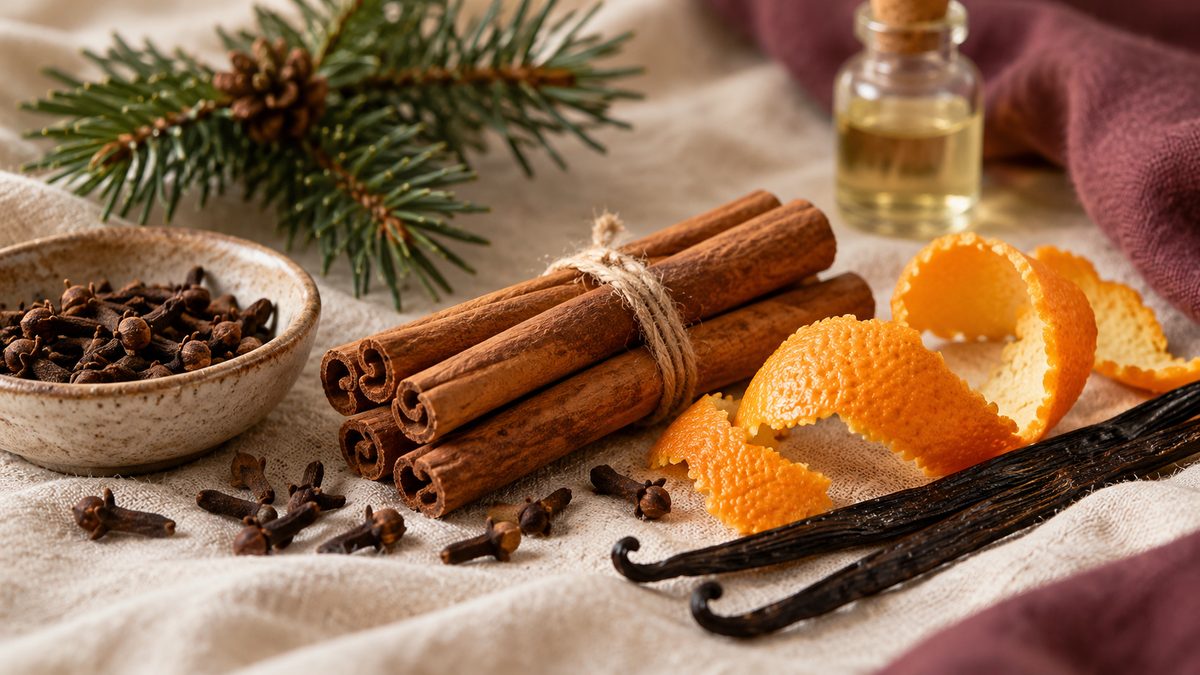
The best notes for a Christmas perfume depend on the atmosphere you want: cinnamon and clove suggest warm spice, pine feels green and wintry, and orange with vanilla gives a softer festive impression. Choose one main direction before looking for a scent that contains every seasonal note. The balance on skin matters more than how Christmassy the description sounds.
A scent for wrapping presents alone can be richer than one worn beside other people at dinner. Think about the room, the food and the length of the occasion as well as the weather outdoors.
Christmas smells are not a single fragrance family. A spiced-orange impression can feel bright and lively; resinous greenery can suggest a freshly cut tree; vanilla with soft woods can feel warm and quiet. Trying to combine all three may produce more density than you want.
Start by naming a scene you enjoy. If it is a bowl of oranges beside greenery, test citrus and conifer styles. If it is baking, consider a lightly spiced gourmand. If food smells become tiring on your skin, concentrate on woods with just a trace of sweetness.
The broader winter perfume notes guide can help separate these moods. Winter does not require a heavy fragrance, and a clean green scent can feel just as seasonal as a rich amber.
| Note | Familiar impression | What to check in the finished scent |
|---|---|---|
| Cinnamon | Warm bark, dry spice, sometimes baking | Does the spice remain comfortable after the opening? |
| Clove | Darker spice with a sharp, sometimes medicinal edge | Does it dominate the other notes? |
| Pine | Needles, resin and cool greenery | Is the effect forest-like or too sharp for you? |
| Orange | Juicy peel, bitter zest or candied fruit | Does the sweetness match what you expected? |
| Vanilla | Soft sweetness, warmth or a creamy texture | Does the base become denser than you enjoy? |
These are smelling descriptions, not ingredient guarantees. A perfume can suggest a material through a blend, and the same named note can take different forms in different formulas.
For example, orange peel with dry woods may feel quite crisp. Orange with vanilla and a sugary accord may suggest dessert. Neither direction is better, but they serve different tastes and settings.
Spice can make a perfume feel festive immediately, which also makes it easy to choose from the first sniff alone. Give the sample time. The question is not just whether you like the opening, but whether you want the spiced effect close to you through a long afternoon.
If cinnamon appeals but feels too rich in a sweet blend, try it with dry woods or citrus. If you like the darker character of clove, look for a composition in which it supports the heart rather than filling the whole scent.
Do not use the smell of a kitchen spice as proof that a perfume will suit your skin. Finished fragrances have their own directions and ingredient information. Avoid making a festive mixture by adding spice oils to a bottle or applying cooking extracts as scent.
Pine can provide contrast when vanilla and spice feel too enclosed. Its green, resinous character can suggest outdoor air without requiring the whole perfume to smell cold. Look for the relationship between greenery and the base rather than treating pine as a guarantee of freshness.
Our pine and fir article explains that woodland direction. In a sample, notice whether the green impression remains clear after the citrus fades. A perfume that starts like needles can settle into warm resin or sweet woods.
Vanilla works differently. It can round a sharp edge, but it can also push orange and spice towards a baking impression. If you want softness without dessert, compare a vanilla-and-wood sample with a more sugary gourmand on separate days.
Try the scent under the conditions in which you will wear it. A sample that feels restrained on a chilly walk may seem more noticeable once you take your coat off in a warm dining room. That is a reason to test the whole outing, not a reason to apply extra outdoors.
For a meal, begin with a small application according to the product directions. Let it settle before deciding whether to add more. Your guests do not need to smell your perfume across the table for you to enjoy it.
If the gathering has fragrance restrictions or someone has asked for an unscented environment, leave the perfume for another occasion. A seasonal mood is optional; other people's comfort has a direct effect on the evening.
Select contrasting samples rather than several near-identical spicy perfumes. One orange-and-spice option, one conifer-and-wood option and one soft vanilla composition provide useful comparisons. Wear each alone so you can identify what you enjoy.
Record three things: how it feels at the start, what remains during ordinary indoor activity, and whether you still want to smell it later. Use plain descriptions such as dry, syrupy, green or powdery instead of trying to identify every listed material.
Then choose for the occasion you have planned. A brighter orange scent may suit daytime visits; a soft woody vanilla may suit a quiet evening. If none feels comfortable, an existing favourite is a better choice than buying a festive theme you will rarely wear.
No. Pine, dry woods and a restrained spice accent can feel festive without a sugary finish.
Yes. Seasonal associations are personal; the same orange, wood or vanilla combination can suit other cool days.
It can suggest a mood you enjoy, but a room scent does not predict what you will enjoy on skin.
Do not add kitchen ingredients or essential oils to a finished perfume. Use a formulated fragrance and follow its directions.
For general information. Patch test a finished perfume as directed before wider wear. Stop use and see a doctor if irritation develops.
Notes A–Z
Explore cinnamon bark and leaf in perfume, their different spicy facets, useful pairings and sensible precautions for sensitive skin.
5 min readNotes A–Z
Understand clove and eugenol in perfume, useful pairings, the difference between spicy and sweet, and how to approach ingredient labelling.
5 min readNotes A–Z
Distinguish pine needles, fir balsams and forest accords in perfume, then choose and wear a conifer scent for everyday winter settings.
4 min readNotes A–Z
Vanilla smells warm, softly sweet and balsamic, with possible creamy, woody, smoky or dried-fruit facets. It can suggest a cured pod rather than frosting.
4 min read