Notes A–Z
Bergamot in Perfume: Bitter Citrus, Floral Peel and Safer Sampling
Bergamot smells like bright citrus peel with a bitter, green edge and a soft floral undertone.
4 min readHow to wear fragrance
Read Lafayette Street’s published notes, from bergamot and apple to woods and amber, and use them to plan a careful skin test.
By The Bla Blu Bli Fragrance Library editors · Published November 2, 2026 · Updated November 2, 2026 · 4 min read
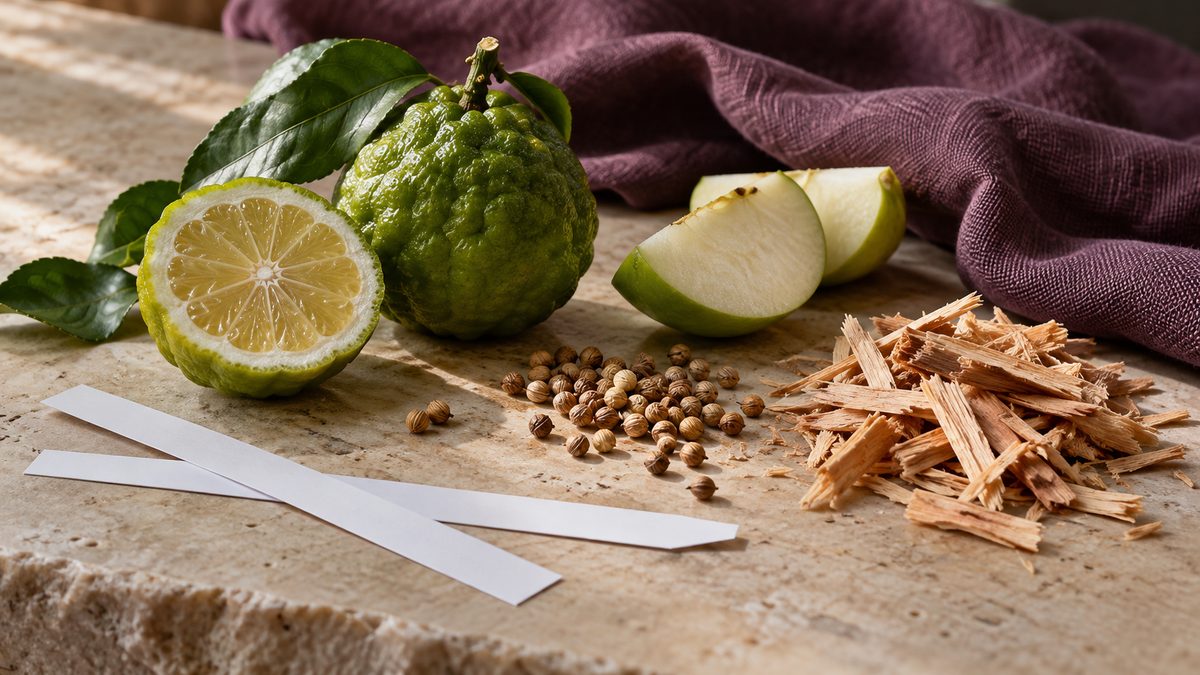
Bond No. 9 lists Lafayette Street with bergamot, coriander, a floral heart, ambroxan, apple, vanilla, dry woods, tonka bean, cedarwood and grey amber. Read that list as a guide to a possible balance of freshness, fruit, floral softness and warm woods. It cannot tell you the exact strength, timing or prominence of each part on your skin.
If your search was for “lafayette street cologne”, the useful next step is a sample of the exact fragrance. A description can help you know what to notice; only wearing it can establish whether you enjoy the balance.
The following descriptions explain familiar uses of these notes in perfumery. They are prompts for smelling, not a claim that every facet will be distinct in Lafayette Street.
| Published note | A useful scent reference | What to ask while sampling |
|---|---|---|
| Bergamot | Bright, citrus-peel freshness | Is the opening crisp or rounded? |
| Coriander | Aromatic spice | Does it give the freshness a dry edge? |
| Floral heart | Petal-like softness | Does the centre feel airy or full? |
| Ambroxan | Diffusive amber-like warmth | Is there a persistent warm impression? |
| Apple | Fresh or sweet fruit | Does the fruit stay noticeable later? |
| Vanilla | Soft sweetness | Does sweetness dominate the woods? |
| Dry woods | A dry woody accord | Does the base feel textured or austere? |
| Tonka bean | Coumarinic, hay-like warmth | Is the warmth powdery or rounded? |
| Cedarwood | Dry, pencil-like wood | Can you distinguish a clearer wood edge? |
| Grey amber | An ambergris-style impression | How does the base feel as a whole? |
Do not treat the table as ten ingredients you must identify to enjoy the fragrance. Materials blend, and a coherent perfume may make their individual boundaries difficult to pick apart.
Bergamot is useful to recognise because its citrus freshness can make an opening feel bright. Coriander offers an aromatic spice reference alongside it. The published list does not specify which part or form of coriander is used, so it would be too precise to assign a particular extraction or raw material.
Apple is another cue, but an apple note does not guarantee a literal cut-fruit smell. It may read as crisp, sweet or integrated into the brighter parts of the composition. Try asking whether the fruit makes the sample feel fresher or sweeter to you.
Leave room for an unexpected answer. If the first impression feels soft rather than sharp, that does not mean you have misunderstood the list. The proportions and supporting materials are not disclosed by note names.
The published description gives a floral heart, without specifying individual flowers. That boundary matters: a reviewer or retailer may use a flower comparison, but it should not be repeated as a confirmed note from this list.
Instead, smell for the effect. Does the centre soften the transition between the bright notes and the warmer base? Does it feel petal-like, airy or simply smoother than the first spray? You can record those impressions without inventing a floral ingredient.
The top, heart and base explanation helps describe development. Those stages overlap rather than switching at fixed times. A bright note can remain noticeable while the woody part is already apparent.
Vanilla and tonka bean provide useful references for sweetness and rounded warmth. Dry woods and cedarwood give a contrasting reference for texture. Listen for the balance rather than assuming the presence of vanilla makes the entire fragrance sugary.
Ambroxan is associated with an amber-like impression and diffusion. Its appearance in the list does not establish a particular projection radius or wear time. Grey amber likewise describes an intended scent character, not proof of a specific natural ingredient.
If the warmer notes seem to merge into one background, that is a valid observation. You do not need to distinguish cedarwood from dry woods to decide whether the drydown suits you. More useful questions are whether the warmth remains pleasant and whether the amount you applied fits your surroundings.
The brand presents Lafayette Street as a men's scent; a few retailers list it as unisex. Those descriptions concern positioning and retail categories. They do not change the published notes or determine who can enjoy wearing the perfume.
Choose by smell and context. Someone who enjoys fruit against dry woods may find the list interesting regardless of the shelf category. Someone who dislikes warm sweetness should still test carefully even if the marketing appears to match their usual choices.
First, assess the opening on paper. Let the wet spray settle, then decide whether the combination invites a skin test. Avoid repeatedly spraying the same strip, which makes comparison harder.
Next, wear a modest application on clean skin, following the product directions. Keep other fragrances away from the test area and take the sample beyond the counter. The sampling guide explains how to keep the comparison clear.
Finally, assess later wear in an ordinary setting. Ask whether you still enjoy the fruit-to-wood balance, whether the sweetness feels comfortable, and whether you want another wear. Record the exact version you tested so a later purchase matches it. Do not turn a promising note list into a performance guarantee.
No. In casual searches, cologne can simply mean a fragrance marketed to men. Check the exact product description and concentration on the item you are considering.
No. The published list says a floral heart without naming individual flowers. Naming a specific flower would go beyond that information.
No. Grey amber is a scent descriptor in this list. It does not tell you the colour of the liquid or establish the presence of natural ambergris.
No. A note list is not an authenticity test. Use the official product information and a seller whose identity and product sourcing you can check.
For general information. Patch test a finished perfume as directed before wider wear. Stop use and see a doctor if irritation develops.
Notes A–Z
Bergamot smells like bright citrus peel with a bitter, green edge and a soft floral undertone.
4 min readNotes A–Z
Ambroxan usually smells dry, woody and ambergris-like, with mineral, warm-skin or faintly salty associations.
4 min readNotes A–Z
Cedarwood in perfume smells dry, woody and often reminiscent of pencil shavings, with resinous, smoky or softly balsamic variations.
4 min readNotes A–Z
Tonka bean smells of hay, almond-like warmth and soft sweetness. Learn how coumarin shapes the note and why it differs from vanilla.
4 min read