Notes A–Z
Vanilla in Perfume: Cured Pods, Cream and Dry Balsamic Wood
Vanilla smells warm, softly sweet and balsamic, with possible creamy, woody, smoky or dried-fruit facets. It can suggest a cured pod rather than frosting.
4 min readNotes A–Z
Tonka bean smells of hay, almond-like warmth and soft sweetness. Learn how coumarin shapes the note and why it differs from vanilla.
By The Bla Blu Bli Fragrance Library editors · Published October 21, 2026 · Updated October 22, 2026 · 4 min read
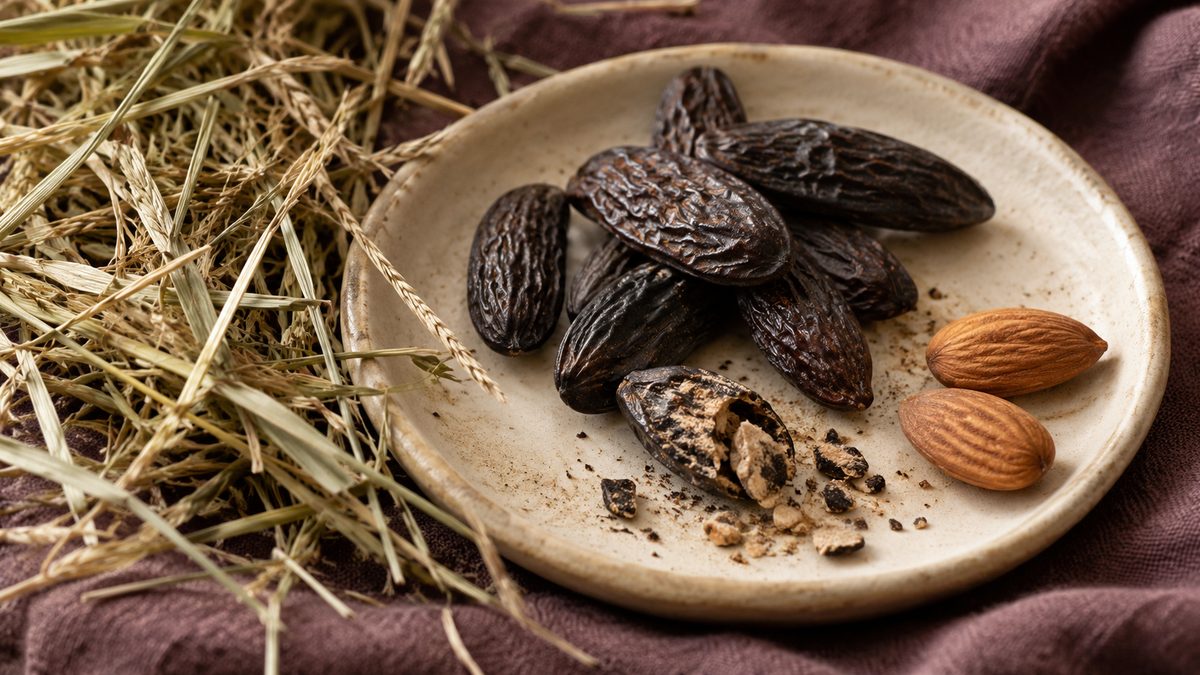
Tonka bean in perfume smells warm and softly sweet, with dry hay, almond-like and sometimes tobacco-like facets. Its characteristic aroma is closely linked to coumarin. Compared with vanilla, tonka often gives a drier, more grassy or toasted warmth, making it useful in both aromatic perfumes and sweet gourmands.
Tonka beans are the seeds of Dipteryx odorata, a tree native to tropical South America. The familiar perfumery material comes from prepared seeds, not flowers or leafy stems. Drying and curing are part of developing the recognisable aromatic character.
Coumarin can form visible crystals on prepared beans. It has a sweet hay-like odour and is a central reference point for understanding tonka. The natural seed's aroma contains more than coumarin alone, but that molecule accounts for much of its familiar direction.
Perfumery can use tonka extracts, including absolutes, as well as manufactured coumarin and other supporting materials. Extraction captures a broader mixture, while an individual molecule lets the perfumer use a selected effect. A finished tonka note may combine both.
There is no reason to assume that a perfume lists every material behind the impression. Tonka on a note pyramid may refer to a natural extract, a coumarin-led accord or a stylistic description. Ask for product information if the exact source matters.
Tonka shares some warm sweetness with vanilla, but it is not simply a substitute name. Vanilla tends to suggest the cured pod, cream or a sweet balsamic quality. Tonka can introduce dried grass, almond-like warmth and a gently toasted character.
| Tonka facet | Sensory reference | What may bring it forward |
|---|---|---|
| Hay-like | Warm dried grass | Lavender and aromatic notes |
| Almond-like | Soft marzipan association | Nutty accords and vanilla |
| Tobacco-like | Dry, warm leaf | Woods and resinous bases |
| Powdered | Gentle cosmetic sweetness | Musks and soft florals |
Almond-like does not prove the presence of nuts. Tobacco-like does not establish tobacco leaf or nicotine. These are sensory comparisons, and the ingredient list or manufacturer is the appropriate source for specific composition questions.
Some tonka perfumes are clearly sweet, while others feel almost savoury in their dry aromatic warmth. If one sample smells like frosting, check for vanilla, caramel or other gourmand support before deciding that tonka always has that effect.
Tonka's coumarin-like warmth has an established role in aromatic fragrance structures. With lavender, it creates a contrast between a brisk herbal-floral opening and a softer, hay-like base. Woods and mossy effects can complete the transition.
This pairing may smell powdery, clean or warmly aromatic depending on the balance. A large sweet base can pull it towards a gourmand; a drier woody arrangement keeps more herbal definition. The same two central notes can therefore suit quite different tastes.
Tonka usually appears in the base, supporting the later stages of a perfume. It may be evident from the beginning when the composition is simple or sweet. Its presence does not automatically determine how long the entire perfume lasts.
In a citrus-led fragrance, tonka can soften a sharp opening as it settles. With spices, it provides warm continuity. With amber, it can add hay-like or almond-like detail to an already balsamic structure.
Tonka can reinforce nutty accords such as pistachio, giving warmth and a familiar almond-like association. Whether that becomes a pastry effect depends on the surrounding milk, vanilla or sugar-like materials.
With coffee or dry woods, tonka can feel more toasted and less confectionery. In a floral perfume, it may round petals without becoming an obvious dessert note. Look for the role it plays rather than assuming every tonka fragrance belongs in the same gourmand category.
If sweetness tires you, compare a tonka-lavender composition with a tonka-vanilla one. The difference can reveal whether you enjoy the hay warmth but dislike the frosting-like support. That is a clearer decision than choosing by intensity alone.
A natural tonka extract offers a wider aromatic profile, while manufactured coumarin supplies a specific, recognisable building block. Perfumers may use either or both. Manufactured origin does not make the hay impression less legitimate.
Natural origin also does not establish better skin tolerance. Coumarin can be relevant to fragrance-allergen labelling, regardless of how a particular formula builds its tonka effect. A diagnosed allergy requires attention to the current finished label.
Avoid using culinary familiarity as a skin-safety argument. The way a substance is handled in food, raw material supply or perfumery can differ. Do not ingest fragrance products or use homemade seed infusions as replacements for ready-to-wear perfume.
For cool daytime wear, an aromatic tonka with lavender or dry woods can feel warm without being especially sugary. A richer tonka-amber or vanilla version may be more comfortable in cool evening air. Heated indoor spaces can make either feel sweeter or more present.
Begin with separate paper strips for an aromatic and a gourmand example. After the spray settles, record hay, almond-like sweetness and any powder effect. Return later to see which aspect remains as the opening changes.
Wear each candidate on a different day with a modest application according to directions. Note whether the base stays interesting or becomes monotonously sweet. Do not add extra sprays merely to recover a fleeting citrus opening above a persistent tonka base.
Use the finished product for skin trials. Stop use if itching, redness or discomfort appears, and seek healthcare advice for ongoing reactions. If you have known fragrance sensitivities, product labelling and professional guidance take priority over a comforting scent description.
A useful final note for your sample record is specific: dry hay with soft almond, or sweet powder over vanilla. That description will help you choose the next perfume more accurately than simply writing that tonka smells cosy.
A guide to the note’s usual role, not a fixed formula or an ingredient list.
Notes overlap as a fragrance develops. Placement varies with the finished composition.
No. An almond-like association does not establish almond ingredients. Ask for product-specific information when a diagnosed allergy is relevant.
No. Fragrance products are not food. Do not ingest perfume or aroma materials.
No. Coumarin and vanillin are different molecules with overlapping warmth but distinct odours.
No. Woods, herbs and other materials can emphasise dry hay or aromatic warmth instead of a cosmetic powder effect.
For general information. Patch test a finished perfume as directed before wider wear. Stop use and see a doctor if irritation develops.
Notes A–Z
Vanilla smells warm, softly sweet and balsamic, with possible creamy, woody, smoky or dried-fruit facets. It can suggest a cured pod rather than frosting.
4 min readNotes A–Z
Lavender smells floral and herbal, often with a cool camphoraceous edge, gentle sweetness and dry aromatic warmth.
4 min readNotes A–Z
Amber in perfume usually smells warm, resinous and softly sweet, with vanilla, balsamic and sometimes leathery facets.
4 min readNotes A–Z
Pistachio in perfume smells creamy, nutty and softly sweet. How the accord is built, why gourmand fans love it, what it pairs with, and how to try it.
3 min read