Concentrations
Parfum, EDP, EDT, EDC and Perfume Oil Compared
Parfum, eau de parfum, eau de toilette and eau de cologne are concentration and style labels, while perfume oil describes a carrier format.
4 min readHow to wear fragrance
Why perfume can smell quieter in cold weather, plus practical adjustments for dry skin, winter clothing and concentration choice without overspraying.
By The Bla Blu Bli Fragrance Library editors · Published October 26, 2026 · Updated October 26, 2026 · 4 min read
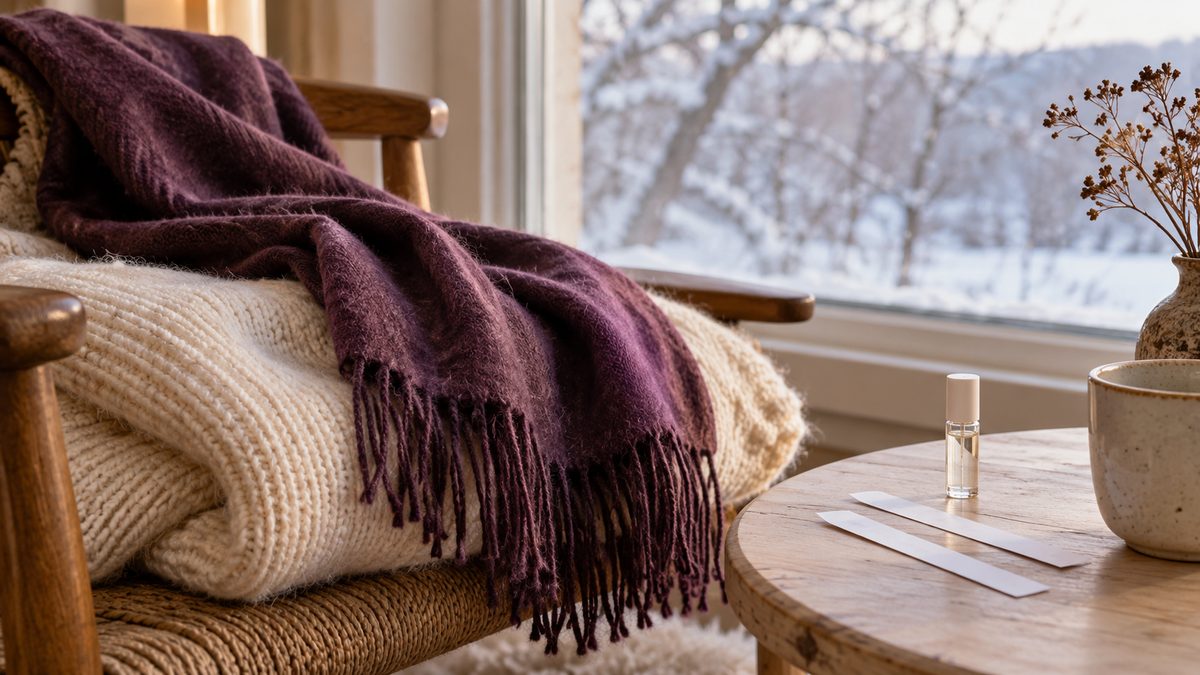
Perfume often smells weaker in cold weather because lower temperatures generally slow evaporation, so less fragrance reaches the surrounding air at once. That quieter impression does not necessarily mean the perfume has vanished from your skin. Adjust your application and test it indoors before deciding you need more or a different concentration.
Winter adds several variables at the same time: cool skin, covered application points, wind and heated rooms. Understanding which one affects your routine is more useful than replacing every fresh perfume with a dense amber.
For you to smell perfume, volatile fragrance materials must reach your nose through the air. Temperature affects that movement from liquid or skin into the surrounding air. In cooler conditions, the same application may feel quieter and less expansive.
The balance can seem different too. If a bright opening is harder to notice, you may pay more attention to the woody or musky parts. This is not a reliable rule that cold removes all top notes or makes every base stronger. Each formula contains a different mixture of materials.
Wind and distance further complicate the outdoor impression. Your wrist may carry scent even when you cannot detect a trail around your coat. Distinguish projection from persistence before calling a fragrance weak: one describes how far it reaches, while the other concerns how long an impression remains.
If your skin feels drier during colder months, begin with its comfort rather than more perfume. Use an unscented moisturiser that suits you, allow it to absorb, then apply fragrance as directed. This keeps the trial simpler than combining scented body products with the perfume.
Moisturiser is not a guaranteed way to add a set number of hours. It changes the surface you are applying to, and results vary. Compare the same perfume on separate days before deciding that the step improves its wear for you.
Avoid perfume on cracked, inflamed or freshly irritated skin. If irritation occurs, stop use and seek clinical advice for a persistent reaction. These are general wearing suggestions; people with diagnosed skin conditions should follow their clinician's advice about fragranced products.
A wrist beneath a cuff has different airflow from an exposed wrist. A scarf can sit near scented skin and retain an odour of its own. When you remove layers indoors, you may suddenly notice fragrance that seemed absent outside.
Clothing can hold scent differently from skin, sometimes well beyond the original wear. That is not always useful. A coat carrying several applications may blur your next sample or remain scented when you want a different perfume.
Do not assume fabric application is harmless. Perfume can mark materials or affect finishes. Follow both the product directions and the garment care label, and avoid experimenting on leather, delicate textiles or valued outerwear. If clothing application is permitted, test an inconspicuous area of a suitable garment first.
| What you notice | A possible explanation | A useful next check |
|---|---|---|
| Quiet outdoors, noticeable indoors | Temperature and airflow changed | Keep the same application for another trial |
| Scent returns when a coat comes off | Layers covered the application | Assess after removing outerwear |
| Little scent to you, clear scent to someone else | Familiarity may reduce your awareness | Pause sniffing and avoid an automatic top-up |
| Perfume seems different with a scarf | Old fragrance or fabric odour is mixing in | Repeat with a clean, unscented layer |
| Weak impression throughout the day | Formula, application or personal perception may differ | Test a sample under a repeatable routine |
No single check proves the cause, but each narrows the next step. Our advice on making perfume last longer covers further adjustments without assuming that a large spray count is the answer.
An eau de parfum or parfum can be worth sampling if you want a fuller settled impression. It is not automatically louder than every eau de toilette. Formulas can change between versions, so concentration may bring a different smell as well as a different balance of materials.
Read the guide to perfume concentrations before treating the label as a performance ranking. Ask what you want to change: more projection during an outdoor walk, a longer base indoors, or simply a rounder texture. Those are different goals.
Try a sample of the alternative version during an ordinary day. Check the opening, the settled scent and its behaviour after you enter a heated building. A version that seems satisfying outdoors may be tiring beside your desk. Changing concentration is useful only if the resulting fragrance fits the whole day.
Start with a clean baseline: the same perfume, a normal application and clothing without old fragrance. Record the application area and the main settings you enter. Next time, change one thing, such as using an unscented moisturiser beforehand or choosing another permitted application area.
Avoid changing dose, location, body products and concentration together. You may like the result but have no idea which step helped. The perfume sampling guide offers a practical way to compare impressions over separate wears.
Let yourself warm up naturally before judging the indoor result. Do not heat your bottle or bring sprayed skin close to a heat source. Store the fragrance away from heat and direct light, following its instructions.
The most useful winter adjustment may be patience. If your day includes a cold journey and hours in a heated office, apply for the office and accept a quieter outdoor scent. Reassess before refreshing, especially if a companion can still detect it.
You can keep wearing scents you enjoy across seasons. Our summer and winter comparison helps frame seasonal preferences, while perfume for darker evenings considers close indoor occasions. Choose a different perfume when its character suits you better, rather than assuming that cold weather requires the strongest bottle available.
No. Keep it away from radiators, hot water and direct heat. Warm up naturally yourself, then use the fragrance according to its directions.
A cold bottle alone does not establish damage. Let it return naturally to ordinary room conditions, check for leakage or damage and consult the supplier if its appearance or smell concerns you.
Yes. Choose it because you enjoy its character. If you want a longer settled impression, compare citrus fragrances with different bases rather than excluding the family.
Rubbing is not a dependable performance adjustment. Let the application dry as directed and assess it after you have warmed up naturally indoors.
No. An oil carrier does not guarantee a wider scent cloud. Formula, dose and application matter, so compare the specific product on skin rather than relying on the carrier.
For general information. Patch test a finished perfume as directed before wider wear. Stop use and see a doctor if irritation develops.
Concentrations
Parfum, eau de parfum, eau de toilette and eau de cologne are concentration and style labels, while perfume oil describes a carrier format.
4 min readHow to wear fragrance
To make perfume last longer, choose a formula whose settled scent you enjoy, apply it as directed to clean dry skin, and store the bottle away from heat and light.
4 min readScent through the seasons
Summer fragrance choices often favor bright citrus, airy florals and dry woods, while winter choices may lean toward warm amber, vanilla and richer woody textures.
4 min readHow to wear fragrance
Test perfume by limiting competing scents, assessing an opening on paper, and giving a suitable finished sample a separate skin-wearing day.
4 min read