Notes A–Z
Amber in Perfume: Resin, Vanilla and the Meaning of Warmth
Amber in perfume usually smells warm, resinous and softly sweet, with vanilla, balsamic and sometimes leathery facets.
4 min readHow to wear fragrance
Choose richer perfume for darker evenings, from dry woods to soft resins, and adjust application for dinner tables, warm rooms and close company.
By The Bla Blu Bli Fragrance Library editors · Published October 26, 2026 · Updated October 26, 2026 · 4 min read
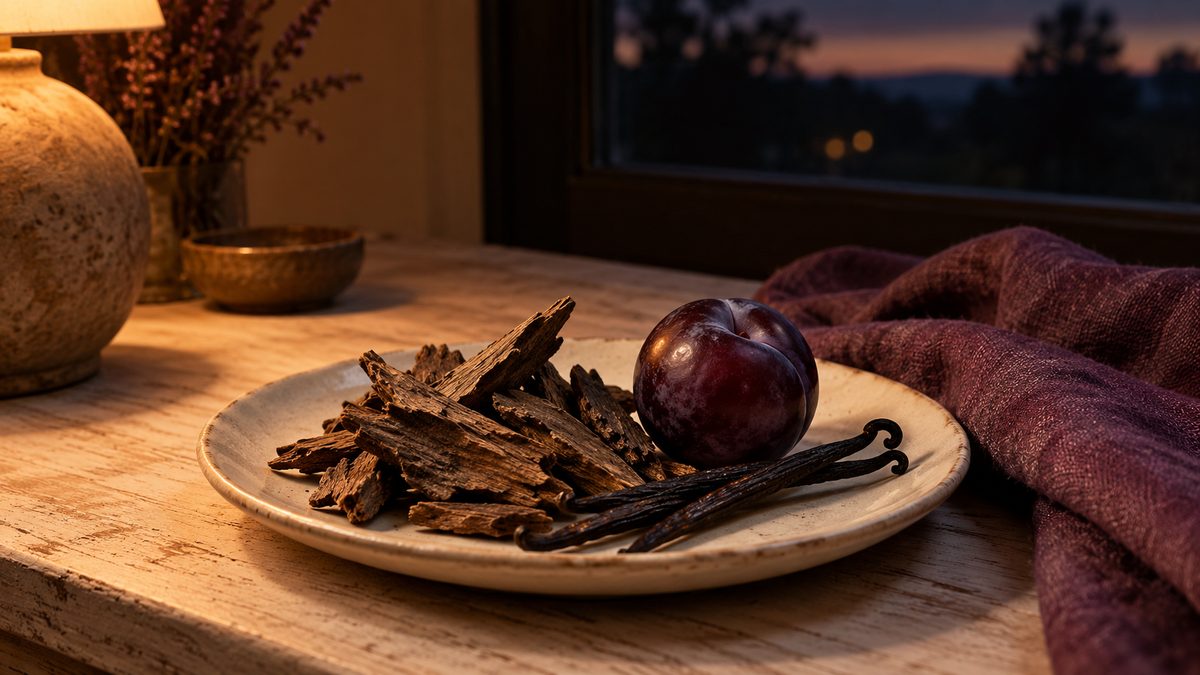
For darker evenings, choose a perfume with a settled base you enjoy at close range, then apply modestly for the indoor setting. Soft woods, rounded resins and dry vanilla can provide richness without a large scent trail. The room and the people sharing it matter more than how dark it is outside.
UK clocks went back on 25 October 2026; US clocks go back on 1 November 2026. Those dates frame the seasonal change, but they do not create a new rule for fragrance. If earlier darkness makes you reach for something warmer, start with samples rather than assuming every evening perfume needs to be heavier.
Rich can mean creamy, smoky, resinous, fruity or sweet. Separating those qualities makes choosing easier. Someone who enjoys smooth sandalwood may find a sugary vanilla tiring, even though both are described as warm.
An amber accord can give a rounded, balsamic impression. A plum note can suggest dark fruit, sometimes with a tart edge that interrupts sweetness. Incense brings aromatic resin and potentially a drier, smoky character. These descriptions suggest directions to explore, not fixed levels of strength.
Think about the last part of a wearing day. If you enjoy the opening but dislike the base on your jumper later, that fragrance is a poor candidate for a long evening. The quieter settled stage may be what you and the person beside you smell most often.
A cold walk can make a perfume seem restrained. A heated dining room, crowded hallway or snug theatre seat may give a different impression. Plan for the place where you will spend time, rather than compensating for the brief trip there.
| Evening plan | A useful direction to sample | Application consideration |
|---|---|---|
| Dinner at a small table | Dry woods or softly rounded resin | Keep fragrance away from hands that approach food |
| A quiet evening at home | Creamy woods or a restrained vanilla | Check whether cushions and knitwear already carry scent |
| A standing gathering | Spiced woods or dark fruit with a dry base | Assess the settled perfume before arriving |
| A closely seated performance | A familiar, low-projecting fragrance | Follow venue guidance and consider going without |
| An outdoor-to-indoor visit | A balanced woody amber | Wait until you are warm before judging strength |
No note guarantees subtle wear. A woody perfume can project strongly, while a sweet one can remain close. Our explanation of sillage and projection separates the trail left behind from the scent noticed around you while still.
Use a sample at home before wearing it to a gathering. Choose a day when you can smell it after the opening and again in the room where you usually relax. Avoid testing several rich perfumes together: their bases can merge and obscure which one you prefer.
Notice more than strength. Does the fruit stay tart or become syrupy? Does the smoky edge soften, or remain intrusive? Is the creamy part comfortable near your collar? These observations are more useful than deciding that a fragrance smells expensive or suitably seasonal.
If possible, repeat the trial with your usual evening clothes. A scarf carrying yesterday's perfume can change the experience. Start with unscented clothing so you are evaluating the new sample, then check how much scent remains before wearing that garment again.
Follow the product directions and begin with a modest application. There is no universal spray count: atomisers, formulas and personal sensitivity differ. For close company, choose an allowed application area away from your face and hands rather than surrounding your neckline with fragrance.
Let the application dry before dressing. Avoid adding perfume to several body areas simply because you cannot smell the first application outdoors. Clothing can cover an application point, and your awareness can change with continued exposure.
Once you reach the warm setting, give yourself time to settle. If you need feedback, ask a willing companion at normal conversational distance. Repeatedly sniffing the application point only tells you what is present at that point, not how much fragrance reaches other people.
Treat warmth as a reason to reassess. Removing a coat can expose scented skin, and a warm room can make the perfume more apparent. The article on cold-weather perfume changes explains why the outdoor impression can mislead you.
Avoid refreshing at the table, in a shared car or in a cloakroom full of other people. If a later application is needed and permitted, step into a suitable private area and keep it small. Someone else may experience fragrance as distracting even when you enjoy it.
If the scent feels excessive before leaving home, wash the application area gently with soap and water and change scented layers if needed. Do not add another fragrance to disguise it. That creates more odour rather than reliably reducing the original.
You do not need to abandon citrus, green notes or airy florals when the clocks change. A familiar fragrance worn lightly can feel more appropriate than an unfamiliar resin chosen only because the evening is dark. You can also explore a richer facet within a family you already like, such as a rose with dry woods or citrus over a soft base.
Keep storage separate from the evening ritual. A bottle may look attractive on a warm mantelpiece, but a cool, shaded place away from heat is a better routine. Close it after use and follow its storage instructions.
This is general wearing advice. If perfume causes irritation, stop using it; seek clinical advice for a persistent reaction. For a scent-free venue or a guest with fragrance sensitivity, leaving perfume off may be the most comfortable choice. A successful evening fragrance is one you enjoy wearing within the practical limits of the occasion.
Yes. An evening setting does not require a sweet or smoky fragrance. A familiar fresh scent can suit you better than a rich sample you have not worn before.
Only if you want to. Check what remains of the daytime fragrance first. Adding a different perfume over a persistent base can produce a mixture you did not intend.
An amber note usually describes a warm accord assembled from fragrance materials. It does not mean fossilised amber has been dissolved in the bottle.
You can, but competing smells may make both harder to assess. Choose an unscented setting when testing a new perfume, and consider guests who prefer little or no fragrance.
No. Liquid colour does not reliably indicate sweetness, projection or persistence. Judge the finished fragrance through wear rather than its appearance.
For general information. Patch test a finished perfume as directed before wider wear. Stop use and see a doctor if irritation develops.
Notes A–Z
Amber in perfume usually smells warm, resinous and softly sweet, with vanilla, balsamic and sometimes leathery facets.
4 min readNotes A–Z
Explore plum in perfume: tart skin, juicy flesh and dried-fruit accords, plus rose, oud and spice pairings and advice for autumn wear.
5 min readNotes A–Z
Incense in perfume can smell resinous, aromatic and smoky, while frankincense itself often adds bright citrus-like, peppery and pine-like facets.
4 min readHow to wear fragrance
Projection describes how far a perfume seems to extend around the wearer, while sillage describes the trail it leaves as the wearer moves.
4 min read