Notes A–Z
Rose in Perfume: Fresh Petals, Spiced Honey and Different Extracts
Rose can smell green, citrusy, honeyed or spicy. Explore distilled oil, absolute, key rose molecules and how to find your preferred floral style.
4 min readNotes A–Z
Explore plum in perfume: tart skin, juicy flesh and dried-fruit accords, plus rose, oud and spice pairings and advice for autumn wear.
By The Bla Blu Bli Fragrance Library editors · Published October 23, 2026 · Updated October 23, 2026 · 5 min read
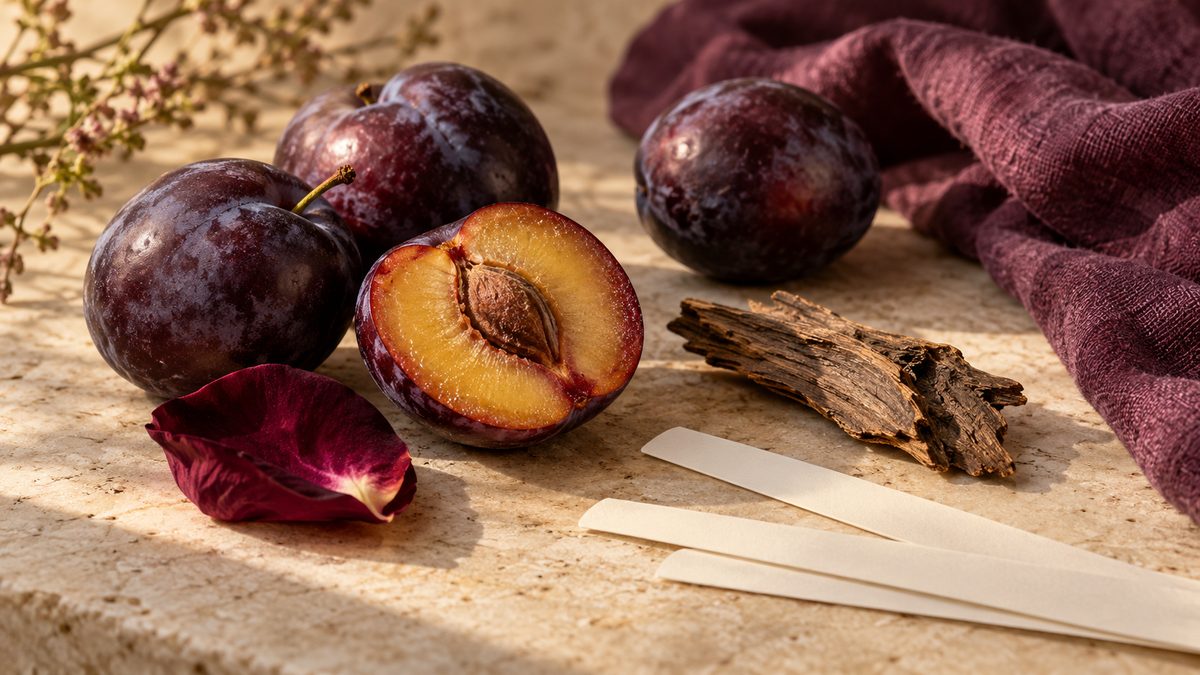
Plum in perfume is usually an accord that suggests the fruit's juicy flesh, tart skin or darker dried-fruit character. It can smell fresh and mouthwatering, rich like jam, or almost liqueur-like, depending on the materials around it. Rose, oud and spices are useful partners because each brings out a different side of that fruit.
For autumn wear, the most useful question is how the plum settles. A bright first impression can turn syrupy in the base, while a darker opening can become surprisingly dry and woody.
Plum is not usually represented in perfume by a conventional steam-distilled fruit essential oil. Perfumers build a recognisable impression with a combination of aroma materials. That combination is an accord: ingredients working together to suggest something that no single ingredient fully represents.
The result need not be an exact copy of a fresh fruit. A perfumer might emphasise the skin's tartness, the softness of ripe flesh or the richness of a cooked plum. Floral, woody and sweet materials can support that idea without becoming separate obvious notes.
A note list therefore describes the intended smell rather than a shopping list of raw fruit ingredients. Our guide to natural and synthetic materials explains why a convincing fruit impression does not have to come directly from the named fruit.
The word plum covers several experiences. Naming the one you want makes sampling easier than asking for a fruity perfume and hoping it will be restrained.
| Plum style | Main impression | A useful point to inspect |
|---|---|---|
| Skin-led | Tart, dark, slightly sharp | Does the freshness survive the opening? |
| Juicy flesh | Rounded, succulent fruit | Is there enough contrast to avoid syrup? |
| Jam-like | Dense, cooked, sweet fruit | Do you enjoy that richness after prolonged wear? |
| Dried fruit | Concentrated, dark, sometimes leathery | Does the base stay fruity or become mostly woody? |
| Liqueur-like | Rich fruit with a boozy suggestion | Is the effect comfortable for daytime? |
These styles overlap. A fragrance may begin with juicy fruit and move towards dried plum over woods. A sour edge can also be deliberate, creating the impression of skin rather than indicating that the perfume has gone wrong.
If you dislike a sample, identify the exact problem. Too much sugar-like sweetness calls for a different balance from a sharp fruit note that feels too acidic to your nose.
Rose can connect naturally with plum because rose perfumes themselves can have fruity facets. Together they may suggest ripe fruit among petals, with the floral heart preventing the composition from feeling like a simple fruit flavour.
The balance matters. A dewy rose can make plum feel brighter, while a rich rose over warm woods can deepen its jam-like side. Powdery or cosmetic rose interpretations take the pairing somewhere else again, away from a bowl of fruit and towards a dressed, floral scent.
When testing, ask yourself whether you want to smell the rose separately. If your aim is a fruit-led perfume, a dominant floral heart may disappoint even when the opening smells convincingly of plum. Conversely, a small plum accent may be enough to enliven a favourite rose style.
With oud, plum can feel darker, less transparent and more textured. The fruit gives a rounded contrast to woody, leathery or earthy effects. Depending on the formula, that contrast may suggest polished wood beside ripe fruit or something closer to dried fruit and leather.
Oud on a note list does not guarantee a particular natural material or a fixed degree of intensity. Some interpretations are smooth and woody; others have more challenging earthy or animalic facets. Decide which side you enjoy rather than treating oud as a universal sign of richness.
Dry cedar-like notes can offer a less dense route to contrast. Patchouli can add earthiness, while a soft musky base may keep the fruit gentler. These are different ways of giving plum a frame, and none automatically cancels sweetness.
Cinnamon and clove-like warmth can push plum towards cooked fruit, especially when vanilla is prominent. If you like the idea of spiced plum compote, that direction may appeal. If you want fresh skin and flesh, the same pairing may feel too dessert-like.
Cardamom can provide a cooler aromatic contrast. Peppery notes may add sparkle or dryness without immediately suggesting baking. Read spicy perfumes explained for the difference between warming spice impressions and fresher aromatic ones.
Do not assume that every spice makes a perfume hotter, stronger or sweeter. Test the finished balance. A faint pepper accent over juicy plum can feel airier than an unspiced plum accord resting on a thick vanilla base.
Plum's association with late-season fruit makes it a natural fit for autumn perfume notes. Its darker forms also sit comfortably beside resin, wood and spice. Those associations can guide your shortlist, but they cannot predict how much perfume a room will tolerate.
Try a candidate on an ordinary day that includes both outdoor time and a warm indoor setting. Apply according to its instructions and keep other scented products simple enough that you can identify the perfume. Check whether the plum remains appealing after the initial freshness recedes.
Write down three things: how sweet it becomes, whether you still recognise fruit, and whether the base suits your daily surroundings. Avoid judging performance solely by your ability to smell it continuously; familiarity can reduce your awareness.
For a shared office or crowded journey, begin with restrained application. A dense fruit-and-wood base can be noticeable even when it feels soft to the wearer. Let the sample settle before deciding to add more.
Use contrasting samples rather than several near-identical dark fruity scents. Compare a tart floral plum with a warmer woody one, then wear the more appealing option alone. The perfume testing guide offers a method for following each stage without mixing samples together.
If both become too sweet, look for descriptions that emphasise skin, dry woods or a restrained floral setting, then verify that impression yourself. If both feel too austere, a softer vanilla or amber background may be a better fit. Your best clue is the part you enjoy after the fruit's first burst has passed.
A guide to the note’s usual role, not a fixed formula or an ingredient list.
Notes overlap as a fragrance develops. Placement varies with the finished composition.
A plum note usually refers to an accord built from aroma materials. Fruit juice is not a substitute for a finished fragrance and would not reproduce its structure.
Yes. Boozy is an odour description. Fruity, woody and sweet materials can suggest a liqueur-like effect without establishing that a drink was used.
No. Liquid colour does not reveal the strength or source of a plum accord. Judge a sample by smell and consult product information for ingredients.
They are related fruit references, but the words often suggest different styles. Plum may imply juicy flesh and tart skin; prune usually points towards a denser dried-fruit impression.
For general information. Patch test a finished perfume as directed before wider wear. Stop use and see a doctor if irritation develops.
Notes A–Z
Rose can smell green, citrusy, honeyed or spicy. Explore distilled oil, absolute, key rose molecules and how to find your preferred floral style.
4 min readNotes A–Z
Oud smells resinous and woody, with possible smoky, leathery, medicinal, sweet or animalic facets.
4 min readScent through the seasons
Autumn suits warm spices, soft woods, amber, vanilla and orchard fruits. The notes that work best in cooler weather, why, and how to wear them.
3 min readNotes A–Z
Chestnut in perfume suggests roasted nuts, soft starch and warm woods. Compare almond and hazelnut, then choose a gourmand for winter wear.
5 min read