Fragrance families
Gourmand Perfumes: Edible Notes Without Too Much Sweetness
What makes a perfume gourmand, how edible accords are built, and how to choose vanilla, nutty or roasted scents without sweetness overload.
4 min readNotes A–Z
Chestnut in perfume suggests roasted nuts, soft starch and warm woods. Compare almond and hazelnut, then choose a gourmand for winter wear.
By The Bla Blu Bli Fragrance Library editors · Published October 23, 2026 · Updated October 23, 2026 · 5 min read
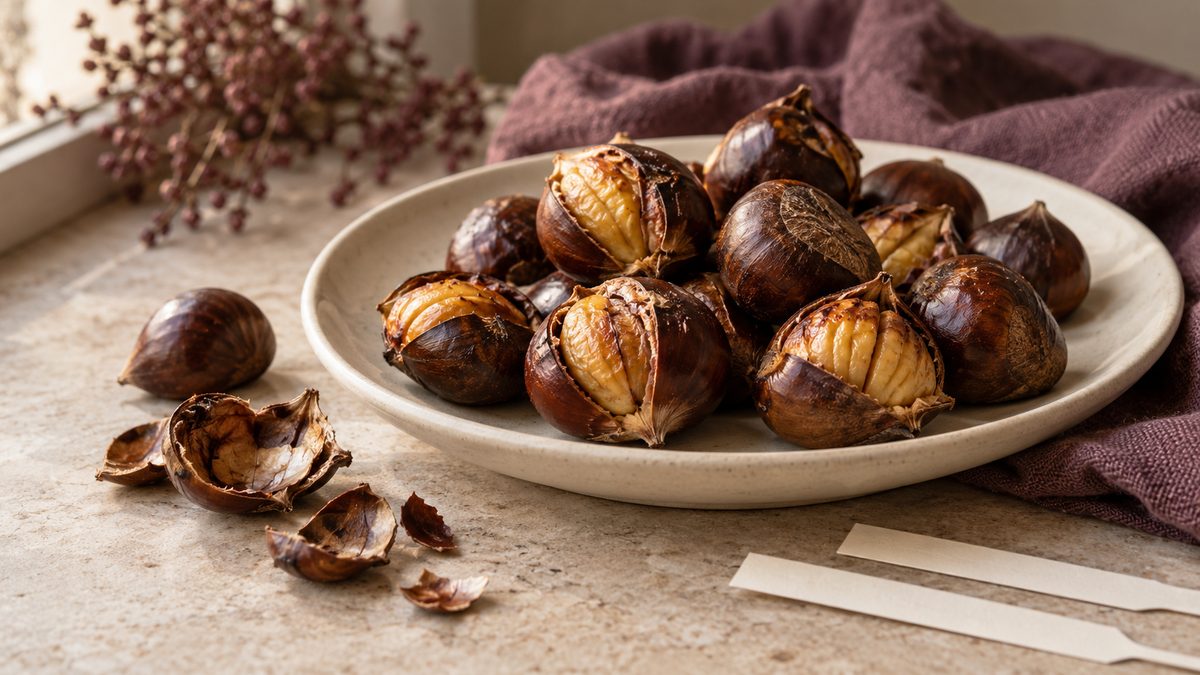
Chestnut in perfume usually smells like a roasted, softly nutty accord, with floury warmth, gentle sweetness and sometimes a toasted or smoky edge. It tends to suggest a cooked chestnut more than a sharp, crunchy nut. The finished fragrance can feel dry and woody or creamy and dessert-like, depending on its supporting notes.
That range makes chestnut useful for winter wear, but it also makes the name alone a poor buying shortcut. A perfume built around a paper bag of roasted chestnuts can be quite different from one that suggests sweet chestnut cream.
The chestnut note in perfume is generally an accord, a combination of aroma materials designed to suggest the food. It is not usually a conventional chestnut essential oil with a fixed smell that appears unchanged in every formula.
Perfumers can assemble a nutty impression, then adjust its toasted surface, soft centre and sweetness. Woods may suggest the dry shell or the setting around the food. Creamy and vanilla-like materials can draw attention to the cooked flesh instead.
A note list rarely tells you which approach dominates. Words such as roasted, glazed, creamy and smoky are useful clues, but the sample is the evidence. Nor does a realistic food impression establish that the perfume contains the food itself.
The broader gourmand perfume guide explains how edible associations can be created without a formula resembling a recipe. Chestnut can sit near that family while remaining much less sugary than a pastry accord.
All three can be called nutty, yet they suggest different textures and familiar foods. These are common perfume interpretations, not rules about what every raw material must smell like.
| Note or accord | Familiar association | What can change the effect |
|---|---|---|
| Chestnut | Soft roasted flesh, warm flour, toasted shell | Smoke makes it drier; cream makes it rounder |
| Almond | Marzipan, bitter almond, cherry-like nuances | Powder and vanilla can make it confectionery-like |
| Hazelnut | Roasted kernels, praline, rich nuttiness | Cocoa and caramel-like notes can deepen the dessert impression |
Chestnut often feels softer and starchier than almond. Almond's familiar marzipan direction can have a distinctive cherry-like edge, while chestnut may be more about warmth and texture than a sharply recognisable flavour.
Hazelnut can suggest a richer, more oily or praline-like food aroma. Chestnut may feel comparatively floury, although adding enough cream and sweetness can make it equally indulgent. Do not choose purely on the assumption that chestnut will always be the least sweet option.
Tonka bean can add almond-like, hay-like and powdery facets around a chestnut accord. If you notice marzipan, the impression may come from the supporting structure rather than from a separate almond theme.
A roasted chestnut perfume can take its cue from the heat around the food. A smoky accent creates the suggestion of a hot pan, charred shell or distant fire. In a restrained amount it can make sweetness feel more balanced; in a dominant amount it can turn the perfume into a smoke experience with little recognisable nut.
A creamy interpretation brings the soft interior forward. Vanilla, milky effects and rounded woods can suggest chestnut purée or a warm dessert. If you enjoy edible scents but dislike caramel, this is worth trying, though the absence of caramel does not guarantee low sweetness.
A woody version treats chestnut as a texture within the base. Sandalwood can support a smooth, creamy effect, while drier woods can keep it closer to shell and roast. This route may appeal if you want warmth that does not constantly remind you of food.
Ask which part should stay with you: the toast, the cream or the wood. That question is more useful than asking for a stronger chestnut, since strength could simply mean more of the facet you dislike.
Start on paper so you can reject an obvious dislike without wearing it all day. Notice whether the first impression is nutty, smoky, sweet or simply woody. Revisit the strip once the opening has softened; an attractive roasted accent may be brief.
For a closer comparison, follow this sequence:
If the perfume becomes burnt or acrid to your nose, do not assume more wear time will make it suitable. If it loses the chestnut entirely and leaves vanilla, consider whether you would choose that vanilla base on its own. The named note should help you find a fragrance you enjoy, rather than excuse a drydown you do not.
Chestnut fits the vocabulary of winter perfume notes because roast, wood and soft sweetness evoke familiar cold-weather settings. That association can make a fragrance appealing for walks, quiet evenings or seasonal gatherings.
Outdoor cold does not describe the whole wearing day. Heated transport, offices and crowded rooms can change your experience of a rich gourmand. Begin with modest application and check it indoors before deciding it needs more projection.
Scarves and coats can retain fragrance and complicate the next sample you try. Avoid spraying clothing unless product directions and fabric care permit it, and keep yesterday's strongly scented scarf away from a comparison trial. Otherwise a smoky residue can make a new chestnut sample seem darker than it is.
A convincing edible smell is still a cosmetic fragrance. Do not taste it, add cooking ingredients or apply raw aromatic materials to reproduce the effect. If a note name raises allergy questions, use the specific product's information and ask the maker rather than inferring ingredients from the scent description.
For your own selection, focus on the part that remains after the novelty of roasted nuts wears off. A dry chestnut can work as a quiet woody companion; a creamy one can provide a fuller gourmand experience. Both are valid interpretations, and a full wear trial is the clearest way to choose between them.
A guide to the note’s usual role, not a fixed formula or an ingredient list.
Notes overlap as a fragrance develops. Placement varies with the finished composition.
The note name alone cannot establish its ingredients or suitability for someone with a nut allergy. Ask the maker about the specific finished product and seek clinical advice where needed.
Yes. Dry roast, wood and restrained sweetness can suggest a warm food aroma without turning into a dessert. The surrounding accord determines how savoury it feels.
Edible chestnuts and horse chestnuts are different plants. A perfume's culinary chestnut reference does not make raw plant material suitable for eating or applying to skin.
An accord name does not predict the liquid's appearance. Colour and clarity depend on the formulation, so neither is a dependable test for the presence of chestnut materials.
For general information. Patch test a finished perfume as directed before wider wear. Stop use and see a doctor if irritation develops.
Fragrance families
What makes a perfume gourmand, how edible accords are built, and how to choose vanilla, nutty or roasted scents without sweetness overload.
4 min readNotes A–Z
Vanilla smells warm, softly sweet and balsamic, with possible creamy, woody, smoky or dried-fruit facets. It can suggest a cured pod rather than frosting.
4 min readScent through the seasons
Choose winter perfume notes for cold air and heated rooms, from resins and woods to vanilla, with practical advice on testing and application.
4 min readNotes A–Z
Tonka bean smells of hay, almond-like warmth and soft sweetness. Learn how coumarin shapes the note and why it differs from vanilla.
4 min read