Notes A–Z
Cedarwood in Perfume: Dry Timber, Pencil Shavings and Soft Woods
Cedarwood in perfume smells dry, woody and often reminiscent of pencil shavings, with resinous, smoky or softly balsamic variations.
4 min readNotes A–Z
Sandalwood ranges from milky softness to dry warm timber. Learn about Santalum oils, santalols, manufactured alternatives and practical comparisons.
By The Bla Blu Bli Fragrance Library editors · Published October 21, 2026 · Updated October 22, 2026 · 4 min read
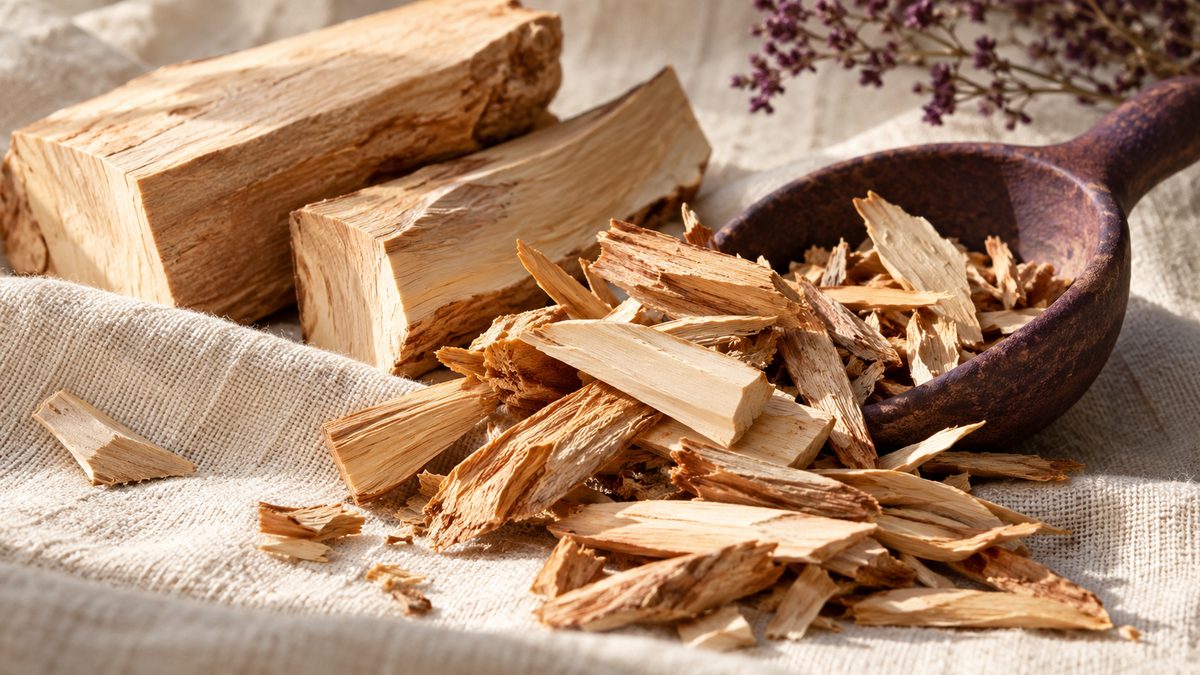
Sandalwood in perfume smells smooth, warm and woody, often with creamy, milky or softly balsamic facets. That creaminess is a texture, not a promise of sweetness. Some sandalwood perfumes feel dry and restrained, while others use vanilla, musks or sweet notes to create a much richer effect.
Natural sandalwood oils come from Santalum trees, with Santalum album and Santalum spicatum among the important perfumery sources. Santalum album has a long association with India and is also cultivated elsewhere. Australian sandalwood materials include sources with their own botanical and aromatic characteristics.
The oil is obtained from aromatic wood, particularly heartwood and roots, through distillation. Leaves and fresh outer wood are not interchangeable sources of the familiar perfumery material. Species, maturity of the wood, growing conditions and processing influence the result.
Alpha-santalol and beta-santalol are important constituents associated with characteristic sandalwood odour, especially in Santalum album oil. They help explain its warm, soft woody character. The natural oil remains a mixture rather than a bottle of one molecule.
Different species do not smell identical, and a regional label alone cannot settle quality. Some materials may feel drier, more aromatic or less rounded than others. Specific sourcing and botanical information are more useful than a broad claim that a wood is exotic.
Sandalwood is often chosen for its ability to feel smooth without becoming heavy. Yet the note can also seem oily, dusty or strongly woody depending on the material and surrounding accord.
| Sandalwood direction | What you might perceive | What to check in the base |
|---|---|---|
| Creamy | Smooth, rounded, almost milky | Whether vanilla adds sweetness |
| Dry | Warm timber, muted aromatic grain | Whether it becomes scratchy |
| Balsamic | Soft resin-like warmth | Whether the finish feels dense |
| Powdered | Dusty, cosmetic softness | The role of iris and musks |
Creamy does not mean a dairy ingredient, and milky does not establish lactose or animal origin. Those are sensory words. If you need ingredient source information, ask about the product rather than translating texture into chemistry.
A cedarwood comparison can sharpen your description. Cedar often draws a drier, clearer grain; sandalwood often rounds the surface. A blend may combine both, leaving enough dry definition to prevent a creamy perfume from becoming blurred.
Sandalwood generally belongs to the base. Its woody warmth can remain as the brighter opening recedes, and in a simple composition it may be present immediately. A base note can support the fragrance from the start.
With iris, sandalwood can emphasise buttery, powdered softness. The result may feel cosmetic or quietly woody depending on sweetness. With jasmine or tuberose, it can round lush petals and carry their warmth into the later stages.
Musk can make sandalwood feel softer and more skin-like. Vanilla may turn it towards a gourmand, while dry spices provide detail without necessarily adding sugar. Citrus above sandalwood gives an opening-to-base contrast rather than making the entire perfume a citrus scent.
If a sandalwood perfume feels too sweet, compare a drier woody version before rejecting the note. The unwanted sugar effect may be supplied by its companions. Likewise, if a dry version feels harsh, a floral or musky balance may suit you better.
Perfumers use manufactured sandalwood-like materials for their particular odours, consistency and behaviour in a formula. They may supply smoothness, diffusion or a more pronounced woody effect than a natural oil would provide on its own.
Some perfumes combine these materials with natural sandalwood; others create the entire impression through a constructed accord. Neither approach can be identified reliably from a note list. Natural and manufactured sources are not a simple division between creamy and sharp.
A synthetic material can be very powerful, so a transparent-looking composition may still project. Conversely, natural oil does not automatically create a dense or heavy perfume. The finished formulation determines the balance you experience.
If origin matters for environmental or personal reasons, seek current, product-specific sourcing information. Sandalwood supply involves questions of species and harvesting practices. A beautiful scent or a natural claim cannot establish responsible production on its own.
Begin with two samples: one described through dry woods, another through creamy sandalwood. On separate strips, compare the grain and sweetness after the spray settles. Write down whether the smoothness feels comforting or overly oily.
Return later. Sandalwood's real contribution may be clearer when bright citrus or spices have faded. A sample that opens sharply may become very soft, while an appealing creamy opening may reveal a sweeter base than expected.
Wear the preferred fragrance alone on a separate day. Notice what you catch during movement and in a warm room, and avoid repeated close sniffing. The guide to sillage and projection helps distinguish a smooth texture from a small scent radius.
Start modestly in shared spaces. Sandalwood materials can be noticeable despite a gentle first impression, especially when supported by other persistent woods. Decide on application from experience with the finished product rather than its calming description.
A dry citrus-sandalwood can suit warmer daytime wear, while a sweeter resinous version may feel more comfortable in cool air. Heated indoor settings can change that judgement. Your preference for the base matters more than a seasonal label.
Softness is not a safety category. Natural oils and manufactured sandalwood accords can both be unsuitable for an individual with a relevant sensitivity. Use the current ingredient label and any advice connected to a diagnosed allergy.
Avoid applying raw sandalwood oil as though it were ready-to-wear perfume. Use a product intended for skin and follow its directions. Stop if you develop redness, itching or discomfort, and consult a healthcare professional for persistent reactions.
Choose sandalwood for the particular balance of wood, creaminess and sweetness you enjoy. A successful trial should leave you able to describe that balance clearly, rather than relying on the broad promise of a smooth woody scent.
A guide to the note’s usual role, not a fixed formula or an ingredient list.
Notes overlap as a fragrance develops. Placement varies with the finished composition.
Not necessarily. Creamy describes an aromatic texture. Ingredient and animal-origin questions need product-specific information.
No. Common names can cover different plants. Botanical identity matters when discussing the source and properties of an oil.
Yes. The perfume may emphasise woody grain and aromatic warmth while keeping sweet or milky effects restrained.
No. A note description is not supply-chain documentation. Seek specific sourcing information from the manufacturer.
For general information. Patch test a finished perfume as directed before wider wear. Stop use and see a doctor if irritation develops.
Notes A–Z
Cedarwood in perfume smells dry, woody and often reminiscent of pencil shavings, with resinous, smoky or softly balsamic variations.
4 min readNotes A–Z
Iris perfume often comes from aged rhizomes or a built accord. Explore orris, irones, cosmetic powder effects and dry versus creamy pairings.
4 min readNotes A–Z
Musk in perfume can smell softly powdery, clean and fabric-like, warm and skin-like, or more animalic.
4 min readHow to wear fragrance
Projection describes how far a perfume seems to extend around the wearer, while sillage describes the trail it leaves as the wearer moves.
4 min read