Notes A–Z
Sandalwood in Perfume: Creamy Wood Without Required Sweetness
Sandalwood ranges from milky softness to dry warm timber. Learn about Santalum oils, santalols, manufactured alternatives and practical comparisons.
4 min readNotes A–Z
Iris perfume often comes from aged rhizomes or a built accord. Explore orris, irones, cosmetic powder effects and dry versus creamy pairings.
By The Bla Blu Bli Fragrance Library editors · Published October 21, 2026 · Updated October 22, 2026 · 4 min read
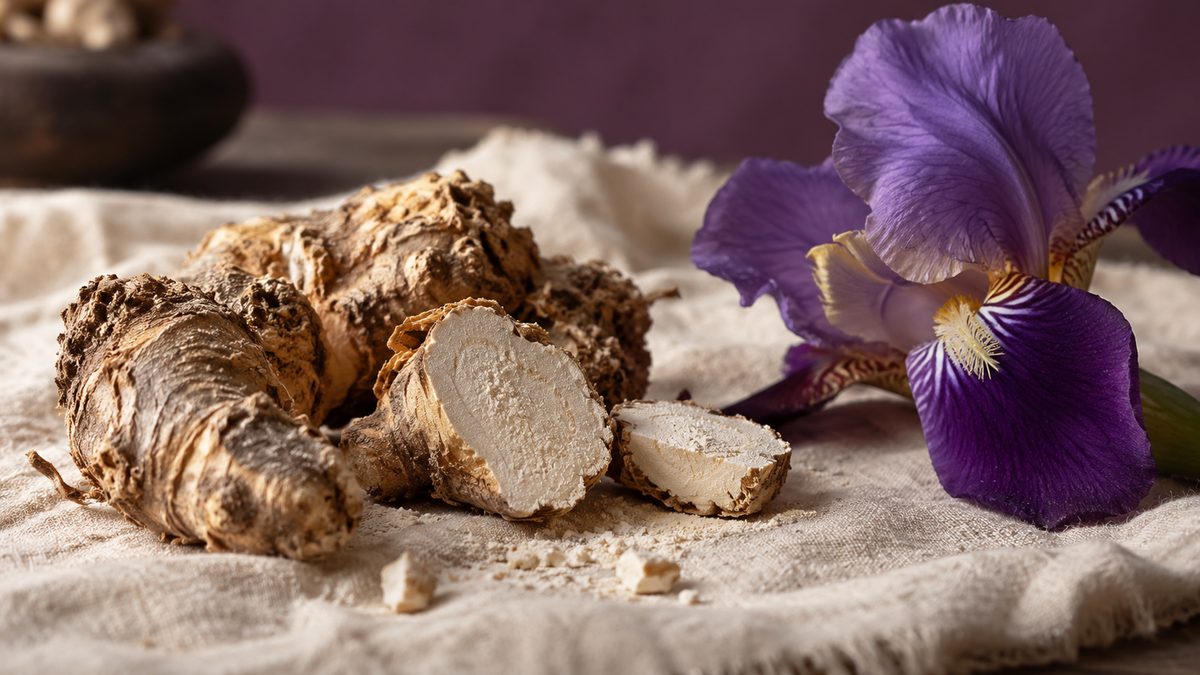
Iris in perfume often smells powdery, softly woody and violet-like, with a cool root or faint carrot-like edge. The traditional material, orris, comes from prepared iris rhizomes rather than from the petals. A perfume can emphasise dry roots, cosmetic powder or creamy suede, so iris is not limited to one soft floral style.
Orris materials are associated with iris species including Iris pallida and Iris germanica. Cultivation and processing have a long history in parts of Europe, including Italy and France. The thick underground rhizome is harvested, cleaned and dried, then aged before further processing.
That preparation is central to the aroma. Changes during ageing lead to the development of irones, the family of molecules strongly associated with characteristic orris odour. A freshly dug rhizome does not simply smell like the finished perfumery material.
Distillation can produce orris butter, a material whose texture reflects a substantial content of fatty components. Further processing can yield other orris preparations. Differences in extraction and irone content affect how the material behaves and what facets it contributes.
There is no need to imagine crushed iris petals in every bottle listing iris. Natural orris, selected aroma molecules and complete reconstructions can all be used to create the note. A garden flower's scent and a prepared rhizome extract are different reference points.
A common first association is face powder or lipstick. That comes partly from the history of violet-like and orris effects in scented cosmetics. It is a useful sensory clue, but it can distract from the drier, more earthy character beneath.
| Iris direction | What to notice | A pairing that may emphasise it |
|---|---|---|
| Cool root | Earthy, faintly carrot-like, dry | Vetiver and green notes |
| Cosmetic powder | Soft violet, dusty sweetness | Musks and vanilla |
| Creamy wood | Smooth, buttery, rounded | Sandalwood-like materials |
| Suede-like softness | Dry, tactile, gently leathery | Leather accords |
The powder effect describes how the scent seems to feel, not a powder ingredient floating in the liquid. It can range from a restrained dry haze to a sweet cosmetic cloud. If one iris perfume feels too cosmetic, try a rootier woody example before rejecting the whole note.
Likewise, buttery does not have to mean edible. Natural orris can have a rich texture without suggesting cake or frosting. The sweetness usually depends on what accompanies it.
Irones are closely linked to orris character. Ionones, another important perfumery family, offer violet-like, floral and woody effects that can support iris constructions. They are related parts of the perfumer's vocabulary rather than interchangeable names for a single substance.
An accord can combine these effects with woods, musks and green materials to create an iris impression. Natural orris may be present as a detail, a central ingredient or not at all. A note pyramid does not usually give enough information to distinguish those possibilities.
Manufactured materials can keep an iris effect transparent or make its powdery side more pronounced. Natural extracts can bring subtle earthy and fatty nuances. Neither approach guarantees the version you will prefer. Read naturals versus synthetics as a source discussion, then use sampling to answer the sensory question.
A botanical source claim should also be specific. Knowing that a perfume contains orris does not tell you its entire formula, irone level or exact agricultural origin. If those details matter, seek information from the maker rather than inferring them from romantic descriptions.
Iris is commonly listed as a heart note, yet many iris effects persist into the base. It can link a fresh opening to woods without the lush petal sweetness of a white floral. That makes it useful in fragrances aiming for dry softness.
With vetiver, its root-like facets can feel cool, austere and almost dusty. With sandalwood, the same note may become smooth and enveloping. Citrus above either combination can prevent the opening from feeling muted.
A leather accord can turn iris towards suede: a dry, brushed texture rather than dark smoke. Rose may add more recognisable petals, while vanilla can make the cosmetic side sweeter. Those pairings explain why some iris perfumes feel formal and others intimate.
Do not judge strength by softness of texture. A powdered iris can be persistent and noticeable even without a sharp opening. Its quiet-seeming character is not a promise of low projection.
For your first comparison, choose a description centred on roots and woods and another centred on powder or cosmetics. Put them on separate strips. Ask which smells drier, which sweeter, and whether the cosmetic association is enjoyable or distracting.
Return after the bright opening has changed. Iris may become more apparent once citrus disappears, so the first sniff can understate how powdery the perfume will feel during wear. Write down the base's texture rather than only the opening's prettiness.
Try the preferred finished fragrance on skin on a different day. Use it without a strongly scented body product so that added sweetness does not obscure the comparison. Notice how the scent feels through ordinary movement and time indoors.
Dry iris can suit warm conditions when paired with citrus, while creamy or suede-like iris often feels comfortable in cooler air. These are starting points, not fixed seasonal rules. Your tolerance for a powdery scent near your face matters more than a suggested occasion.
For sensitive skin, use the finished product label and any professional allergy advice you already have. Neither a soft smell nor a natural orris claim establishes low irritation risk. Stop using a product that causes discomfort, and seek medical guidance for persistent reactions rather than repeatedly testing the same fragrance.
A guide to the note’s usual role, not a fixed formula or an ingredient list.
Notes overlap as a fragrance develops. Placement varies with the finished composition.
Powdery violet-like materials have long been used in cosmetic scents. The association does not mean lipstick was added to the perfume.
Yes. Green, citrus and root-like facets can be emphasised while sweet cosmetic effects remain restrained.
The term describes the material's texture. It does not refer to milk butter.
No. The familiar perfumery material is obtained from prepared rhizomes, and a finished iris accord may be constructed from other materials.
For general information. Patch test a finished perfume as directed before wider wear. Stop use and see a doctor if irritation develops.
Notes A–Z
Sandalwood ranges from milky softness to dry warm timber. Learn about Santalum oils, santalols, manufactured alternatives and practical comparisons.
4 min readNotes A–Z
Vetiver smells woody, earthy and dry, with possible green, smoky, bitter citrus or nutty facets.
4 min readNotes A–Z
Leather in perfume can smell dry, smoky, tarry, warm or softly suede-like, sometimes with animalic or rubbery facets.
4 min readIngredients
Natural extracts and synthetic aroma materials are both useful tools in perfume.
4 min read