Notes A–Z
Bergamot in Perfume: Bitter Citrus, Floral Peel and Safer Sampling
Bergamot smells like bright citrus peel with a bitter, green edge and a soft floral undertone.
4 min readNotes A–Z
Vetiver smells woody, earthy and dry, with possible green, smoky, bitter citrus or nutty facets.
By The Bla Blu Bli Fragrance Library editors · Published October 21, 2026 · Updated October 22, 2026 · 4 min read
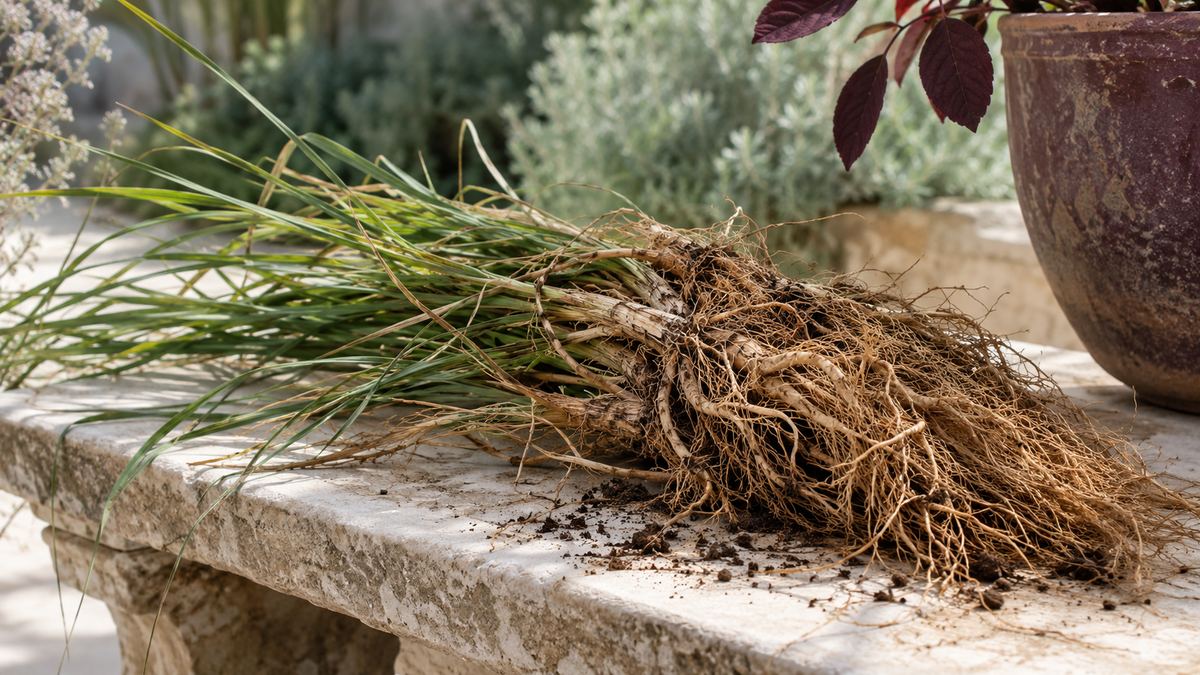
Vetiver smells woody, earthy and dry, with possible green, smoky, bitter citrus or nutty facets. Its perfumery oil comes from the roots of a tropical grass, not the freshly cut blades. That difference makes vetiver a better reference for fragrant roots and dry soil than for a newly mown lawn.
The plant used for vetiver oil is Chrysopogon zizanioides. Prepared roots are distilled to release a complex aromatic oil. Growing sources include Haiti, Indonesia and India, but the origin alone cannot tell you exactly how a finished perfume will smell.
Harvesting, cleaning, drying, distillation and later treatment can all change the balance between earthy, smoky and smoother woody aspects. Descriptions sometimes contrast particular regional styles. Those can help frame a comparison, but they are not a substitute for smelling the actual material or composition.
Vetiver oil contains many constituents. Khusimol and vetivones are among the molecules discussed in relation to its characteristic woody odour. No single named constituent recreates the whole root oil, and a consumer note list gives no reliable breakdown of those components.
Earthy can describe the cool mineral-like smell of roots, the dryness of dust, or the dampness of soil after rain. These are quite different experiences. Vetiver may suggest any of them without containing earth or water.
| Facet to listen for | How it may feel | Helpful pairing clue |
|---|---|---|
| Dry root | Firm, wiry, woody | Cedar and restrained citrus |
| Bitter green | Crisp, almost grapefruit-like | Bergamot and aromatic herbs |
| Damp earth | Cool, dark, root-cellar association | Patchouli or mossy accords |
| Smoke | Toasted or charred wood | Incense and leather effects |
| Soft wood | Rounded, less angular texture | Musk or sandalwood |
If a sample smells muddy to you, identify what makes it so: dampness, darkness or lack of contrast. A brighter vetiver may solve that problem. Conversely, someone who finds clean woods bland may enjoy a root-focused style with more uneven texture.
Vetiver often anchors a perfume as a base note because its woody character persists after brighter notes soften. It can still be present from the opening. The whole fragrance is applied together, so the pyramid describes which impressions draw attention over time.
With bergamot, vetiver can feel brisk and dry rather than heavy. The citrus bitterness connects naturally to some of the root's sharper facets. This pairing is useful when you want freshness without a strongly watery or sugary effect.
Cedarwood gives the root a more timber-like outline. Iris can highlight cool earth and powder, creating an austere or softly dusty heart. Vanilla and sandalwood round the base, but too much sweetness may obscure the dryness that attracted you to vetiver in the first place.
Perfumers also use vetiver beneath a floral theme without making it the star. A small earthy contrast can give rose or jasmine a firmer foundation. In such a blend, you may notice the effect as depth rather than as a separate root smell.
Natural vetiver oil offers a broad range of facets at once. Fractionation and other processing can select or soften parts of that range. Vetiveryl acetate, a material made by acetylating components of vetiver oil, is associated with a smoother woody effect and can help reduce some rougher aspects.
A constructed vetiver accord may combine processed natural material with other woody ingredients. It can emphasise freshness, smoke or polish without trying to copy a particular batch of root oil. Synthetic support does not by itself make the smell less convincing or less useful.
For someone shopping, the distinction changes expectations more than it sets a quality ranking. If you want a rugged root character, look for descriptions that mention earth and smoke. If you want a cleaner daily wood, seek a smoother style and confirm it in the drydown.
Select contrasting samples rather than collecting several fragrances with the same note list. One citrus-vetiver and one smoky-vetiver composition can teach you more than two nearly identical woody perfumes.
Start with separate paper strips and record which is drier, greener and smokier. Revisit them when the opening is quieter. Does smoke stay behind the root, or does it become the whole story? Does the cleaner sample retain any earthy character?
Wear each promising sample on its own day, following the finished product directions. Notice the scent during a walk and in a still room. Record the conditions alongside your impression; a warm enclosed space can alter how dense the supporting base feels.
Do not judge longevity solely by smelling your wrist repeatedly. Familiarity can reduce your awareness. The sillage and projection guide explains why personal detectability and the scent reaching nearby people are different questions.
A dry, citrus-led vetiver can suit warm days, while smoky versions may feel more comfortable in cool conditions. Application and the complete formula matter more than a seasonal label. For a long meeting or shared journey, begin with restrained use and assess how far the whole fragrance travels.
Vetiver is a fragrance material, not a treatment for stress or skin disease. Avoid applying neat root oil, and check finished-product ingredient information if sensitivity is a concern. Discontinue use if irritation develops and seek professional advice for symptoms that persist or recur. Natural origin cannot guarantee tolerance.
A guide to the note’s usual role, not a fixed formula or an ingredient list.
Notes overlap as a fragrance develops. Placement varies with the finished composition.
Khus is commonly associated with vetiver in South Asian usage. Check the product context, since a traditional preparation, a home fragrance and a wearable perfume may be very different products.
No. Some interpretations emphasise bright wood or green bitterness. If smoke bothers you, ask for a cleaner root style and inspect its base before deciding.
A dry mineral association can read as salty, especially beside musks or ambergris-like materials. The sensation does not prove that salt is present or identify a single ingredient responsible.
No. Its dry root character can support florals, powdery accords or sweet bases worn by anyone. Choose the texture and balance you enjoy rather than using the note as a gender category.
For general information. Patch test a finished perfume as directed before wider wear. Stop use and see a doctor if irritation develops.
Notes A–Z
Bergamot smells like bright citrus peel with a bitter, green edge and a soft floral undertone.
4 min readNotes A–Z
Cedarwood in perfume smells dry, woody and often reminiscent of pencil shavings, with resinous, smoky or softly balsamic variations.
4 min readNotes A–Z
Iris perfume often comes from aged rhizomes or a built accord. Explore orris, irones, cosmetic powder effects and dry versus creamy pairings.
4 min readNotes A–Z
What aldehydes mean in perfume, why some smell sparkling or soapy, and how these varied materials transform floral and clean fragrance accords.
4 min read