Notes A–Z
Neroli in Perfume: Bitter Orange Flowers with Green Freshness
Neroli is distilled from bitter orange blossom. Compare its airy floral oil with orange blossom absolute, peel oil and leafy petitgrain effects.
4 min readNotes A–Z
Jasmine smells floral, sweet and radiant, with possible green, fruity, tea-like or animalic facets.
By The Bla Blu Bli Fragrance Library editors · Published October 21, 2026 · Updated October 22, 2026 · 4 min read
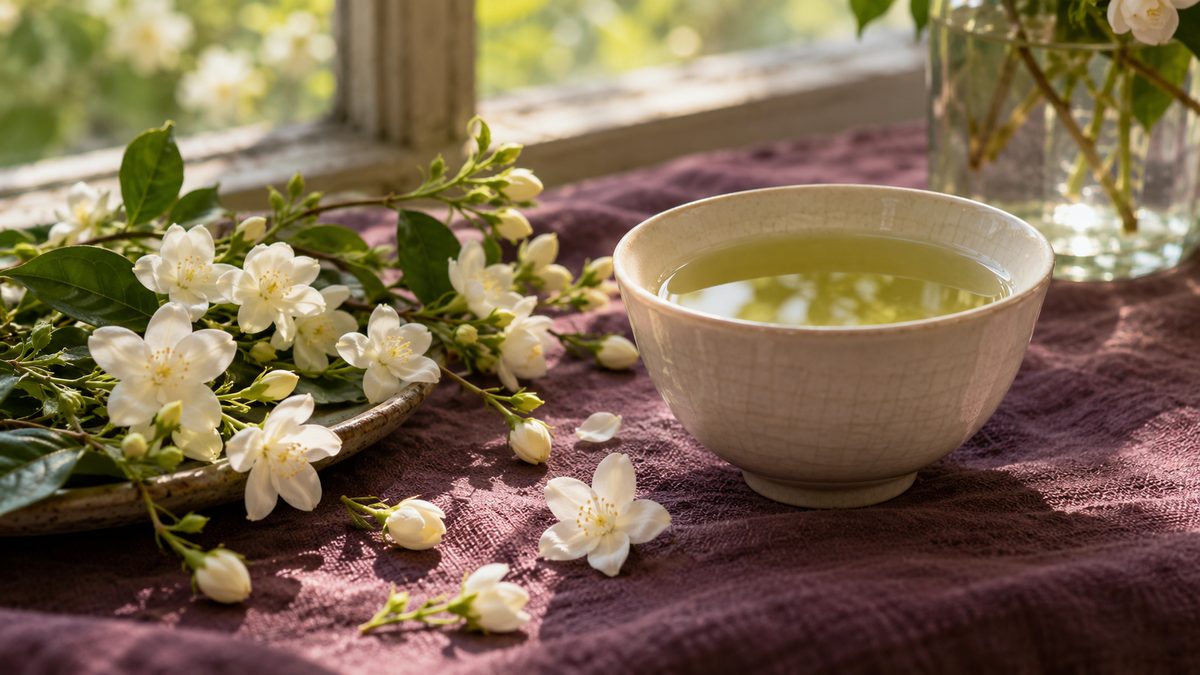
Jasmine smells floral, sweet and radiant, with possible green, fruity, tea-like or animalic facets. Some interpretations are airy; others are dense and warm. The note can come from flower extracts, a constructed accord, or both, so one heavy jasmine sample does not represent the whole category.
Jasminum grandiflorum and Jasminum sambac are important perfumery species. Flower production is associated with places including India and Egypt, among other growing regions. Grandiflorum is often discussed through rich floral warmth, while sambac can suggest greener, tea-like and fruity aspects.
Those are tendencies rather than guarantees. Growing conditions, extraction and the finished blend can change the balance considerably. The species name gives you a useful question for sampling, not a reason to assume that all sambac will be light or all grandiflorum will be dense.
Solvent extraction is a common route to jasmine concrete and then absolute. A conventional steam-distilled jasmine essential oil is not the usual reference material behind this note. Other specialised extraction methods exist, but a consumer description may simply say jasmine without identifying the material at all.
Indole is associated with the warm animalic side of jasmine. In concentrated isolation its associations can be very different from its role within a balanced floral mixture. Concentration and context matter, so describing a jasmine as indolic does not mean the whole perfume must smell unpleasant.
Benzyl acetate contributes floral-fruity character, linalool provides floral freshness, and cis-jasmone contributes characteristic jasmine facets. Methyl jasmonate and related materials are also relevant to jasmine-like effects. These molecules offer a vocabulary for the material's range without turning a public note list into an ingredient analysis.
Perfumers can reduce the animalic impression or build a luminous jasmine effect with synthetic materials. Natural absolute can also be used alongside these supports. A clean, transparent jasmine is therefore a deliberate style choice, not proof that something essential has been removed from a supposedly correct flower.
| Jasmine direction | Sensory markers | A question for the sample |
|---|---|---|
| Green and tea-like | Leafy brightness, light petal bitterness | Does the green edge remain? |
| Fruity floral | Soft pear-like or banana-like sweetness | Does it become too edible? |
| Airy white flower | Open, luminous floral space | Is the base equally transparent? |
| Indolic warmth | Dense petals with animalic depth | Is the warmth comfortable indoors? |
The same perfume can move between these descriptions. A green opening may settle into a warmer heart, while a seemingly dense spray may become more open once the initial cloud disperses. Allow time for that change before deciding.
Jasmine usually occupies the heart, helping a bouquet feel fuller and more alive. Its effect can connect a bright opening to a warm base. It may be the named theme or an almost invisible support that rounds rose, citrus blossom and other flowers.
With rose, jasmine adds depth behind fresh petals. Neroli can emphasise a brighter, greener floral direction. Tuberose pushes towards richer white-floral volume, where creaminess and heady warmth become more prominent.
Sandalwood can extend the smooth petal texture, while musks create a softer skin-like background. Citrus gives contrast at the top; vanilla can turn the flower towards a sweeter and more enveloping style. Tea accords bring out leafy associations without requiring the perfume to contain brewed tea.
If you find jasmine overpowering, look beyond the flower name. A dense sweet base may be increasing the weight, while an airier reconstruction could preserve the floral character you wanted. Sampling a different structure is more informative than avoiding every list that includes jasmine.
Take two finished samples with contrasting descriptions, such as green jasmine and rich white floral. Smell them on separate strips after the alcohol has cleared. Record flower, fruit and animalic warmth independently rather than combining everything into a strength score.
Then revisit the strips after the opening. Does the warmth support the petals, or distract you from them? Is the sweetness part of a flower impression or more like vanilla cream? These questions help identify why one jasmine feels inviting and another feels oppressive.
Wear only the more appealing candidate on skin at first, following the product's directions. Test during a day when you can observe it in a normal room, outdoors and after the bright notes recede. The skin-versus-paper comparison explains why those environments need not give identical results.
Leave time away from the scent between observations. Constant close sniffing can make a rich floral harder to judge. Stop the trial if it becomes uncomfortable; discomfort does not need to be turned into a tolerance exercise.
A fresh tea-like jasmine may suit daytime and warm conditions, while a dense indolic floral can feel more manageable in cool air. Either can project strongly depending on its supports. Start cautiously for a shared office, public transport or a meal where the floral cloud may remain close to other people.
Ingredient lists, rather than flower imagery, are the place to check known fragrance sensitivities. Jasmine materials can include constituents relevant to allergen labelling, and natural extraction does not remove that concern. Avoid using concentrated absolute directly on skin. If a finished fragrance causes irritation, discontinue it and seek medical advice when symptoms persist or recur.
A guide to the note’s usual role, not a fixed formula or an ingredient list.
Notes overlap as a fragrance develops. Placement varies with the finished composition.
Common plant names can refer to different species, including plants outside Jasminum. A perfume description may use the name imaginatively, so ask about botanical identity if the source matters.
Floral-fruity facets can overlap with familiar ripe-fruit associations. The perfume may emphasise that aspect with supporting ingredients; the impression alone does not establish a fruit extract.
It describes an odour association that can read as warm and naturalistic within flowers. Some people enjoy that depth and others find it distracting. It is a preference, not a quality ranking.
Yes. Green, tea-like and transparent floral materials can create freshness within the heart itself. Check that the later base retains that openness if it is the quality you want for daily wear.
For general information. Patch test a finished perfume as directed before wider wear. Stop use and see a doctor if irritation develops.
Notes A–Z
Neroli is distilled from bitter orange blossom. Compare its airy floral oil with orange blossom absolute, peel oil and leafy petitgrain effects.
4 min readNotes A–Z
Tuberose can smell creamy, green and richly white-floral. Explore its flower extracts, salicylates, indolic facets and ways to test its volume.
4 min readNotes A–Z
Musk in perfume can smell softly powdery, clean and fabric-like, warm and skin-like, or more animalic.
4 min readNotes A–Z
What aldehydes mean in perfume, why some smell sparkling or soapy, and how these varied materials transform floral and clean fragrance accords.
4 min read