Notes A–Z
Jasmine in Perfume: Airy Petals, Green Tea and Animalic Warmth
Jasmine smells floral, sweet and radiant, with possible green, fruity, tea-like or animalic facets.
4 min readNotes A–Z
Tuberose can smell creamy, green and richly white-floral. Explore its flower extracts, salicylates, indolic facets and ways to test its volume.
By The Bla Blu Bli Fragrance Library editors · Published October 21, 2026 · Updated October 22, 2026 · 4 min read
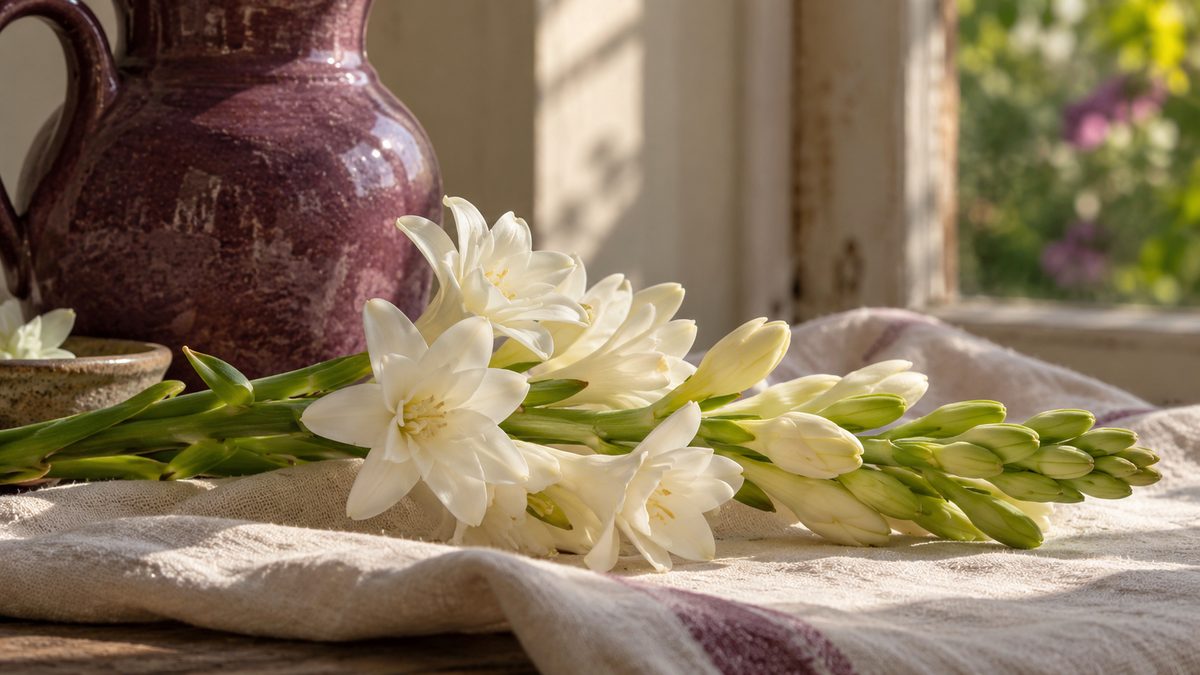
Tuberose in perfume smells lush and white-floral, often creamy or waxy, with green, fruity and sometimes animalic facets. Some versions also have a cool medicinal edge beneath the sweetness. To find a comfortable one, compare green-stem tuberose with a richer creamy style rather than treating the note as a single heavy floral smell.
Tuberose is commonly known botanically as Agave amica, with Polianthes tuberosa also widely used as its botanical name. It is not a rose. Its long stems carry fragrant pale flowers that provide the traditional perfumery material.
The plant has Mexican origins and is cultivated in other regions, including India. Cultivation, harvest and processing influence the aromatic material. The smell of a living flower and the smell of its extract are related but not interchangeable experiences.
Solvent extraction can produce a concrete followed by an absolute. Other extraction methods may also be used. A tuberose note in perfume may include natural extract or may be built with a combination of aroma materials that reproduces selected floral effects.
As with jasmine, an ordinary note list does not establish the species preparation, origin or amount of natural material. A realistic flower impression can involve considerable construction rather than a simple transfer of petals into alcohol.
Tuberose's appeal often comes from contrast. Its petals can seem thick and warm while a green or medicinal quality adds sharpness. Removing all that contrast can leave a much sweeter, softer flower.
| Tuberose facet | What to notice | What it may become in a blend |
|---|---|---|
| Green | Fresh stems, leaves, a sharp edge | A crisper daytime floral |
| Waxy | Thick petals, smooth surface | A rich floral texture |
| Creamy | Rounded, almost milky warmth | A softer wood-supported base |
| Indolic | Lush, bodily or overripe warmth | A more animalic floral |
| Fruity | Sweet, sometimes bubblegum-like | A playful gourmand-leaning effect |
Methyl benzoate contributes sweet floral character in the natural aromatic profile. Methyl salicylate can help explain a cooler medicinal association. Indole is one contributor to the warm animalic dimension, with its effect depending strongly on context.
Those constituents do not mean every tuberose perfume will smell like medicine or overripe flowers. Perfumers adjust the balance, and your own associations affect what stands out. Describe what you perceive rather than forcing the sample to match a technical term.
Tuberose is usually a heart note, but it can be apparent immediately and remain a major theme into the base. A full tuberose accord can give a perfume volume and a sense of thick petals without relying on a large sweet amber structure.
With jasmine, it can form a lush floral centre. Their shared warmth may be emphasised, or greener materials may keep the bouquet brighter. The presence of two white florals is not enough to predict heaviness.
Neroli can offer a fresher, more airy contrast. Green notes can sharpen the stems, while citrus gives an opening lift. These effects may make tuberose easier to approach if the creamy style feels too enveloping.
Sandalwood can round the later texture, strengthening a creamy or milky impression. Vanilla may increase sweetness; dry woods can create firmer definition. The base often decides whether the finished flower feels comfortable or cloying after several hours.
Natural tuberose extract carries multiple facets at once. A perfumer may use it for detail while supporting the main floral body with manufactured materials. Another composition may create the effect without relying on natural extract.
A reconstruction can emphasise green freshness or creamy petals and keep the indolic side quieter. That makes it possible for two perfumes labelled tuberose to have sharply different personalities. Neither is automatically a more authentic choice for your taste.
Natural does not guarantee delicacy, and synthetic does not guarantee a flat or sugary result. Source information is valuable when you want it, but it cannot replace a wear trial. The desired effect and the production method are different questions.
If a product makes a specific origin claim, ask what that claim applies to. One natural floral ingredient does not describe the source of the entire fragrance or establish its compatibility with sensitive skin.
Start on a strip with a small application. Let the spray settle and notice whether you perceive more green stems, sweet petals or bodily warmth. A large first application can make the comparison feel overwhelmingly floral.
Return later. Tuberose may become more apparent as citrus fades, or it may soften into a woody creaminess. Note which stage you would enjoy wearing for a full afternoon rather than only admiring for a moment.
Wear the preferred finished fragrance alone on a separate day. Begin modestly and check its presence while moving. A scent can feel soft at the wrist and still produce a noticeable floral trail.
For warm days, a greener composition may feel easier than a dense sweet one. In cooler air, a rounded tuberose can feel more comfortable. Test the actual indoor setting you expect to use, since heating and limited ventilation may matter more than the season.
If the perfume becomes tiring, identify whether sweetness, indolic warmth or sheer volume is the problem. A smaller application can address volume, but it may not change an association you dislike. A different style is then a better experiment.
Use perfume testing to keep trials separate and record the later base. Avoid comparing several strong floral samples on adjacent skin areas, where their trails can merge and obscure the result.
Read the finished ingredient label if you have known allergies. Flower-derived and manufactured constituents can both be relevant to sensitivity. Do not apply tuberose absolute undiluted, and do not interpret a natural floral story as evidence of gentleness.
Discontinue an irritating product and seek healthcare advice for persistent or repeated symptoms. The goal is an enjoyable balance of petals, green contrast and warmth that remains comfortable during ordinary wear.
A guide to the note’s usual role, not a fixed formula or an ingredient list.
Notes overlap as a fragrance develops. Placement varies with the finished composition.
No. Its common name contains rose, but it is a different plant with a different perfumery character.
Sweet fruity-floral facets and their supporting accord can create that association. It does not mean gum flavouring or literal sweets are present.
No. Natural extracts can be intense and complex. The dose and surrounding formula determine the finished effect.
Yes. A greener or more transparent composition can suit ordinary daytime wear if its strength and texture feel comfortable to you.
For general information. Patch test a finished perfume as directed before wider wear. Stop use and see a doctor if irritation develops.
Notes A–Z
Jasmine smells floral, sweet and radiant, with possible green, fruity, tea-like or animalic facets.
4 min readNotes A–Z
Neroli is distilled from bitter orange blossom. Compare its airy floral oil with orange blossom absolute, peel oil and leafy petitgrain effects.
4 min readNotes A–Z
Sandalwood ranges from milky softness to dry warm timber. Learn about Santalum oils, santalols, manufactured alternatives and practical comparisons.
4 min readHow to wear fragrance
Test perfume by limiting competing scents, assessing an opening on paper, and giving a suitable finished sample a separate skin-wearing day.
4 min read