Fragrance families
Gourmand Perfumes: Edible Notes Without Too Much Sweetness
What makes a perfume gourmand, how edible accords are built, and how to choose vanilla, nutty or roasted scents without sweetness overload.
4 min readNotes A–Z
Explore how praline and caramel accords suggest toasted nuts and cooked sugar, and learn to choose a gourmand that stays comfortable through wear.
By The Bla Blu Bli Fragrance Library editors · Published October 26, 2026 · Updated October 26, 2026 · 4 min read
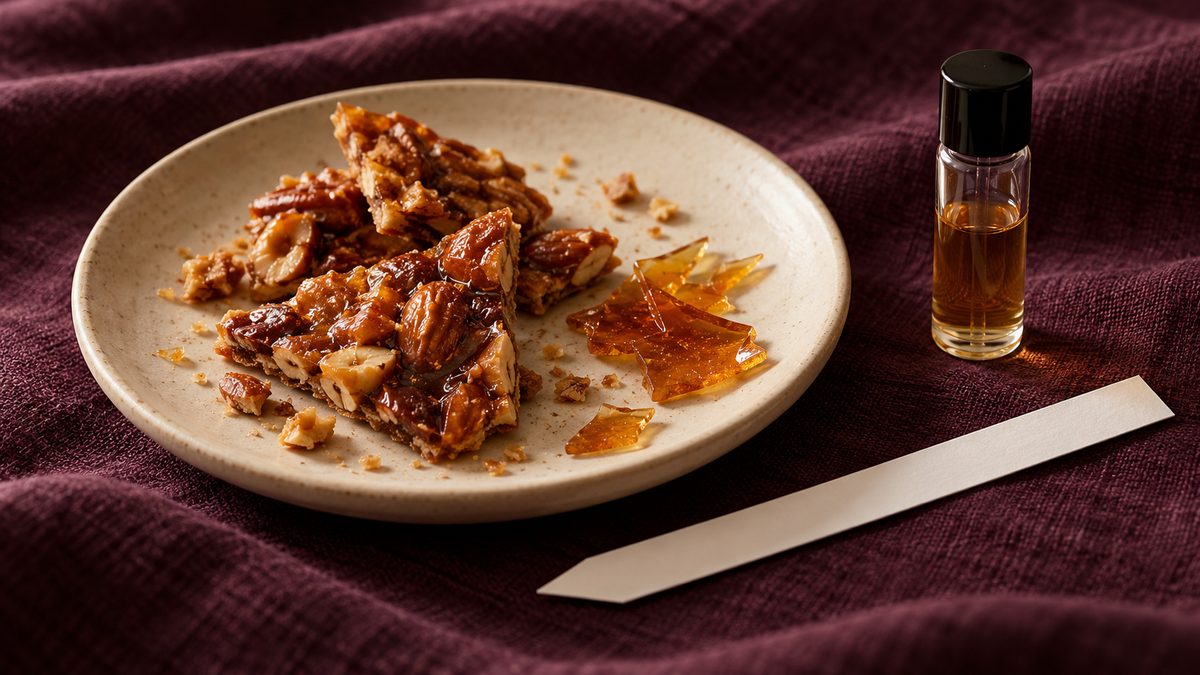
Praline and caramel in perfume are gourmand notes that suggest confectionery: praline often brings toasted, nut-like sweetness, while caramel evokes cooked sugar with buttery or lightly burnt edges. They are usually built as accords from aroma materials, rather than made by adding sweets to a perfume bottle.
To avoid overload, choose by the settled balance of sweetness, texture and projection. A bright first spray can conceal a much richer base that becomes obvious later indoors.
The food meaning of praline varies between traditions, so perfume descriptions do not always point to the same confection. You might smell roasted nuts with sugar, soft creamy filling or a chocolate-like sweetness. Ask which impression the particular fragrance aims to create.
Caramel descriptions also span a range. A pale, creamy interpretation feels different from dark cooked sugar with a slightly bitter edge. Butter-like, milky or toasted facets can make both seem edible, even when no actual dairy ingredient is involved in the effect.
The overlap is substantial. In a finished perfume, you may find it difficult to isolate praline from caramel or vanilla. That is not a failure of your nose: the accord may be intended to read as one rounded dessert impression.
Perfumers combine sweet-smelling materials with toasted, creamy, nutty or darker accents to suggest food. Maltol and ethyl maltol are examples of aroma materials associated with sweet, candy-like or caramel-like effects. They are tools within a formula rather than complete praline recipes.
Vanilla-related materials can give a familiar dessert frame. Roasted and nutty facets can add contrast, while woods, musk and balsamic materials shape the texture and persistence. The finished composition determines whether the effect feels fluffy, sticky, powdery or dense.
A note pyramid is a description, not an ingredient declaration. It cannot establish the presence of edible nuts, sugar, milk or any particular raw material. Never taste perfume or treat a food-like smell as evidence that the liquid is food-safe.
Our gourmand perfumes overview places these notes alongside other edible impressions. Vanilla can appear in drier compositions too, which makes it a useful comparison when you want warmth without a strong confectionery effect.
Sweetness is only one part of a gourmand. A fragrance can smell sugary yet airy, or only moderately sweet but very creamy and dense. Recognising those separate features makes sample comparisons more useful.
| Your preference | A direction to try | What could disappoint later |
|---|---|---|
| Toasted rather than sugary | Praline with dry woods or roasted accents | A very sweet vanilla base |
| Soft and creamy | Caramel with milky or sandalwood-like textures | Richness that feels tiring indoors |
| Dark and bittersweet | Burnt-sugar effects with earthy or smoky contrasts | Smoke overpowering the confection |
| Lightly edible | A floral or woody perfume with a caramel accent | An opening that hides a dense drydown |
| Powdery sweetness | Praline with iris or tonka-like effects | A cosmetic texture you do not enjoy |
Treat these as sampling directions. A dry note in the description does not cancel every sweet material around it, and a caramel note does not guarantee a syrupy perfume.
At first, citrus, fruits or airy floral notes can make a gourmand seem lighter. As those impressions recede, the persistent sweet base becomes easier to notice. The perfume is not necessarily increasing in strength; the balance reaching your attention is changing.
Check a strip again after the opening has settled. Ask if the praline still smells toasted or has become mostly sweet vanilla. For caramel, notice whether the darker edge remains, because that contrast may be what keeps the fragrance interesting to you.
Tonka bean can add hay-like, almond or powdery associations. Patchouli may provide an earthy contrast, and woods can give shape to a smooth sweet accord. Those companions can change the character without making the fragrance less persistent.
If you like only the first impression, a larger bottle will not solve the mismatch. Look for a different base rather than repeatedly reapplying to recover the opening.
Try the selected sample on a day spent in your usual surroundings. A brief outdoor test gives limited information if you plan to wear it through a heated evening at home or in a restaurant.
Apply according to the product instructions, beginning modestly. Leave other scented products out of the first comparison. Notice whether you still enjoy the aroma while sitting, eating and moving between rooms, rather than judging it only with your nose close to skin.
A tiring fragrance is not necessarily a badly made fragrance. You may enjoy the same accord occasionally, at lower application, or only when you have more personal space. If it remains uncomfortable, choose another style instead of trying to train yourself to tolerate it.
The first adjustment is application, not layering. Adding citrus may brighten the start while leaving the full sweet base underneath. Combining two gourmands can make the late fragrance denser than either sample suggested alone.
Check sillage and projection if the issue is how much space the perfume occupies. Concentration labels alone cannot tell you how strongly a particular caramel fragrance will project. The formula and application matter.
Clothing can retain fragrance between wears, so consider residual scent before applying more and follow fabric care advice. Avoid spraying delicate material simply to make a sweet perfume last longer.
For known ingredient allergies, use the packaging information and your clinician's advice. A nutty note neither proves nor rules out a relevant ingredient, and the same applies to creamy descriptions. Ask the manufacturer when needed. The goal is a finished perfume you enjoy wearing, with its practical details understood, rather than the most elaborate dessert description.
A guide to the note’s usual role, not a fixed formula or an ingredient list.
Notes overlap as a fragrance develops. Placement varies with the finished composition.
Salted caramel is an odour impression, not an instruction to taste the product. A mineral or contrasting accord can suggest saltiness without predicting the formula.
No. The note can be created through aroma materials. If you have an allergy, ask about the finished ingredients rather than drawing conclusions from the scent description.
Sweetness and projection describe different qualities. A sweet fragrance may stay close, while a fresh one may travel widely.
Yes. Floral notes can add lift or texture beside caramel. Test whether you enjoy the settled balance, since the flowers may become less prominent over time.
For general information. Patch test a finished perfume as directed before wider wear. Stop use and see a doctor if irritation develops.
Fragrance families
What makes a perfume gourmand, how edible accords are built, and how to choose vanilla, nutty or roasted scents without sweetness overload.
4 min readNotes A–Z
Vanilla smells warm, softly sweet and balsamic, with possible creamy, woody, smoky or dried-fruit facets. It can suggest a cured pod rather than frosting.
4 min readNotes A–Z
Tonka bean smells of hay, almond-like warmth and soft sweetness. Learn how coumarin shapes the note and why it differs from vanilla.
4 min readHow to wear fragrance
Projection describes how far a perfume seems to extend around the wearer, while sillage describes the trail it leaves as the wearer moves.
4 min read