How to wear fragrance
How to Store Perfume: Heat, Light and Air
Store perfume tightly closed in a cool, stable place away from direct light and heat.
4 min readHow to wear fragrance
Choose a travel perfume or decant, check current airport liquid rules and pack a small spray with clear identification and secure closures.
By The Bla Blu Bli Fragrance Library editors · Published November 7, 2026 · Updated November 7, 2026 · 4 min read
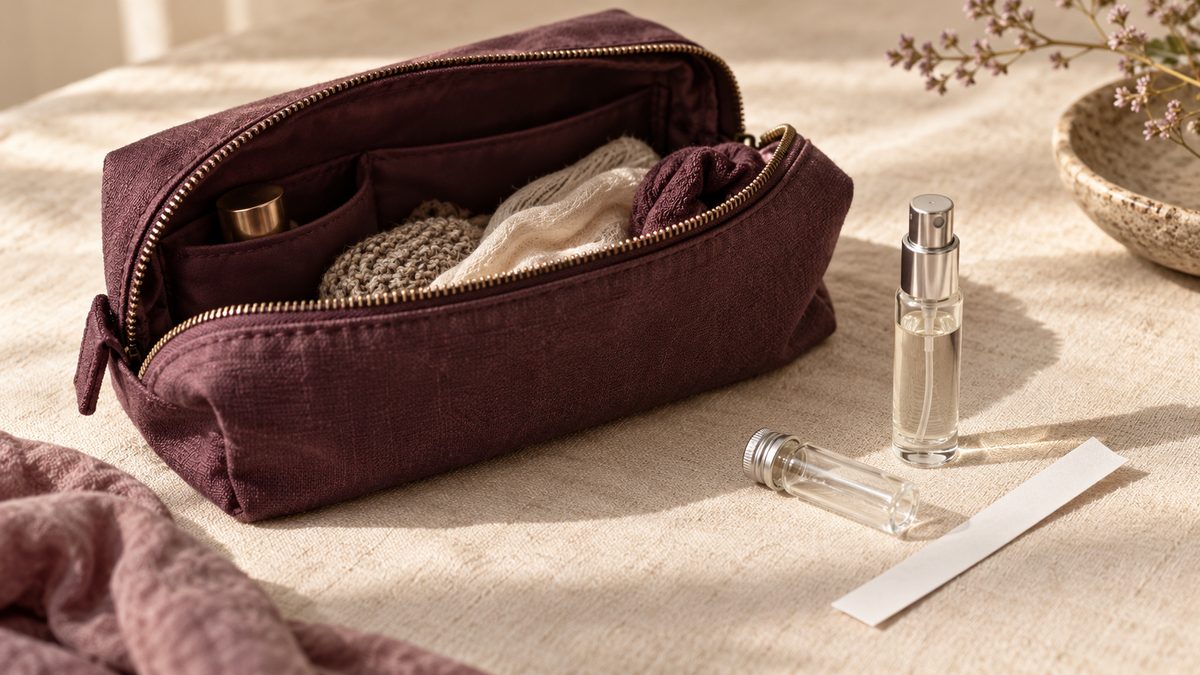
A travel-size perfume is a small fragrance container chosen for the trip, while a decant is perfume transferred from its original container into another one. Pick a securely closing container intended for fragrance, retain the product details and check your airline and airport rules before packing. A bottle described as travel size is not proof that it is permitted on your route.
The practical aim is simple: take enough of a familiar scent without carrying a fragile full bottle or an unidentified liquid. Refilling and packing deserve as much attention as the size printed on the container.
An original travel spray is supplied in that format by the fragrance seller. A sample is primarily for testing and may use a dab opening or a small atomiser. A decant describes transferred contents, regardless of the style of container.
For a short trip, consider how often you expect to wear perfume and whether fragrance is appropriate at the destination. There is no useful universal conversion from millilitres to days: atomisers dispense different amounts, and wearing habits differ.
If you have not worn the fragrance before, use the perfume testing guide before making it your only travel scent. A long journey is an awkward time to discover that a sample feels too strong or uncomfortable.
| Format | Useful feature | Check before packing |
|---|---|---|
| Original small spray | Product identification stays with the supply | Cap, closure and stated capacity |
| Refillable atomiser | Can carry a favourite in a smaller container | Refill design and compatibility |
| Dab sample | Compact way to carry a trial amount | Stopper security and careful application |
| Seller-supplied decant | Access to a smaller quantity | Source identification, contents and container condition |
Do not judge the amount by appearance alone. Read the stated capacity and keep it legible. A decorative outer case may hide the liquid container, so make sure you can identify what is inside without dismantling something at a security checkpoint.
Keep ingredients and directions available from the original packaging or supplier information. A little spray with no identification is difficult to check if you develop a reaction or want to confirm which fragrance it contains.
Look at the official guidance for your departure airport, airline and any airport where you will pass through security again. Check the return journey too. Rules and screening arrangements can differ, and advice from another traveller may not match your route.
Confirm the permitted container capacity, how liquids must be presented and which baggage category applies. Do not rely on an old photograph of a security sign or assume that changing screening equipment means every restriction has disappeared.
Perfume may also be subject to transport rules because of its flammable contents. If you are carrying more than a small personal supply, or using an unusual format, consult the carrier directly. Avoid treating permission at one checkpoint as blanket permission for the entire journey.
Inspect the container first. Reject damaged glass, a loose collar or a cap that no longer stays on. Read its refill instructions and check that the source bottle can be used with that design. Some refillable sprays use a bottom valve; others open at the top.
Work on a stable, protected surface away from flames and heat. Keep the original fragrance identification beside you so you cannot confuse two bottles. Transfer only into a compatible perfume container, following its instructions and avoiding overfilling.
Do not force off a crimped sprayer or prise apart a bottle that was not designed to open. Avoid pouring into a narrow opening without a suitable transfer method. A spill can damage surfaces as well as waste perfume.
Refill a clean, dry container intended for reuse. If it still smells of a previous scent, use a separate atomiser rather than assuming the residue will disappear. Do not add water or other liquids to stretch the supply; that changes the finished product.
Close the atomiser as directed, wipe away any liquid on the outside and check for seepage during ordinary handling. A secure cap protects the spray head from accidental pressure, but it does not repair a faulty seal.
Use protective packing that fits the official liquid-presentation rules. Keep the atomiser away from items that could press the spray head, and protect glass from knocks. Avoid packing it where a leak would reach travel documents or electronics.
Temperature and light matter at the destination as well. Our perfume storage guide explains why a stable, shaded place is preferable to a hot car or sunny windowsill. A small container still deserves sensible storage.
Apply in a suitable private space rather than a crowded cabin, queue or shared vehicle. Other travellers cannot easily move away from a fresh cloud of perfume. There is no requirement to refresh a fragrance simply because you are travelling for a long time.
Keep any concentration details with the source information. The concentration guide can help explain the label, but it cannot tell you exactly how the scent will behave in a new climate or from a different atomiser.
After the trip, inspect the container before storing it for next time. Replace damaged closures and keep the contents identified. A travel spray works best as a small, traceable supply of something you already enjoy, packed according to the rules for the journey you are making.
Do not assume it can. Rules may assess the container’s stated capacity rather than the liquid remaining; check the official requirements for your route.
Use a container intended for perfume and compatible with the liquid. Food containers may not seal or tolerate the formula appropriately.
Moving a finished perfume does not deliberately change its concentration. Do not dilute it; poor storage or a leaking closure can affect its condition.
Check the carrier’s current dangerous-goods rules and destination requirements first. Fragrance transport restrictions can differ from passenger baggage rules.
For general information. Patch test a finished perfume as directed before wider wear. Stop use and see a doctor if irritation develops.
How to wear fragrance
Store perfume tightly closed in a cool, stable place away from direct light and heat.
4 min readConcentrations
Parfum, eau de parfum, eau de toilette and eau de cologne are concentration and style labels, while perfume oil describes a carrier format.
4 min readHow to wear fragrance
Test perfume by limiting competing scents, assessing an opening on paper, and giving a suitable finished sample a separate skin-wearing day.
4 min readHow to wear fragrance
Store perfume through winter by avoiding heat, direct light and temperature swings, with practical checks for travel and cold deliveries.
4 min read