Notes A–Z
Iris and Orris in Perfume: Root, Powder and Violet-Like Woods
Iris perfume often comes from aged rhizomes or a built accord. Explore orris, irones, cosmetic powder effects and dry versus creamy pairings.
4 min readNotes A–Z
Separate powdery violet flower from green violet leaf, understand ionones, and find the right floral or leafy perfume style.
By The Bla Blu Bli Fragrance Library editors · Published November 2, 2026 · Updated November 2, 2026 · 4 min read
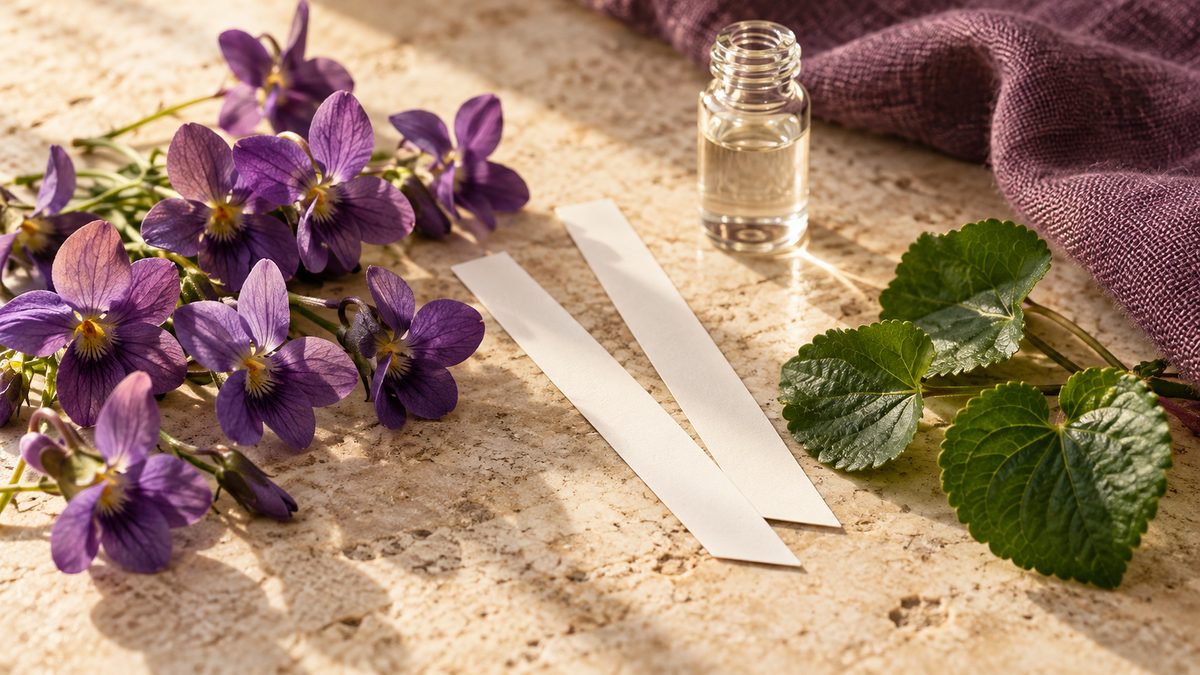
Violet flower in perfume usually suggests soft petals, powder and a slightly woody sweetness, while violet leaf smells greener, wetter and sometimes cucumber-like or metallic. The flower effect is commonly built with ionones and related aroma materials. Leaf-derived extracts can contribute a very different botanical character, so the two notes are not interchangeable.
The familiar violet impression in perfumery owes much to ionones, a family of aroma compounds associated with violet-like, woody and powdery smells. Different members have different balances. Perfumers combine them with other materials to shape a petal-like floral, a cosmetic powder or a drier woody effect.
Natural violet flowers are not the routine extracted source behind most violet perfumes. A note list naming violet does not mean a large quantity of petals was processed for that bottle. The flower can be convincingly evoked through an accord.
That is not a lesser category of perfume. Natural and synthetic materials offer different tools, and quality depends on the finished composition. The relevant question for a wearer is whether the violet feels delicate, dusty, sweet or woody in a pleasing way.
Violet leaf preparations, including absolutes, come from the foliage rather than the flowers. Their profile can be intensely green, with wet vegetation, cucumber-like freshness and an earthy or metallic edge. A little leafy material can change the atmosphere of a floral composition.
The note can also be reconstructed or supported by other green materials. As with the flower, the description alone does not disclose the complete ingredient list. A leafy perfume may be built for crispness rather than botanical realism.
Imagine the difference between powdered petals and crushed fresh stems. That contrast is more useful than treating leaf as a fresher version of the same violet smell. A perfume can contain both impressions, but one does not automatically bring the other with it.
| Cue | Violet flower direction | Violet leaf direction |
|---|---|---|
| First association | Petals, cosmetics or violet sweets | Wet stems, cucumber or green vegetation |
| Texture | Powdery, velvety or softly woody | Crisp, watery or sharply green |
| Possible difficulty | Dustiness or confectionery sweetness | Metallic sharpness or a raw leafy edge |
| Common companions | Rose, iris, soft woods and musk | Citrus, green florals, leather and woods |
| Useful request | A dry powdery violet | A green leafy violet accord |
Both styles can be sweetened or softened. A green note does not promise a sugar-free impression, and powder does not always mean sugary. Separate the texture from the sweetness when describing your preference to someone helping you sample.
Purple packaging may encourage you to imagine a petal scent even when the perfume is mostly green. Smell the strip before rereading the note description if you want a less suggestible comparison. Your own words are useful evidence, even when they differ from the official description.
Rose can make violet feel more floral and rounded. Iris can deepen its cosmetic, powdery or woody character. Soft musks may make either combination feel clean and close, although a smooth texture does not guarantee restrained projection.
A dry woody frame can reduce the impression of violet sweets. Vanilla-like sweetness may increase it. If you like powder but dislike confectionery, ask for violet with dry woods and restrained sweet notes rather than rejecting the flower altogether.
Violet leaf often suits crisp floral or leathery structures. It can add a fresh contrast to a warmer base, giving the fragrance a green opening without making the whole perfume smell like leaves. Check whether that contrast remains enjoyable after the first impression.
Perception of particular aroma materials varies, and repeated sniffing can make a note harder to detect. Violet effects may seem fleeting or uneven to some wearers. That experience alone does not establish poor quality, short wear or a faulty bottle.
Put the sample down and return after time in fresh, unscented air. Compare the whole fragrance rather than hunting continuously for one named material. Ask a willing companion whether they notice the scent nearby, but remember that their nose is another perspective rather than a calibrated instrument.
Avoid adding several sprays because the powdery part seems to have vanished. Other components may still be apparent. The perfume testing guide helps separate personal awareness from the fragrance's presence around you.
Select one clearly powdery violet and one clearly green violet-leaf style. Start on separate strips, checking the settled impressions rather than just the first spray. Note which you prefer and why: softness, leafy freshness, dry wood or a petal-like heart.
Wear the preferred sample alone during an ordinary day. Try it without competing scented lotions or another perfume, then decide whether the effect still suits your routine. A striking green opening may be exciting briefly but tiring in a warm room; a powdery base may become more appealing as it settles.
Follow product directions and avoid raw extracts on skin. If fragrance causes irritation, stop use; persistent symptoms need advice from a clinician. Neither a delicate flower name nor a botanical leaf description guarantees suitability for someone with known fragrance sensitivity.
A guide to the note’s usual role, not a fixed formula or an ingredient list.
Notes overlap as a fragrance develops. Placement varies with the finished composition.
No. They can share powdery or woody impressions, but iris can be more rooty and earthy while violet may feel more floral or confectionery-like.
No. A perfume colour is not evidence of a botanical ingredient or a particular violet effect.
Violet odours have familiar confectionery associations for some people. Sweet supporting materials can strengthen that association without making the perfume edible.
Yes, some green accords have a cool metallic impression. That description refers to perceived smell rather than proving the presence of metal.
For general information. Patch test a finished perfume as directed before wider wear. Stop use and see a doctor if irritation develops.
Notes A–Z
Iris perfume often comes from aged rhizomes or a built accord. Explore orris, irones, cosmetic powder effects and dry versus creamy pairings.
4 min readNotes A–Z
Rose can smell green, citrusy, honeyed or spicy. Explore distilled oil, absolute, key rose molecules and how to find your preferred floral style.
4 min readIngredients
Natural extracts and synthetic aroma materials are both useful tools in perfume.
4 min readHow to wear fragrance
Test perfume by limiting competing scents, assessing an opening on paper, and giving a suitable finished sample a separate skin-wearing day.
4 min read