Notes A–Z
Vanilla in Perfume: Cured Pods, Cream and Dry Balsamic Wood
Vanilla smells warm, softly sweet and balsamic, with possible creamy, woody, smoky or dried-fruit facets. It can suggest a cured pod rather than frosting.
4 min readNotes A–Z
Explore benzoin resin, its vanilla-like balsamic smell, its sources and how it changes amber, floral and woody perfumes.
By The Bla Blu Bli Fragrance Library editors · Published October 27, 2026 · Updated October 27, 2026 · 4 min read
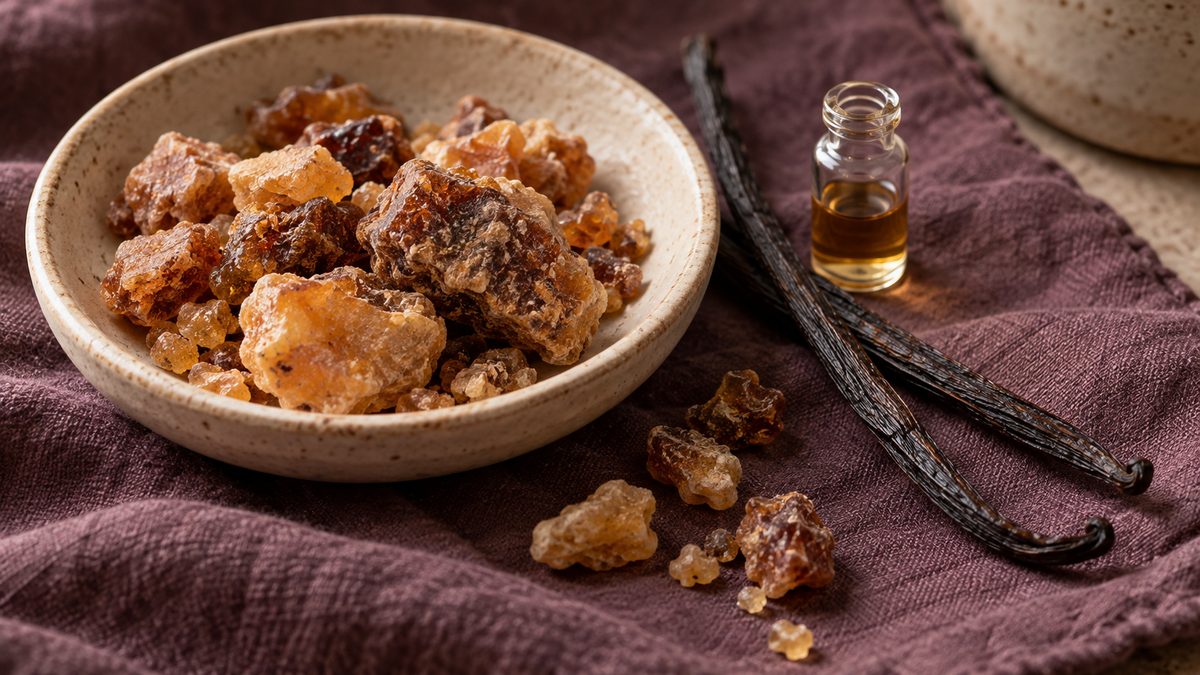
Benzoin in perfume smells warm, balsamic and often vanilla-like, with a resinous depth that can suggest soft spice or a faint powdery sweetness. It comes from the aromatic resin of Styrax trees and commonly helps round out amber, woody and floral bases. It is not simply another name for vanilla.
Benzoin resin is collected from trees after the bark is cut. The exuded material hardens into irregular pieces, which can vary in colour and texture. Perfumery preparations are made from this resin through processing and extraction; a piece sold for incense is not the same thing as a finished cosmetic preparation.
Two established trade types are Siam benzoin, associated with Styrax tonkinensis, and Sumatra benzoin, associated with species including Styrax benzoin. These names point towards botanical and material differences. They do not promise identical batches or a fixed smell in every finished fragrance.
Siam benzoin is often described as particularly sweet and vanilla-like. Sumatra material can have a more pronounced balsamic, spicy character. Processing and grade also matter, so avoid treating the trade name as a complete sensory specification. For a wearer, the whole composition is more useful evidence than the resin's name alone.
In fragrance language, balsamic commonly describes warm, rounded aromatic resins. It does not mean the perfume should smell like a salad dressing. Benzoin's sweetness can feel smoother and less obviously edible than a frosting-like vanilla accord, although a sweet formula may bring it straight into dessert territory.
Compare the smell to a few separate references: vanilla-like warmth, dry resin, soft spice and a powdery edge. You may detect some more clearly than others. Fragrance descriptions are attempts to explain an impression, not a test in which every wearer must find the same answer.
A useful distinction is between sweetness and density. A perfume can feel thick and enveloping without being strongly sugary. Equally, an airy perfume may contain a clear sweet benzoin effect. Judge those dimensions independently when deciding what you enjoy.
| Companion | Possible effect | What to listen for in the drydown |
|---|---|---|
| Vanilla | Rounded, creamy balsamic sweetness | Whether the resin remains distinct |
| Labdanum | Darker amber warmth | Leathery edges beneath the softness |
| Incense | Warm resin against dry aromatic smoke | Whether smoke or sweetness leads |
| Cedarwood | A drier woody frame | Soft resin smoothing the wood |
| Rose | Balsamic depth under petals | Whether the floral heart survives |
These are directions rather than recipes. Vanilla can make benzoin seem edible, while labdanum adds a darker resinous character. Together they are familiar building blocks in many amber accords, though amber has no single compulsory formula.
Beside incense, benzoin can soften a dry, church-like or smoky impression. It can also support a floral composition quietly, giving it a warm base without turning it into an obvious resin perfume. Seeing benzoin in a note list does not tell you how prominent it will be.
Benzoin commonly serves in the base of a fragrance. Bright citrus, spice or floral materials may dominate the first impression, leaving the rounded balsamic effect easier to notice later. A perfume pyramid describes an intended development rather than a strict schedule for each ingredient to switch on.
Wait for the initial spray to settle before judging. If the perfume starts with a sharp aromatic note and later becomes smooth and sweet, benzoin may be part of that transition. You cannot identify the formula by smell alone, but you can describe the change that matters to your preference.
Its persistent character can help create continuity in a base. That does not provide a guaranteed wear time or prove it will project strongly. Duration, reach and sweetness remain properties of the finished perfume on the wearer.
Begin with a strip to rule out a clear dislike. Compare a woody or incense-led benzoin perfume with a more vanilla-led one, keeping the strips separate. Note the difference between dry resin warmth and cream-like sweetness rather than marking both simply as sweet.
Choose the more promising sample for a separate skin trial. Follow its application instructions and check how it feels in a heated room as well as outside. Warm, sweet bases can feel more enveloping indoors, which is useful to discover before choosing a daily fragrance.
If you want less sweetness, ask for benzoin framed by dry woods, vetiver or aromatic incense. If you want comfort without pronounced smoke, ask for a smoother floral or vanilla pairing. Neither request guarantees a match, but both are more precise than asking for a light resin.
Do not rub resin pieces or concentrated perfumery extracts onto skin to experience the note. Raw materials can cause irritation or allergy and may not be supplied for direct cosmetic use. A natural origin does not remove that concern.
Use a finished product as directed and stop if irritation develops. Seek clinical advice for a persistent reaction, especially if you have known fragrance allergies. For product-specific questions, consult the manufacturer rather than relying on an evocative note description to establish suitability.
A guide to the note’s usual role, not a fixed formula or an ingredient list.
Notes overlap as a fragrance develops. Placement varies with the finished composition.
No. The similar-looking names do not identify the same substance. A benzoin perfume note refers to an aromatic resin or its reconstructed effect.
Do not treat incense resin as a cosmetic ingredient ready for skin. Use finished fragrance products with suitable directions and safety information.
No. A listed note describes an impression and does not reveal every ingredient or its origin.
It might suggest familiar balsamic sweetness, but woods, flowers, spices and the balance of the formula can produce a very different result.
For general information. Patch test a finished perfume as directed before wider wear. Stop use and see a doctor if irritation develops.
Notes A–Z
Vanilla smells warm, softly sweet and balsamic, with possible creamy, woody, smoky or dried-fruit facets. It can suggest a cured pod rather than frosting.
4 min readNotes A–Z
Amber in perfume usually smells warm, resinous and softly sweet, with vanilla, balsamic and sometimes leathery facets.
4 min readNotes A–Z
Incense in perfume can smell resinous, aromatic and smoky, while frankincense itself often adds bright citrus-like, peppery and pine-like facets.
4 min readNotes A–Z
Learn how labdanum from cistus creates ambery, leathery warmth, how it differs from incense, and what to check when sampling.
4 min read