Notes A–Z
Amber in Perfume: Resin, Vanilla and the Meaning of Warmth
Amber in perfume usually smells warm, resinous and softly sweet, with vanilla, balsamic and sometimes leathery facets.
4 min readNotes A–Z
Learn how labdanum from cistus creates ambery, leathery warmth, how it differs from incense, and what to check when sampling.
By The Bla Blu Bli Fragrance Library editors · Published October 27, 2026 · Updated October 27, 2026 · 4 min read
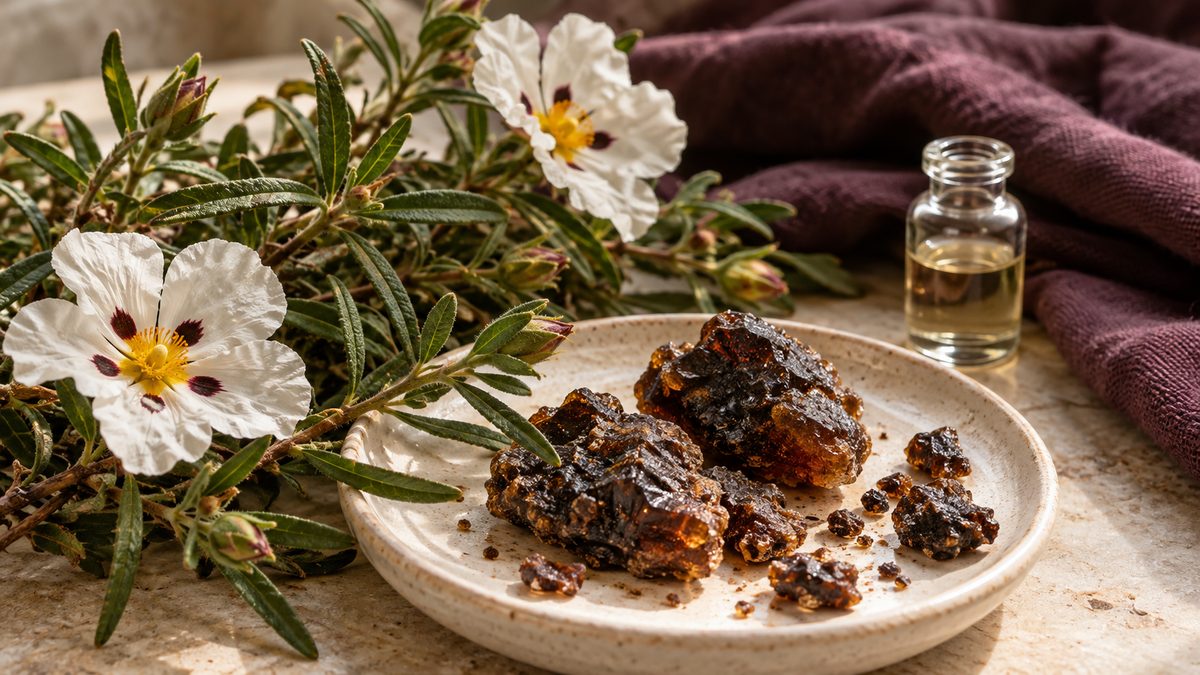
Labdanum in perfume is a dark, ambery resin note that can smell leathery, balsamic, warm and slightly animalic. It is obtained from cistus shrubs, often called rockrose, and helps give depth to amber and chypre compositions. It can suggest worn leather or sun-warmed vegetation as readily as sweetness.
Cistus shrubs have aromatic, resinous surfaces. Labdanum is collected from this resinous material and processed into forms suitable for perfumery, including extracts and absolutes. Cistus ladanifer, associated with the western Mediterranean, is a familiar source.
The shrub's common name can be misleading. Rockrose is not a true rose, and labdanum does not simply smell like rose petals. The floral name tells you little about the resin's dense, dark character. Think of aromatic scrub, balsam and leather before imagining a fresh bouquet.
Cistus oil and labdanum preparations are not interchangeable labels for a single material. Distillation and extraction produce different aromatic balances. A finished perfume may also recreate the effect using several ingredients, so a note list cannot verify exactly which preparation was used.
Labdanum often occupies several sensory categories at once. Its balsamic warmth can feel rounded, while its leathery side gives a darker, drier edge. Some interpretations seem animalic or medicinal; others are smoother and more sweetly ambery. These differences are useful clues when sampling.
Smoke can appear in a labdanum perfume without being the resin's defining feature. Incense or smoky woods may provide that impression. If smoke is what you dislike, do not reject all labdanum on the basis of one heavily smoked composition.
Similarly, leathery does not always mean harsh. A soft, suede-like effect and a dark, tarry leather accord are very different experiences. Our leather note article helps distinguish those descriptions before you compare samples.
| Structure | Labdanum's possible role | Main contrast to notice |
|---|---|---|
| Amber | Resinous warmth and depth | Dark resin against sweeter balsams |
| Chypre | A warm foundation within a contrasting structure | Bright opening against earthy or mossy depth |
| Leather | Balsamic body beneath a hide-like accord | Smooth warmth against dry or smoky edges |
| Woody resin | Density around dry wood | Rounded resin against pencil-like or rooty facets |
In many amber perfumes, labdanum works beside vanilla-like or balsamic materials. Benzoin can round its edges, making the result softer and sweeter. Increasing the leathery or earthy side produces a different character even when the same broad notes are listed.
A chypre composition depends on contrast and structure rather than a single smell. Labdanum can help anchor the darker portion beneath brighter notes. Modern interpretations vary, so the family label is a starting point for discussion rather than proof of a particular ingredient list.
Although usually described as a base note, labdanum can be apparent from the opening. A resin-led formula may introduce its warmth immediately, while citrus and aromatic materials move around it. Base does not mean invisible until the end of the day.
Follow the balance over time. Does the leathery edge soften, or does it become more noticeable as the bright notes fade? Does the perfume remain resinous, or settle into a sweeter vanilla impression? Those changes tell you more about wearability than the note's position on a pyramid.
Do not infer projection from darkness. A dense-smelling base can stay close, while a more transparent woody amber can spread widely. Test the reach of the finished fragrance as carefully as you test its texture.
Describe the part of labdanum that appeals to you. For rounded resin warmth, ask for a balsamic amber with restrained smoke. For a drier effect, look towards woody or chypre interpretations. For a leather impression, clarify whether you want soft suede or a more rugged, smoky character.
Compare samples separately on strips, then wear the preferred one by itself. A side-by-side skin test can become confusing when both perfumes have persistent bases. Avoid adding a sweet lotion or another fragrance during the trial, since either can change how you read the resin.
Check the sample during an ordinary indoor activity. A dramatic opening may be appealing for a moment but tiring when it stays with you through a working day. Conversely, an initially severe resin can become rounded and comfortable once the brightest or most medicinal facets settle.
Labdanum's warmth often suits cool weather, but the note is not restricted to winter evenings. A lighter floral or citrus structure can make it comfortable in other settings. Judge the full composition and the amount applied instead of assigning a season to the raw material.
In a shared room, begin cautiously and follow fragrance policies. Persistent bases can remain on clothing between wears, making a new application feel stronger than expected. Avoid spraying delicate fabric unless the product directions and care instructions allow it.
Raw resin, oils and absolutes should not be used as ready-to-wear substitutes. Follow finished-product guidance and seek advice from a clinician if irritation persists. Ask the manufacturer about known allergens or ingredient concerns; neither a natural resin description nor an amber label establishes individual suitability.
A guide to the note’s usual role, not a fixed formula or an ingredient list.
Notes overlap as a fragrance develops. Placement varies with the finished composition.
No. Labdanum is an aromatic plant resin. The similarly spelled historical medicinal preparation is a different substance.
A leather-like smell does not establish animal ingredients. Ask the manufacturer for product-specific vegan information.
Some people describe a salty or mineral edge in particular compositions. That impression does not mean salt has been added to create the note.
No. Cistus can refer to different preparations or a broad aromatic effect. Product descriptions may not distinguish them precisely.
For general information. Patch test a finished perfume as directed before wider wear. Stop use and see a doctor if irritation develops.
Notes A–Z
Amber in perfume usually smells warm, resinous and softly sweet, with vanilla, balsamic and sometimes leathery facets.
4 min readNotes A–Z
Leather in perfume can smell dry, smoky, tarry, warm or softly suede-like, sometimes with animalic or rubbery facets.
4 min readNotes A–Z
Explore benzoin resin, its vanilla-like balsamic smell, its sources and how it changes amber, floral and woody perfumes.
4 min readFragrance families
Learn the classic chypre structure, how modern mossy perfumes differ, and what to notice when sampling citrus, flowers and a dry base.
5 min read