Notes A–Z
Vetiver in Perfume: Rooty Freshness, Dry Earth and Smoke
Vetiver smells woody, earthy and dry, with possible green, smoky, bitter citrus or nutty facets.
4 min readNotes A–Z
Learn how petrichor and rain accords suggest wet soil, leaves and stone, and how to choose an earthy autumn perfume that suits your taste.
By The Bla Blu Bli Fragrance Library editors · Published October 25, 2026 · Updated October 25, 2026 · 5 min read
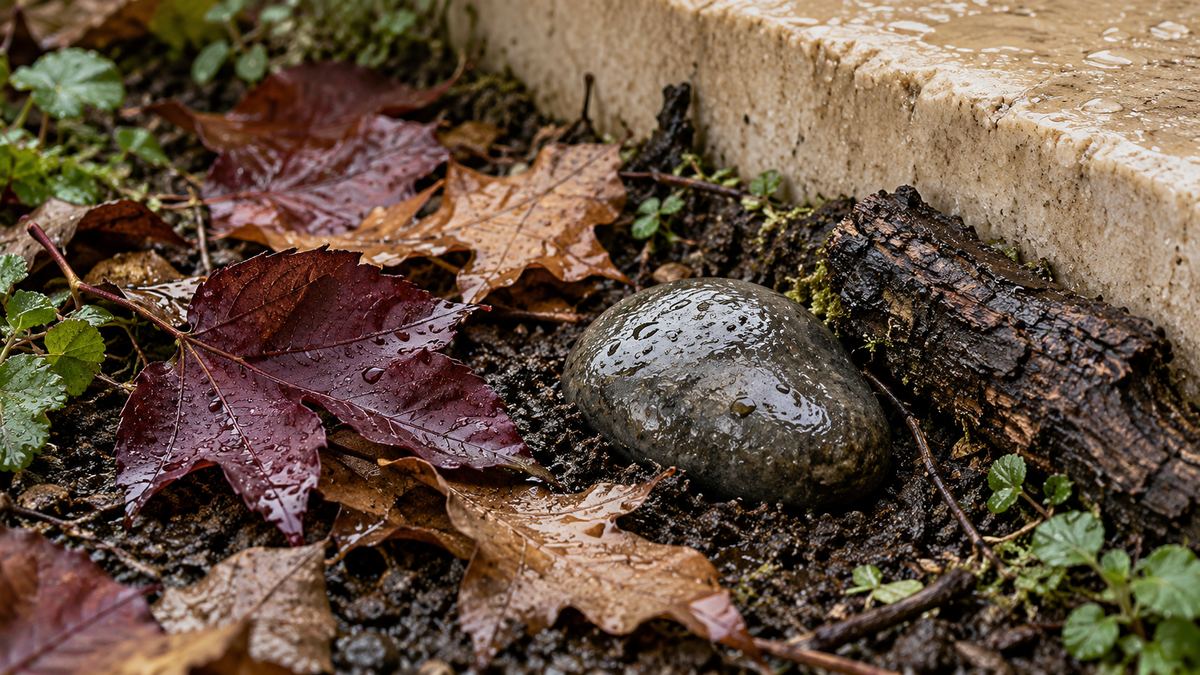
Petrichor perfumes recreate the impression of rain meeting dry ground through earthy notes supported by green, woody, airy or mineral effects. There is no single rain note that smells the same in every perfume. A composition may suggest damp soil after a shower, leaves in a wet garden or cool pavement before a storm, so choose the scene before choosing the sample.
For stormy autumn weather, that distinction matters. Wet woodland and bright, watery freshness can both sit under a rain description, yet feel very different on skin. The useful starting point is the part of rainfall you want to smell again.
Petrichor is the distinctive earthy smell associated with rain falling on dry ground. It is more specific than a general impression of dampness. Rain passing through a leafy garden, a city street and bare soil will not offer an identical smell.
In perfumery, rain is a creative brief rather than a fixed recipe. A perfumer can focus on humidity, green leaves, wet stone or the dark ground beneath plants. The result need not reproduce the full outdoor event to make the association recognisable.
When reading descriptions, separate words that suggest the air from words that suggest the ground. Airy, ozonic and watery point towards space and freshness; earthy, rooty and humus-like point downwards. If you want muddy boots and damp bark, an airy composition alone may leave you disappointed.
Geosmin is an earthy-smelling compound produced by certain microorganisms. It is associated with soil smells and is one reason beetroot can have an earthy aroma. It provides a useful reference for understanding why a damp-earth effect can feel so recognisable.
That does not mean every perfume described as petrichor contains geosmin. An earthy accord can use other materials, and a published note list is not a complete formula. Nor does adding an earthy material automatically create a convincing rainy scene: the surrounding texture changes what you perceive.
Think of the difference between soil in a closed pot and soil outdoors after rain. The second impression includes space, vegetation and whatever surfaces are nearby. A perfume needs that wider context if the intended effect is a garden after a shower rather than earth alone.
For the same reason, natural and synthetic are poor shortcuts for judging realism. Both can contribute to an illusion. The natural and synthetic materials overview explains why origin and smell should be considered separately.
These are ways to read the finished smell, not a formula for mixing raw materials. Each perfume may place the emphasis differently, and the same note can change character beside different companions.
| Part of the scene | Effect to look for | A possible mismatch |
|---|---|---|
| Damp ground | Earthy, rooty or soil-like depth | More muddy or vegetable-like than expected |
| Wet vegetation | Green leaves, crushed stems or mossy impressions | Too bitter or grassy for your taste |
| Rain-filled air | Airy, watery or ozonic freshness | More laundry-like or sharp than outdoorsy |
| Stone and timber | Cool mineral effects and dry or damp woods | Too abstract if you wanted obvious soil |
Vetiver can provide rooty, woody or earthy facets that fit a wet-ground idea. Patchouli can bring a darker earthy depth. Neither is a substitute word for petrichor, and both appear in many perfumes that have no rain association.
Musks can soften the edges or contribute a clean background. That may help an airy rain effect feel wearable, but it can also make the composition remind you of fresh fabric. Read the musk note explanation if that clean softness is either an attraction or a concern.
For a woodland impression, look for a balance of green, earthy and woody descriptions. Sample for damp leaves and roots rather than assuming that a mossy label guarantees them. Mossy effects can also feel dry or abstract.
For wet pavement, mineral and airy language may be more useful than an emphasis on rich soil. Expect an interpretation of coolness and surfaces, not a literal piece of stone in liquid form. Decide whether you enjoy the effect without needing every element to be identifiable.
For rain viewed through a window, a softer composition with woods or restrained musk may be more comfortable. It can evoke the weather without putting a damp-earth note at the centre. This is a useful route if you like the idea of petrichor but dislike soil smells close to your skin.
Do not assume that a dark sky calls for a dense fragrance. A light rain accord can fit autumn as easily as an earthy woody base. Your routine, indoor surroundings and preferences matter more than matching the forecast literally.
Rain compositions can change direction as their bright opening settles. Before choosing one, write down a short sensory aim, such as cool stone with green leaves. It gives you something concrete to compare against the description.
The guide to testing perfume offers more help with organising samples. Avoid treating a rainy test day as proof that a perfume performs better in rain; weather changes several conditions at once, and personal impressions do not establish a general rule.
The deciding question is simple: does the settled scent still give you the part of rain you wanted? A convincing first impression is enjoyable, but the quieter base is what you may spend much of the day wearing.
A guide to the note’s usual role, not a fixed formula or an ingredient list.
Notes overlap as a fragrance develops. Placement varies with the finished composition.
A rain note describes an impression rather than a required ingredient. The name alone does not tell you whether any water came from rainfall.
Yes. Rain smells different around soil, vegetation, stone and streets. A perfume usually selects one version of that experience.
No. Marine notes suggest the sea, while rain notes can suggest fresh air, wet leaves, stone or soil. Some compositions overlap, so sample rather than relying on the category.
No. Mineral is usually a descriptive term for an effect such as cool stone, dryness or a flinty edge. It does not identify a specific ingredient.
Geosmin has an earthy smell also associated with beetroot. If that association bothers you, try a rain composition with less emphasis on soil.
For general information. Patch test a finished perfume as directed before wider wear. Stop use and see a doctor if irritation develops.
Notes A–Z
Vetiver smells woody, earthy and dry, with possible green, smoky, bitter citrus or nutty facets.
4 min readNotes A–Z
Patchouli smells earthy, woody and aromatic, with possible damp-leaf, camphoraceous, balsamic or cocoa-like facets.
4 min readNotes A–Z
Musk in perfume can smell softly powdery, clean and fabric-like, warm and skin-like, or more animalic.
4 min readIngredients
Natural extracts and synthetic aroma materials are both useful tools in perfume.
4 min read