Notes A–Z
Cinnamon in Perfume: Bark, Leaf and Warm Spiced Accords
Explore cinnamon bark and leaf in perfume, their different spicy facets, useful pairings and sensible precautions for sensitive skin.
5 min readNotes A–Z
Understand cinnamon, nutmeg and clove in pumpkin spice perfume, and choose dry woods and gentle sweetness without a sugary latte impression.
By The Bla Blu Bli Fragrance Library editors · Published October 25, 2026 · Updated October 25, 2026 · 5 min read
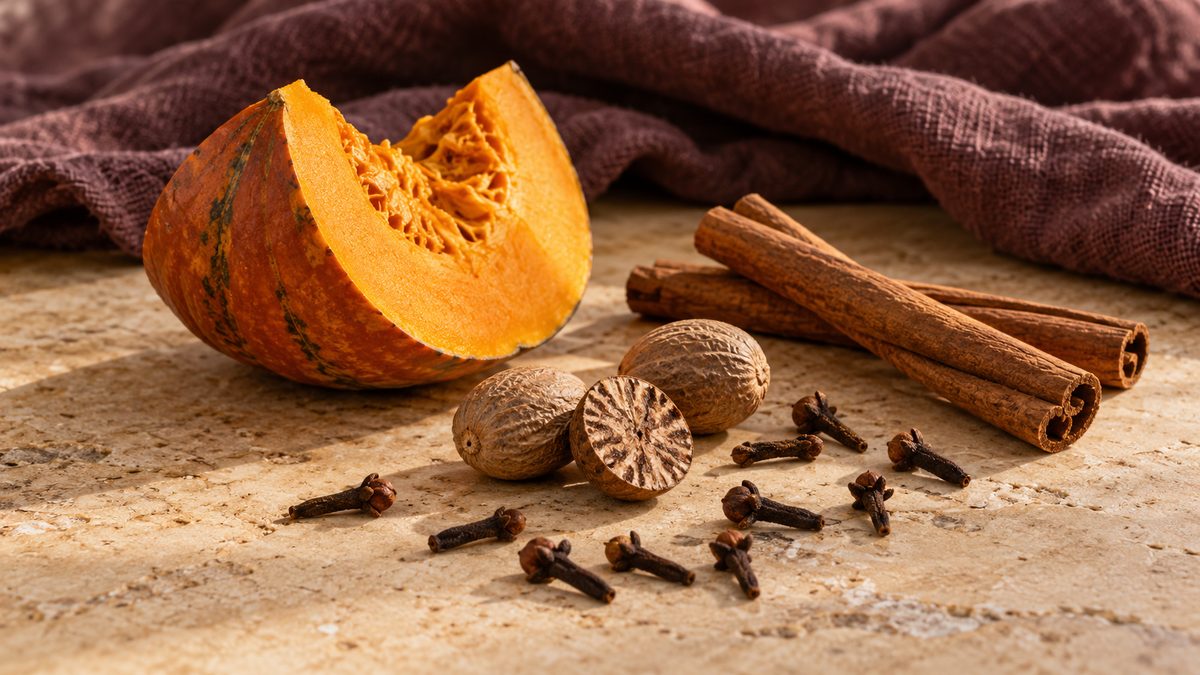
Pumpkin spice perfume combines warm spice impressions, often cinnamon, nutmeg and clove, with notes that may suggest baked pumpkin or dessert. To enjoy the spices without smelling like a latte, choose a composition that gives more space to dry woods and less to creamy, caramel or coffee accords. The balance around the spices matters more than the seasonal name.
You can like the smell of baking and still want a perfume that feels dry on skin. Equally, a little vanilla need not turn the whole composition into pudding. The aim is to identify which part of the familiar autumn smell you want to keep.
Pumpkin flesh has a much quieter scent than the spiced desserts associated with it. In perfume, pumpkin can be an imaginative accord: a combination suggesting cooked squash, soft sweetness or a baked texture. It does not prove that pumpkin extract is present.
Pumpkin spice points towards the seasoning. Cinnamon, nutmeg and clove are common reference points, sometimes accompanied by ginger or other spices. There is no single perfume recipe that the phrase requires, so two descriptions can lead to very different scents.
The latte impression adds another layer: coffee, milk-like creaminess and sweetness. A composition can have baking spices without that drink association, while another may lean strongly towards a café even if the spices are subdued.
For a wider explanation of edible scent effects, see gourmand perfumes. Gourmand describes an impression of food or dessert; it does not tell you the perfume's sugar content or ingredients.
Cinnamon often suggests warm bark and familiar baking spice. It can feel sweet by association even when there is little obvious sugary softness around it. If cinnamon dominates, ask whether you enjoy its warmth or mostly recognise a kitchen memory.
Nutmeg can give a drier, woody and gently peppery impression. In a restrained accord it may help the spices feel closer to a cupboard of whole ingredients than a finished dessert. That is a scent direction to test, not a guarantee attached to the name.
Clove has a sharper aromatic warmth, sometimes with a medicinal edge. A trace can make a spice blend more distinct; a prominent clove effect can become the main thing you notice. Enjoying clove in baking does not establish that you will enjoy wearing it.
Do not read the order of a short note list as a measure of ingredient quantities. It is more useful to identify the dominant effect on the strip and then check how it develops on skin. The spicy perfume overview helps distinguish warm baking spices from fresher aromatic styles.
The base often decides how the spice story ends. Dry woods can frame cinnamon and nutmeg without adding an obvious dessert finish. Creamy woods may soften the spices while still keeping some woody shape, depending on the rest of the perfume.
| If the sample reminds you of... | Check for this surrounding effect | A direction to compare next |
|---|---|---|
| Sweetened coffee | Coffee paired with creamy sweetness | A spicy woody sample without a coffee accord |
| Iced cake | Strong vanilla or sugary softness | A drier spice composition with cedar or vetiver |
| Hot milk with spice | A prominent milky accord | An aromatic or woody frame around the spices |
| A sharp spice cupboard | Clove or cinnamon dominating | Softer woods or restrained vanilla for balance |
| Potpourri | Dry spice mixed with decorative floral associations | A simpler woody spice structure |
These are comparison prompts, not rules that particular notes always produce those results. Vanilla, for example, can suggest a dry pod as well as a sweet dessert. Removing it from your search entirely may exclude a balance you would enjoy.
Likewise, adding smoke does not automatically make a sweet perfume dry. Smoke beside caramel can suggest toasted sugar. If that is the direction you keep finding, compare with smoky woods where the timber remains more prominent.
The first spray may emphasise a lively spice opening while the sweeter background becomes clearer later. Choose a suitable finished sample and wear it on a normal day before deciding it is sufficiently dry.
Write down three observations: the spice you notice most, the food or non-food association, and the texture of the settled base. Words such as powdery, syrupy, creamy and woody are more useful than simply autumnal. Repeat this after the opening has changed.
Compare samples on separate days where possible. If you wear a sweet body lotion underneath one and an unscented product under another, you are comparing combinations as well as perfumes. Keep the rest of your scented routine simple while deciding.
Pay attention to how much you want around you. A scent that is pleasant for a brief sniff may feel tiring when its sweetness remains close to your face. Follow the product's directions and begin with a modest application rather than assuming a seasonal fragrance needs to fill a room.
Layering cannot remove the sweet materials already in a perfume. Another fragrance may alter the overall impression, but it can also create a denser mix or obscure the spice you liked. First establish whether the original scent works on its own.
If you still want to experiment, compare a small amount of the combination on separate paper strips before wearing it. Keep the original perfume on another strip as a reference. Stop if the added wood merely gives you a sweet wood dessert rather than the drier result you wanted.
The fragrance layering guide covers ways to make comparisons clearer. Choosing a less sweet composition is often more straightforward than repeatedly adding other scents to compensate for a base you dislike.
Do not add kitchen spices or raw spice oils to finished perfume or apply them directly to skin. Food use does not establish suitability for cosmetic use. Check the finished product's information if you have sensitivities; discontinue use if irritation develops and consult a professional for persistent reactions.
A successful pumpkin spice perfume does not need to reproduce a drink. If you can still pick out warm bark, dry nutmeg or an aromatic clove accent after the scent settles, you have kept the spice character while choosing how much dessert belongs around it.
A guide to the note’s usual role, not a fixed formula or an ingredient list.
Notes overlap as a fragrance develops. Placement varies with the finished composition.
No. It can describe an accord suggesting cooked pumpkin, a dessert or an autumn scene. The note name does not confirm the ingredients.
No. The spices can sit beside dry woods or aromatic notes. Vanilla, caramel and creamy accords often have more influence on a dessert-like impression.
No. The seasonal association is optional. Wear it when the composition and its intensity suit your preferences and surroundings.
No. Perfume is not food. Use it only as directed, regardless of how closely it resembles spices, milk or dessert.
No. Removing alcohol does not remove all possible irritants or allergens. Check product information and seek professional advice about known sensitivities.
For general information. Patch test a finished perfume as directed before wider wear. Stop use and see a doctor if irritation develops.
Notes A–Z
Explore cinnamon bark and leaf in perfume, their different spicy facets, useful pairings and sensible precautions for sensitive skin.
5 min readNotes A–Z
Understand clove and eugenol in perfume, useful pairings, the difference between spicy and sweet, and how to approach ingredient labelling.
5 min readNotes A–Z
Vanilla smells warm, softly sweet and balsamic, with possible creamy, woody, smoky or dried-fruit facets. It can suggest a cured pod rather than frosting.
4 min readFragrance families
What makes a perfume gourmand, how edible accords are built, and how to choose vanilla, nutty or roasted scents without sweetness overload.
4 min read