Notes A–Z
Petrichor and Rain Notes: How Perfume Suggests Wet Earth
Learn how petrichor and rain accords suggest wet soil, leaves and stone, and how to choose an earthy autumn perfume that suits your taste.
5 min readHow to wear fragrance
Practical rainy-day perfume advice: how humidity, wind and wet clothing affect the experience, which notes to sample and when to reassess application.
By The Bla Blu Bli Fragrance Library editors · Published October 26, 2026 · Updated October 26, 2026 · 4 min read
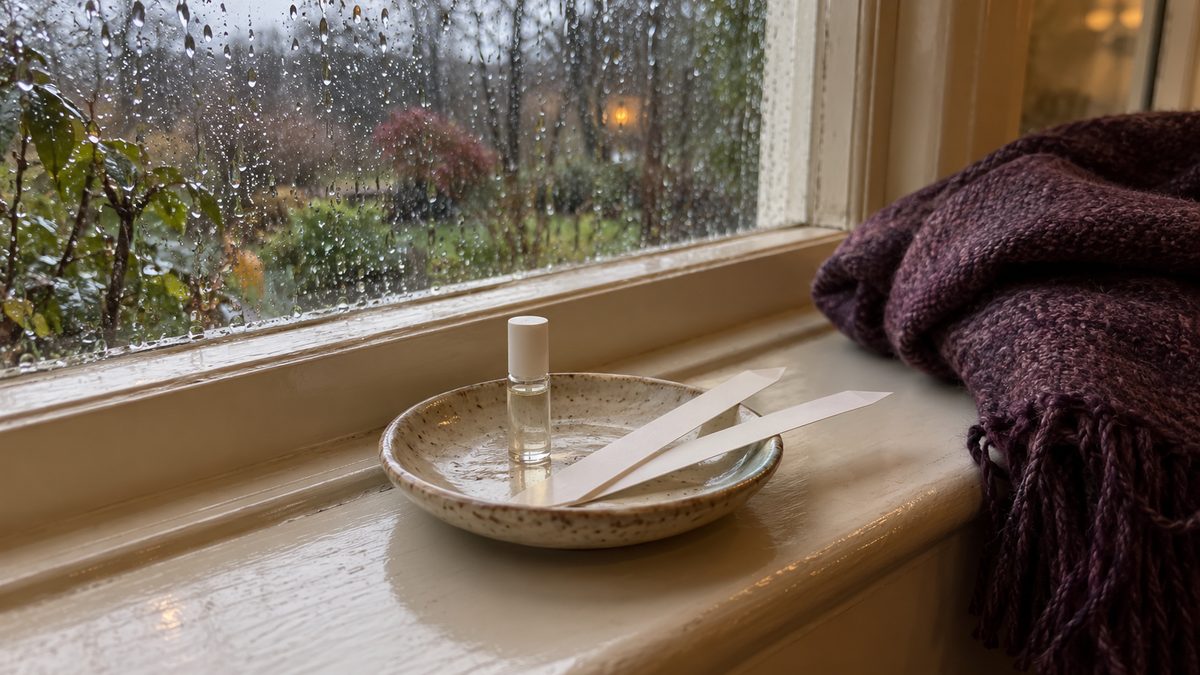
On rainy days, protect your usual perfume application from direct wetting and wait until you are dry indoors before adding more. Humidity can influence how a fragrance behaves, but it does not provide a reliable stronger-or-weaker rule. Temperature, wind, the formula and your clothing help determine what reaches your nose.
A perfume that seems absent on a wet pavement may become noticeable again on a sheltered bus or in a warm hallway. That change does not mean the rain has repaired the fragrance. You have moved into a different smelling environment, often while removing a coat or scarf.
Humid air and water landing on skin are different conditions. Humidity describes moisture in the air. Direct rain adds water to the application area and may lead you to wipe it with a sleeve or towel. Physical wetting and wiping can disturb what remains on the surface.
Avoid the claim that damp air always traps fragrance or makes every perfume louder. A finished perfume contains materials with different properties, so its response cannot be reduced to one humidity percentage. Cool air can also accompany rain, making it hard to tell which condition changed your impression.
Wind adds another complication. Moving air can disperse scent away from you, so a quiet personal impression is not proof that nothing remains. Read about projection and sillage before treating the size of the scent cloud as a measure of longevity.
For a rainy commute, sample perfumes with a settled woody, musky or resinous character you enjoy. Those bases often provide a continuing impression after the bright opening softens. The whole formula determines persistence; a listed wood does not make a fragrance resistant to water.
Dry cedar can feel clear beside damp wool. Vetiver may offer rooty, grassy or earthy facets that suit a wet-weather mood. Soft musk can feel less intrusive in a crowded indoor space, although some musky formulas project strongly. Assess the sample rather than assuming that clean means faint.
If you enjoy the smell of wet ground, explore petrichor and rain notes. These are artistic scent effects, not evidence that the perfume will work better in rain. An earthy accord you love on a strip may feel too dense beside wet shoes and heavy outerwear.
| Part of the day | What may confuse your judgement | What to do |
|---|---|---|
| Walking in wind and drizzle | Scent disperses and clothing covers skin | Avoid judging longevity during the walk |
| Removing a damp scarf | Retained fragrance mixes with wet fabric odour | Separate the scarf from your skin assessment |
| Entering a heated room | Warmer conditions can increase noticeability | Let the fragrance settle before refreshing |
| Drying after a soaking | Towelling may remove some surface perfume | Dry gently and reassess later |
| Sitting on shared transport | Nearby passengers receive scent at close range | Keep application restrained and follow guidance |
This approach prevents a common mistake: applying extra fragrance for the exposed outdoor section, then carrying that larger application into close company. Plan around the longest indoor part of the day instead.
Apply according to the product instructions before going out, allowing the sprayed area to dry before dressing. Covered skin may be less exposed to rain than wrists that extend beyond a sleeve. Choose only areas permitted by the product directions and comfortable for your skin.
Do not spray a wet sleeve to replace fragrance you think you have lost. Moist fabric makes it harder to judge both the smell and any mark left by the liquid. Perfume may stain or affect finishes, and rain does not make fabric application safer.
Waterproof coatings, leather and delicate scarves deserve particular caution. Follow their care labels rather than using them as scent carriers. If the fragrance permits clothing application, test an inconspicuous part of a suitable washable garment and allow it to dry fully before assessing the result.
First, get into shelter and remove wet outer layers where practical. Dry your skin gently and change soaked clothing if you can. Stronger perfume will not dry fabric or remove the odour of a damp coat.
Next, give your nose a break from the application point. Notice the fragrance during normal movement rather than repeatedly sniffing your wrist. If you are unsure how much others can detect, a willing companion may provide more useful feedback than another spray.
Only consider a small refresh once you know what remains and the setting permits it. Do not spray in a crowded doorway or train carriage. If skin feels irritated after wet clothing has rubbed against it, avoid adding fragrance there.
Use a familiar perfume first. Record the application area, the outer layer you wore and whether it got wet. Note what you could smell outdoors, then what you noticed after settling indoors. You do not need precise weather measurements to identify a useful personal pattern.
On another day, try a candidate with a different base while keeping the routine similar. Compare comfort and character as well as duration. Our perfume testing method helps keep the comparison focused on one fragrance at a time.
Keep the bottle in a closed bag away from accidental knocks and wet clothing, following its storage directions. This is general application advice, not a guarantee of performance or skin tolerance. Stop using a product if it causes irritation and seek professional advice if the reaction persists. A good rainy-day choice remains pleasant when you are dry, warm and sitting beside someone else.
A coat can shelter covered skin from direct rain, but it also changes airflow around the application. Do not assume a quiet scent beneath a coat has disappeared.
Avoid it. Perfume may affect the fabric, finish or handle, and an umbrella is not a controlled application surface. Follow the fragrance and umbrella care instructions.
No. Rain and petrichor descriptions refer to scent impressions created with fragrance materials. The note name does not identify the finished product's water source.
Paper strips can help compare their initial character indoors, but separate wearing days make skin comparisons clearer. Different exposure to sleeves and rain can distort a side-by-side trial.
No. Rain does not change a product's intended use. Only use a product on hair if its directions permit it, and avoid spraying near the eyes or inhaling the mist.
For general information. Patch test a finished perfume as directed before wider wear. Stop use and see a doctor if irritation develops.
Notes A–Z
Learn how petrichor and rain accords suggest wet soil, leaves and stone, and how to choose an earthy autumn perfume that suits your taste.
5 min readNotes A–Z
Vetiver smells woody, earthy and dry, with possible green, smoky, bitter citrus or nutty facets.
4 min readHow to wear fragrance
Projection describes how far a perfume seems to extend around the wearer, while sillage describes the trail it leaves as the wearer moves.
4 min readHow to wear fragrance
Test perfume by limiting competing scents, assessing an opening on paper, and giving a suitable finished sample a separate skin-wearing day.
4 min read