Notes A–Z
Leather in Perfume: Suede, Smoke and the Scent of Tanned Hide
Leather in perfume can smell dry, smoky, tarry, warm or softly suede-like, sometimes with animalic or rubbery facets.
4 min readNotes A–Z
Saffron in perfume often smells dry, hay-like and leathery, with warm spice, faint sweetness and sometimes metallic or rubbery facets.
By The Bla Blu Bli Fragrance Library editors · Published October 21, 2026 · Updated October 22, 2026 · 4 min read
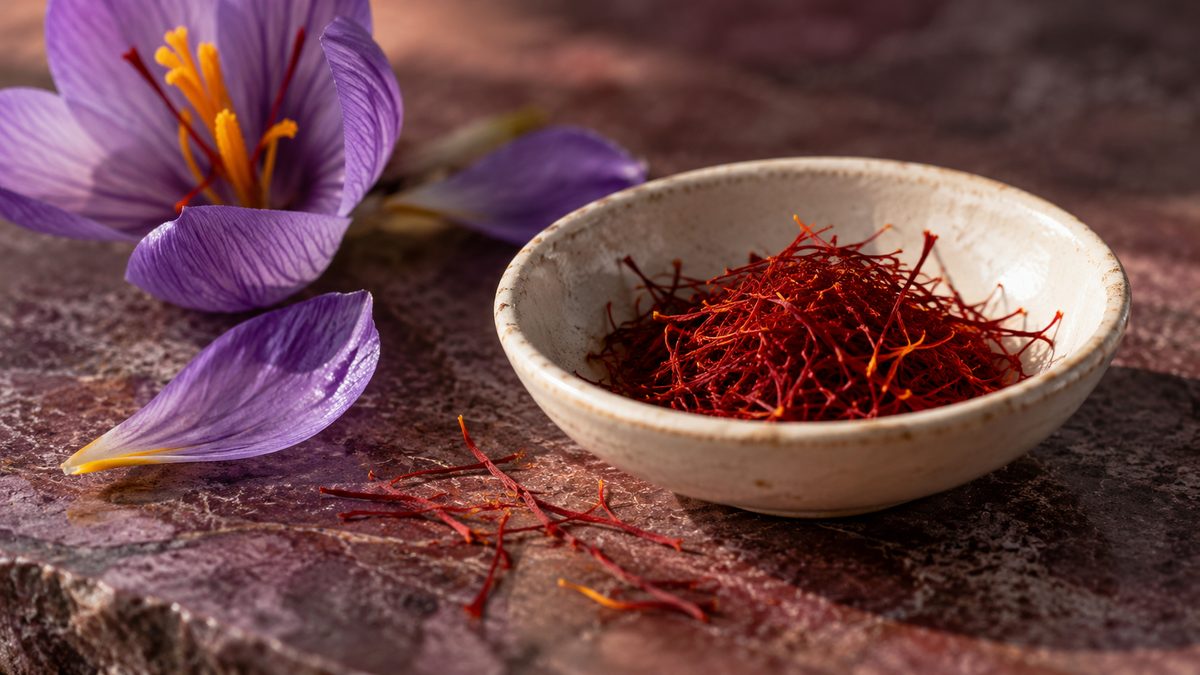
Saffron in perfume often smells dry, hay-like and leathery, with warm spice, faint sweetness and sometimes metallic or rubbery facets. It is not usually a cinnamon-like heat. A perfumery saffron note may use extracted spice material, synthetic ingredients or a constructed accord that highlights selected parts of its smell.
Culinary saffron consists of the dried stigmas of Crocus sativus. Cultivation is associated with regions including Iran, Spain and parts of India. The perfumery association begins with those aromatic flower parts, not with the whole purple blossom or an ordinary woody spice bark.
Specialised extraction can provide fragrant materials from saffron, but a note list does not establish that a natural spice extract is used. Natural saffron's culinary value or a story about harvesting is not proof of the perfume's composition.
Safranal is an important aroma compound associated with saffron's characteristic dry, warm smell. It helps explain the connection between hay, spice and leathery effects, although the complete spice has a more complex aromatic profile. A perfumer can use saffron-like aroma materials to build an effect without reproducing every constituent of the spice.
Saffron can feel warm while remaining dry and relatively unsugared. Its sharper edge may suggest metal, polished leather or new rubber. Those are sensory comparisons, not evidence of metal or rubber in the bottle.
| Saffron direction | What to listen for | Helpful comparison |
|---|---|---|
| Hay-like | Dry grass and warm straw | Tonka's sweeter hay facet |
| Leathery | Supple hide or a sharper suede edge | A full leather accord |
| Metallic | Bright, cool, almost mineral sharpness | Smooth warm resin |
| Rubbery | Elastic, new-object association | Smoky or tarry leather |
| Sweet spice | Rounded, gently honeyed warmth | Vanilla and amber sweetness |
The table can help you explain a mixed reaction. You may enjoy the dry hay but dislike rubber, or enjoy the metallic edge while finding a sweet base excessive. Asking for a different saffron style is more useful than asking only for less intensity.
Saffron is often placed in the heart, where it gives flowers, leather and woods a distinctive dry warmth. Potent saffron-like materials can be obvious from the opening and remain noticeable later. A note pyramid does not provide an exact timetable for their appearance.
With rose, saffron can add a dry leathery contrast to rounded petals. With leather, it may strengthen the hide impression or introduce the sharper rubber-like facet. These pairings can feel polished or forceful depending on the balance.
Oud supplies a deeper woody-resinous background. Sandalwood can smooth the spice, while amber and vanilla make it richer and sweeter. Citrus gives a brief bright contrast, and iris can shift the heart towards powdery suede.
Choose the pairing according to the feature you want to keep. If saffron seems too metallic, a smoother woody base may help. If it seems too sweet, look for a drier leather or cedar direction. Those changes affect texture rather than simply reducing the amount of spice.
The vivid colour associated with culinary saffron can make golden perfume liquid feel persuasive, but colour does not establish saffron content. A fragrance can be coloured independently, and a saffron-like accord can be pale.
Natural extracts and synthetic supports also have different formulation uses. A perfumer may want a stable, precise leathery effect rather than the whole smell of dried stigmas. That is a design choice rather than a guarantee of either realism or quality.
If a product makes a specific natural-saffron claim that matters to you, ask for source information. Smell, colour and the prominence of the note name cannot confirm it. The materials sourcing article gives context for interpreting natural and manufactured ingredients without ranking them automatically.
Begin with a finished sample on paper, especially if you are unsure about rubbery or metallic scent associations. Let the initial alcohol clear and describe saffron, sweetness and smoke separately. Otherwise a sharp spray can be mistaken for the spice itself.
Use a contrasting pair, such as saffron with rose and saffron with leather. Keep the strips apart and revisit them after the opening. Is the dry warmth still clear, or has it been replaced by a sweet or smoky base?
For the skin test:
This approach makes the next choice more precise. If the late rubber facet bothers you, look for a softer floral saffron rather than buying a stronger version of the same structure.
A resinous saffron can feel suited to cool evenings, while a transparent floral treatment may work in daytime. Application and the complete perfume's reach matter more than a seasonal category. Start cautiously before a meeting or meal where a persistent sharp accord could become intrusive.
Do not make skin preparations from culinary saffron or put concentrated aroma chemicals directly on your body. Food use and perfumery use are different contexts. Check the finished ingredient list for known sensitivities, discontinue a product that irritates you, and seek professional advice for persistent or repeated symptoms.
The note is not a treatment and does not establish the health properties sometimes discussed for the food ingredient. Enjoy its dry warmth as a fragrance effect without carrying culinary or supplement claims into wearing advice.
A guide to the note’s usual role, not a fixed formula or an ingredient list.
Notes overlap as a fragrance develops. Placement varies with the finished composition.
Price associations are subjective and can be influenced by description and context. A saffron note does not prove rare natural material, a particular cost or a quality level.
They are different spices with different aromatic profiles. Smelling one does not reliably teach the other, and neither food ingredient should be applied as a substitute for a finished perfume sample.
Dry leathery and medicinal associations can overlap in some accords. The impression does not identify a medical ingredient or indicate a healing property.
Yes. A small dry accent within a smooth floral or woody structure can be restrained. Test the complete fragrance's settled form, since a gentle opening can still lead to a persistent base.
For general information. Patch test a finished perfume as directed before wider wear. Stop use and see a doctor if irritation develops.
Notes A–Z
Leather in perfume can smell dry, smoky, tarry, warm or softly suede-like, sometimes with animalic or rubbery facets.
4 min readNotes A–Z
Oud smells resinous and woody, with possible smoky, leathery, medicinal, sweet or animalic facets.
4 min readNotes A–Z
Pink pepper smells fresh, rosy and gently peppery. Learn its Schinus sources, extraction, opening role and contrasts with other spice notes.
5 min readNotes A–Z
What aldehydes mean in perfume, why some smell sparkling or soapy, and how these varied materials transform floral and clean fragrance accords.
4 min read