Notes A–Z
Oud in Perfume: Resinous Wood, Smoke and Animalic Facets
Oud smells resinous and woody, with possible smoky, leathery, medicinal, sweet or animalic facets.
4 min readHow to wear fragrance
Understand Dubai-style perfume descriptions, from oud and rose to amber and saffron, and learn how to test sprays and apply perfume oils.
By The Bla Blu Bli Fragrance Library editors · Published November 7, 2026 · Updated November 7, 2026 · 5 min read
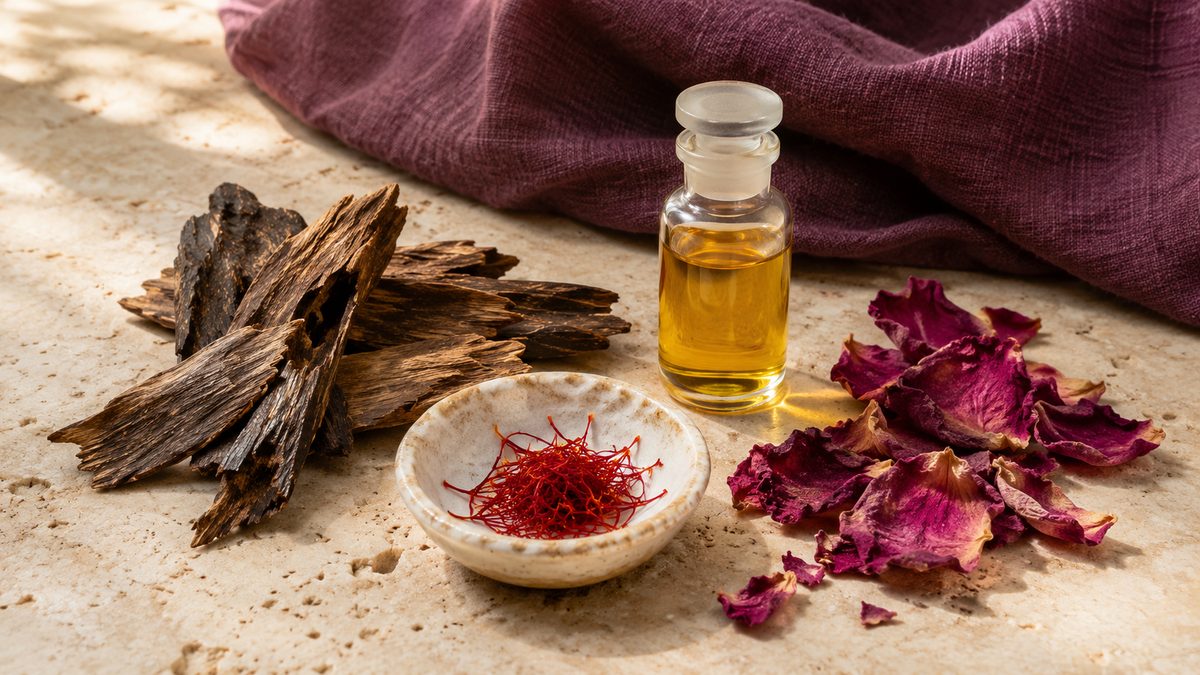
Dubai-style perfume usually means a loose association with rich woods, rose, amber, saffron and perfume oils, rather than one defined fragrance type. Middle Eastern perfumery includes many traditions and scent preferences, so a regional description cannot tell you exactly how something smells or how strongly it will wear.
If you are searching for “dxb perfume”, start by translating that broad phrase into specific questions: do you want woody depth, a rose scent, warm sweetness or an oil format? That gives you something useful to test instead of relying on the place name as a promise.
Dubai is a trading and retail centre, but a perfume described as Dubai-style is not necessarily made there. Equally, a fragrance made in the region need not contain oud or smell heavy. Check origin information separately if it matters to your purchase.
Treat “Middle Eastern style” as a starting description used by the seller. Ask for the fragrance’s own note profile, format and directions. Fresh, floral, musky and gently woody scents can belong in the conversation as well as the dense resinous styles that attract attention.
Avoid assuming authenticity or quality from ornate packaging, oil format or a dark liquid. Those visible features cannot establish ingredients or craftsmanship. A plain, clearly identified sample tells you more about suitability when you wear it than a decorative bottle can tell you from a photograph.
Several familiar notes help explain the scent association, but none is compulsory. Their proportions and the materials around them change the result. A rose-and-oud combination may feel dry and woody, sweet and rounded, or sharply leathery.
| Note or accord | Common impressions | What to check in a sample |
|---|---|---|
| Oud | Woody, smoky, leathery or earthy | Whether the darker facets feel pleasant on you |
| Rose | Fresh petals, honeyed flowers or cosmetic softness | Whether it stays floral or becomes very sweet |
| Amber | Warm, resinous, sometimes vanilla-like | How much sweetness remains after the opening |
| Saffron | Dry spice with leathery or hay-like shades | Whether the dry edge balances or dominates |
| Musk | Soft, clean, powdery or warm effects | How the base feels close to skin later |
These are descriptions, not ingredient guarantees. A named note can be an effect built from several materials. In particular, an oud fragrance may use an accord rather than natural oud oil; a note list alone does not establish which.
Perfumery amber usually describes a warm accord rather than a liquid extracted from fossil amber. Understanding that distinction helps you read a fragrance description without taking every evocative word literally.
Rose can make a dark woody composition feel more floral and rounded. A fresher rose effect may lift the opening, while a sweeter one can merge with amber and feel dense. If you dislike sugary perfumes but enjoy flowers, ask about the sweetness rather than rejecting every rose-and-oud pairing.
The rose note guide explains why rose is broader than a single petal smell. On skin, notice whether the floral impression survives into the later stages or becomes a small accent behind the woods.
Saffron can bring a dry, leathery impression that cuts across sweetness. It does not necessarily smell like a jar of cooking spice, and its presence does not mean the perfume contains the raw spice itself. Test how that dry edge sits with the rest of the composition before deciding from a note list.
Traditional attars are associated with aromatic distillation and a base oil. In modern retail language, “attar” can also be used more broadly for oil-based fragrances. The word alone cannot establish a traditional production method, a particular base or an all-natural formula.
Read the specific product description. A perfume oil may contain fragrance materials in a carrier, while an alcohol-based spray disperses its contents through an atomiser. Neither format guarantees subtlety, purity or a fixed wear time.
If avoiding alcohol or a particular ingredient matters to you, ask for the supplied ingredient information rather than inferring the answer from “oil” or “attar”. If you have known allergies, discuss uncertainties with an appropriate healthcare professional. Natural materials can also cause reactions, so origin is not a substitute for personal suitability.
Use only an oil sold for application as a finished personal fragrance. Raw aromatic materials and products intended for room scenting are not interchangeable with wearable perfume.
Do not spread a new oil widely just to imitate the reach of a spray. If irritation develops, stop using it and seek medical advice for persistent or significant symptoms. Someone with a history of fragrance reactions should get individual advice before a new trial; a small application cannot guarantee safety.
Some dense compositions remain noticeable for a long time, while others stay close to the wearer. That variation comes from the formula and application as well as the setting. “Dubai-style” does not supply a useful strength rating.
Distinguish projection, the scent’s reach around you, from longevity, how long you can detect it. An oil may linger close to skin without filling a room. A spray may feel more expansive at first, but that opening does not predict the whole wear. Our sillage and projection explanation covers these differences.
Try the sample on an ordinary day with a restrained dose, especially before wearing it in a shared office, public transport or a small room. Leave layering until you know the fragrance by itself. A clear sense of its rose, woods, sweetness and reach will help you choose far more confidently than a regional label or a claim that stronger always means better.
No. DXB is associated with Dubai through its airport code and may be used as a shopping shorthand. It does not describe the formula; read the individual product information.
No. Choose by the particular scent, your application and the setting. A soft rose oil may feel comfortable in daytime, while a dense smoky spray may suit a more spacious setting.
Do not apply materials sold for burning to your skin. Use products explicitly intended as personal fragrance and follow their own directions.
No. Colour cannot reliably tell you concentration, projection or quality. Use the product details and a cautious wear test instead.
Yes. Those notes do not determine who can enjoy a fragrance. Focus on the balance you like, such as fresh petals with dry woods or a sweeter, denser combination.
For general information. Patch test a finished perfume as directed before wider wear. Stop use and see a doctor if irritation develops.
Notes A–Z
Oud smells resinous and woody, with possible smoky, leathery, medicinal, sweet or animalic facets.
4 min readNotes A–Z
Amber in perfume usually smells warm, resinous and softly sweet, with vanilla, balsamic and sometimes leathery facets.
4 min readNotes A–Z
Rose can smell green, citrusy, honeyed or spicy. Explore distilled oil, absolute, key rose molecules and how to find your preferred floral style.
4 min readNotes A–Z
Saffron in perfume often smells dry, hay-like and leathery, with warm spice, faint sweetness and sometimes metallic or rubbery facets.
4 min read