Notes A–Z
Tea Notes in Perfume: Green, Black and Smoky Accords
Understand green, black and smoky tea accords, their floral and woody pairings, and how to choose a tea perfume beyond its opening.
4 min readNotes A–Z
Discover osmanthus, its apricot-like and leathery facets, the role of its absolute, and how floral, tea and woody pairings change it.
By The Bla Blu Bli Fragrance Library editors · Published November 2, 2026 · Updated November 2, 2026 · 4 min read
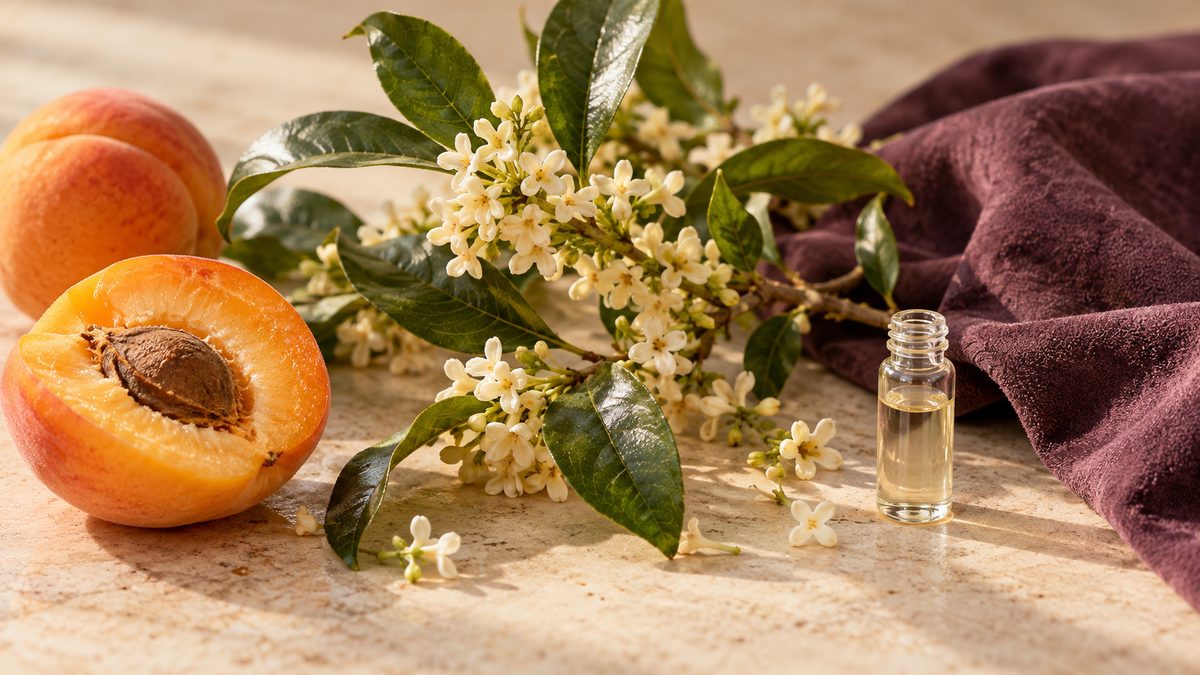
Osmanthus in perfume smells floral and apricot-like, often with a soft leathery or tea-like undertone. Its unusual appeal comes from holding ripe-fruit softness and dry depth together. It can brighten a floral perfume without turning it sugary, or soften a leather accord without making the leather disappear.
Osmanthus fragrans is an evergreen shrub or small tree known for its fragrant flowers and associated especially with East Asia. Its blossoms are used in aromatic traditions as well as perfumery. The finished perfume note can evoke the flowers while selecting only part of their complex smell.
A natural osmanthus absolute is an extracted perfumery material obtained from the blossoms. It is not a conventional bottle of floral water, and it should not be treated as a ready-to-wear fragrance. Its character can vary with the flowers and processing.
A perfume may use the absolute, a reconstructed accord or both. Seeing osmanthus in a note list does not establish the amount of natural material present. Nor does a claim about natural content tell you whether the resulting perfume will emphasise fruit, petals or leather.
The fruit-like side of osmanthus often suggests ripe apricot or peach skin. It can feel soft, velvety and rounded rather than juicy in a citrus-like way. That texture is one reason the note sits comfortably beside suede-like leather effects.
An apricot impression does not mean a perfumer added fruit juice. Fragrance materials can create related odours without using the object they remind you of. The same principle applies when a perfume smells like tea, polished wood or warm fabric.
It is useful to separate ripeness from sweetness. A perfume can suggest apricot skin while staying dry overall. If you dislike dessert fragrances but enjoy fruit in a more restrained form, osmanthus is a sensible note to explore through samples rather than a promise that every version will suit you.
Osmanthus can have a leathery depth beneath its fruit and flowers. Depending on the material and formula, this may feel suede-like, faintly animalic or more clearly dark. It need not resemble a smoky leather jacket.
Other ingredients can strengthen the leather impression. A perfumer may use osmanthus to give an existing leather accord a fruit-like softness, or place it in a floral structure where the leathery shade stays in the background. These are different ways of using the same broad idea.
If you dislike aggressive smoke, ask for a floral or tea-led osmanthus before dismissing the note. If you want a pronounced leather fragrance, verify that the leathery effect remains once the fruit softens. A beautiful first impression may not predict the base you will wear later.
| Pairing | Possible result | What to check on skin |
|---|---|---|
| Tea | Dry infusion with a fruity floral lift | Whether tea stays distinct |
| Jasmine | Fuller floral volume | Whether the fruit becomes too rich |
| Sandalwood | Creamy wood beneath soft petals | Whether creaminess becomes sweetness |
| Leather | Suede-like fruit and darker depth | Whether smoke is part of the accord |
| Citrus | Brighter contrast to ripe fruit | What remains after the opening |
Tea accords can make the note feel drier and more transparent. Jasmine can bring a fuller floral impression, while sandalwood supports its rounded texture. The proportions determine which side becomes central.
Do not treat that table as a formula decoder. A listed pairing may be a subtle background detail rather than the main theme. Ask for descriptions of the whole scent and use the sample to discover the actual balance.
Start by choosing a reference you can describe: fresh apricot skin, dried fruit, delicate petals, tea leaves or soft leather. You do not need access to osmanthus blossoms to have a useful preference. These comparisons provide a vocabulary, even when none captures the full note.
Compare a floral osmanthus sample with a tea-led or leathery interpretation. Keep them on separate strips and note the leading impression after the opening settles. A fragrance that smells mostly of citrus initially may reveal its fruit and leather contrast later.
Then wear the favourite on a separate day. Check it in normal indoor conditions and consider whether the fruit feels pleasant over prolonged wear. A soft opening can become a richer musky or woody base, so avoid making the decision from one appealing sniff.
An airy tea-osmanthus perfume may feel comfortable in mild weather or daytime. A creamier leather interpretation may suit cooler conditions. Those are practical associations rather than restrictions: the full formula, setting and personal preference matter more than the flower's name.
For a heated shared room, begin with restrained application and respect fragrance-free policies. Do not add more simply because the delicate fruit seems quieter after a while. Your awareness can change before the fragrance has disappeared from the space around you.
Use finished products as directed and keep concentrated extracts separate from skin testing. Stop use if irritation occurs, and consult a clinician for persistent symptoms. For known ingredient concerns, manufacturer information is more useful than assuming a small flower or natural extract must be mild.
A guide to the note’s usual role, not a fixed formula or an ingredient list.
Notes overlap as a fragrance develops. Placement varies with the finished composition.
No. They are different plants with different aromatic profiles. Flower colour or a warm floral impression does not make the notes interchangeable.
Fragrance preferences are individual. Fruit, flowers and leather are not restricted by gender, so choose by smell and comfort.
No. Aroma materials and their combinations can suggest apricot without using the fruit. A note is not an ingredient declaration.
Do not apply a concentrated raw material as if it were finished perfume. Use a product formulated and supplied for personal fragrance use.
For general information. Patch test a finished perfume as directed before wider wear. Stop use and see a doctor if irritation develops.
Notes A–Z
Understand green, black and smoky tea accords, their floral and woody pairings, and how to choose a tea perfume beyond its opening.
4 min readNotes A–Z
Leather in perfume can smell dry, smoky, tarry, warm or softly suede-like, sometimes with animalic or rubbery facets.
4 min readNotes A–Z
Jasmine smells floral, sweet and radiant, with possible green, fruity, tea-like or animalic facets.
4 min readNotes A–Z
Sandalwood ranges from milky softness to dry warm timber. Learn about Santalum oils, santalols, manufactured alternatives and practical comparisons.
4 min read