Notes A–Z
Bergamot in Perfume: Bitter Citrus, Floral Peel and Safer Sampling
Bergamot smells like bright citrus peel with a bitter, green edge and a soft floral undertone.
4 min readNotes A–Z
Understand green, black and smoky tea accords, their floral and woody pairings, and how to choose a tea perfume beyond its opening.
By The Bla Blu Bli Fragrance Library editors · Published November 2, 2026 · Updated November 2, 2026 · 4 min read
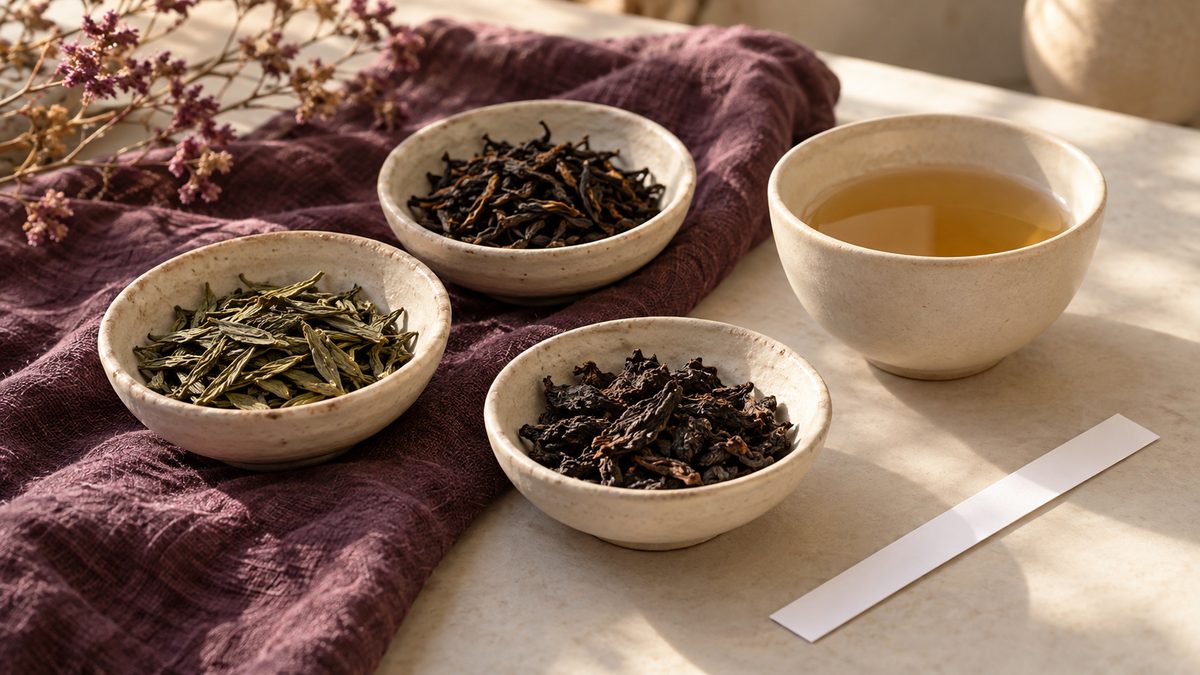
Tea notes in perfume suggest leaves, a brewed infusion or aromatic steam, usually through a carefully built accord. Green tea tends towards grassy, fresh and lightly bitter impressions; black tea can feel drier, darker and more tannic. Smoky tea adds a fire-dried or woody dimension that is worth testing separately.
Tea has a delicate, complex aroma that can be difficult to carry directly into a perfume. Extracts may contribute, but perfumers also combine citrus, floral, green, woody and other materials to create a recognisable tea impression. A note name describes the result rather than certifying a recipe.
An accord can include the space around the cup as well as the leaves. Airy floral notes may suggest steam, dry woods may evoke a tea caddy, and a soft musky base can extend the feeling of clean warmth. These associations do not require those physical objects to be ingredients.
Decide which part interests you before sampling. The smell of dry leaves differs from a hot infusion, and both differ from a sweetened iced drink. Using a specific reference helps avoid choosing a citrus perfume that only briefly hints at tea.
Green tea styles often combine light bitterness, green vegetation and a transparent floral effect. Citrus may make the opening bright, while musks or soft woods carry the cleaner part into the base. Some interpretations feel almost watery; others have more grass or dry leaf.
Fresh does not automatically mean weak or short-lived. Supporting materials can project beyond the immediate tea impression. If you want a quiet fragrance, test its reach rather than assuming the light colour or delicate description predicts performance.
Pay attention to the green edge. A grassy scent can feel lively to one wearer and sharp to another. If that edge bothers you, try a floral tea style instead of adding more sweetness through layering before you understand the original sample.
Black tea interpretations can suggest dried leaves, woody warmth and a tannic dryness. Some include fruity or honey-like facets, while others lean towards leather or smoke. They are not merely green tea accords with the volume turned up.
Bergamot makes a familiar aromatic partner for black tea. The combination can suggest a scented infusion without becoming a literal replica of a drink. Citrus may dominate the first impression, so return to the sample once that brightness has softened.
For someone who dislikes sweet gourmands, a dry black tea accord can be a useful direction. Still, check the base: vanilla, amber or sweet woods may change the balance later. The word tea cannot guarantee an unsweetened result.
Smoke can evoke leaves dried near a fire, charred wood or an incense-like haze. Its intensity varies widely. A trace may deepen the tea impression; a pronounced smoky accord may make the leaves difficult to identify.
Try a smoky tea separately from a clean green style rather than expecting them to suit the same mood. If you enjoy dry aromatic smoke but dislike tarry leather, describe that distinction when requesting samples. Smoke has several textures, and a broad dislike can conceal a more specific preference.
| Tea direction | Main cues | Useful companion | Check before choosing |
|---|---|---|---|
| Green | Grass, leaf, airy bitterness | Citrus or soft musk | Sharpness after the first spray |
| Black | Dry leaf, wood, tannic depth | Bergamot or dry woods | Sweetness in the base |
| Floral | Petals around an infusion | Jasmine or osmanthus | Whether tea remains noticeable |
| Smoky | Fire-dried leaf, aromatic wood | Vetiver or incense | How much smoke persists |
Jasmine can make tea more floral and luminous, while osmanthus may add apricot-like fruit and a soft leathery shade. These pairings can suggest scented tea while remaining clearly perfume. The flower may lead, with tea providing dryness underneath.
Vetiver can support rooty or smoky depth. Soft musks can preserve an airy clean texture once the brighter notes fade. Neither pairing fixes the strength or duration of the tea itself.
If you want the leaves to remain central, ask for a tea-led composition with restrained floral sweetness. If you want a gentle daily floral, tea may work better as a background contrast. Both can be satisfying, provided the expectation matches the finished balance.
Sample on paper first and name the dominant impression without reading the description again. Is it citrus, leaf, flower, smoke or wood? Revisit later and note whether an identifiable tea effect has emerged or disappeared.
Wear your favourite candidate alone on a separate day. Assess it in ordinary indoor air and after some time outdoors. Do not judge solely while standing beside a freshly brewed cup, since nearby smells change what your nose picks out.
A tea perfume can suit warmer weather or a heated office, but shared-space rules and individual sensitivity still apply. Follow application directions and avoid topping up just because the delicate leaf impression seems quieter to you. If a product causes persistent symptoms, stop using it and seek appropriate clinical advice.
A guide to the note’s usual role, not a fixed formula or an ingredient list.
Notes overlap as a fragrance develops. Placement varies with the finished composition.
Not necessarily. Natural extracts can be used, but an accord may evoke tea without leaf-derived ingredients.
In a scent description, tannic usually refers to a dry, tea-like impression. It does not establish the chemical contents of the fragrance.
No. These names describe aromatic ideas rather than standardised strength categories. Compare the finished fragrances on skin.
Use products only as directed. A personal fragrance is not automatically suitable for spraying rooms, furniture or household textiles.
For general information. Patch test a finished perfume as directed before wider wear. Stop use and see a doctor if irritation develops.
Notes A–Z
Bergamot smells like bright citrus peel with a bitter, green edge and a soft floral undertone.
4 min readNotes A–Z
Jasmine smells floral, sweet and radiant, with possible green, fruity, tea-like or animalic facets.
4 min readNotes A–Z
Vetiver smells woody, earthy and dry, with possible green, smoky, bitter citrus or nutty facets.
4 min readNotes A–Z
Musk in perfume can smell softly powdery, clean and fabric-like, warm and skin-like, or more animalic.
4 min read